
In the all on 4 vs all on 6 choice, both options replace a full arch of teeth. All-on-4 holds a fixed bridge on four implants. All-on-6 holds the same kind of bridge on six implants. Your jawbone, health, and bite decide which plan fits you.
Key Takeaways
- All-on-4 places its back two implants at an angle to make the most of the bone you have.
- A review of 53 studies on the upper jaw found similar survival for four and six implants.
- The same review found more bone loss around the implants in the four-implant group.
- Smoking and conditions such as diabetes can slow healing after implant surgery.
Estimated read: 5 min
All on 4 vs All on 6: What Is the Difference?
Both treatments are full-arch implant options. Instead of one implant per tooth, a small group of implants holds one bridge for a whole row of teeth.
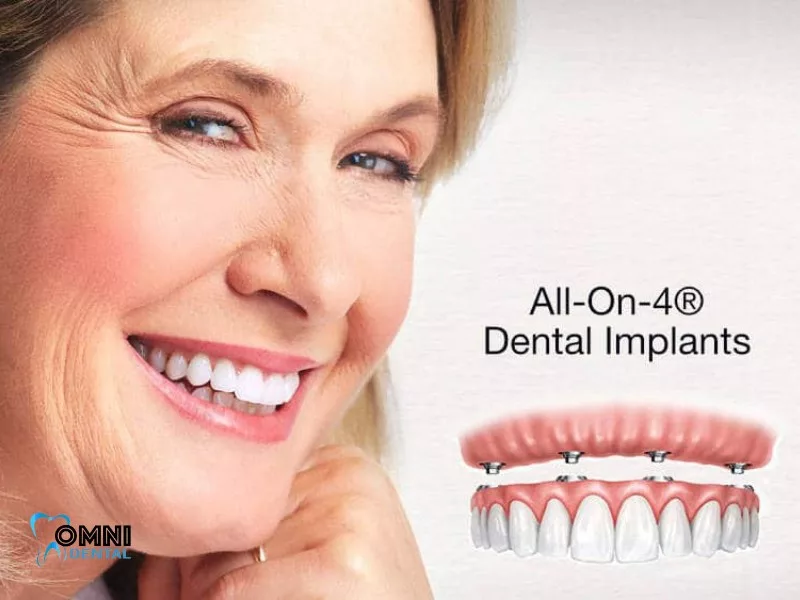
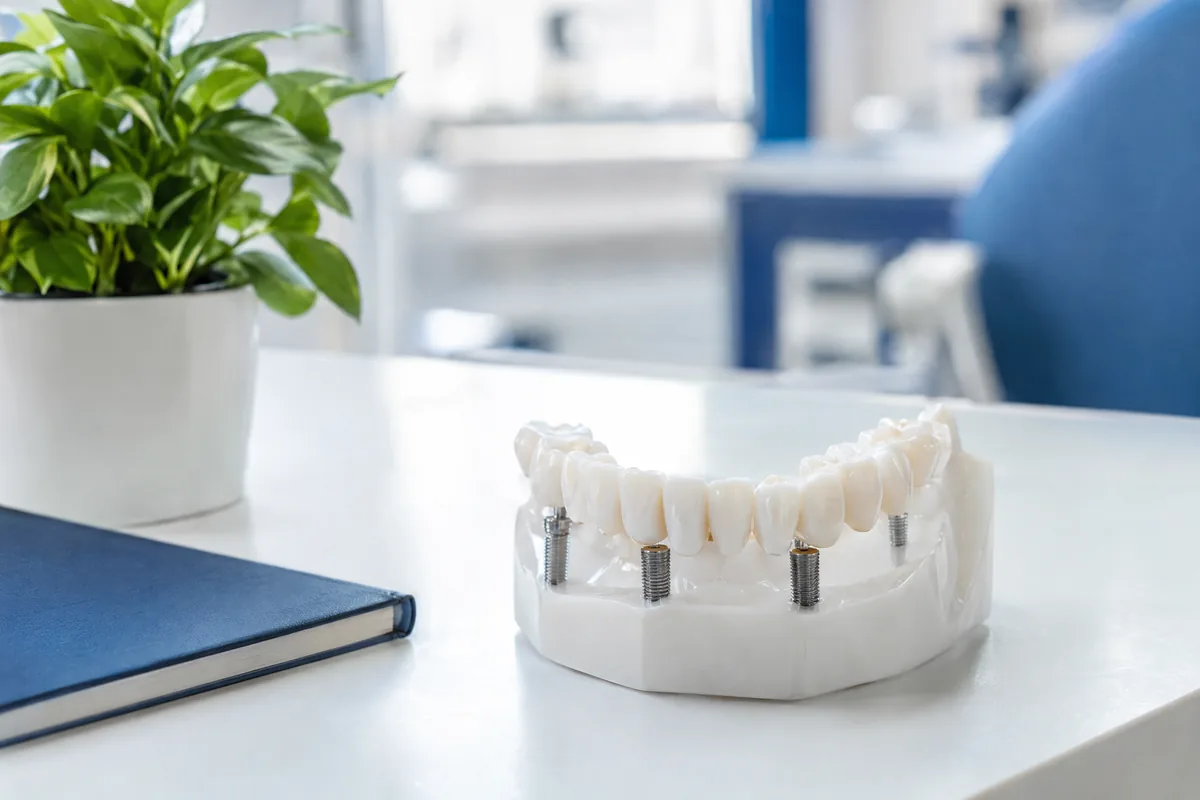
At Omni Dental, All-on-4 means four implants supporting a full fixed bridge, often called a fixed full arch.
Because the implants anchor the bridge to the jawbone, it stays in place when you eat and talk. Omni Dental’s full-arch page explains that this prevents the slipping and shifting common with removable dentures.
The main difference is the number of implants under the bridge. Four implants spread the load across fewer points, while six add two more anchors. That sounds like a small change, but it affects how much bone you need and where the implants go.
The table below compares all on 4 vs all on 6 at a glance.
| Factor | All-on-4 | All-on-6 |
|---|---|---|
| Implants per arch | Four | Six |
| Implant angle | Back two tilted to use front bone | Spread along more of the jaw |
| Bone needed | Works with less bone in many cases | Needs bone at more sites |
| Bone loss in research | Higher around implants | Lower around implants |
When Does All-on-4 Make Sense?
Dentists developed All-on-4 for jaws that have lost bone. A systematic review of the all-on-four concept explains that the method places four implants in the front of the jaw. The two front implants stand straight, and the two back implants sit at an angle.
That angle matters. It lets the bridge reach farther back, up to 12 teeth, while using the bone that is still there. As a result, many patients can avoid extra bone-building procedures that add cost and recovery time.
Omni Dental’s All-on-4 dental implants page lists who usually fits this plan:
- Adults who have lost many teeth or are about to
- People who want to stop wearing loose dentures
- Patients with enough jawbone to hold the implants
- People ready to keep up good daily oral hygiene
The same review reported implant survival of 99.8% after more than 24 months. However, the authors also called the evidence limited, because many studies were small or had short follow-up.
When Might Six Implants Be the Better Plan?
Six implants make sense when the jaw has enough healthy bone in more places. With two extra anchors, the bridge has more support along the arch.
Still, more implants are not always better for every mouth. Each extra implant needs its own healthy site, so a jaw with heavy bone loss may need grafting first. In that case, a four-implant plan could be the simpler path.
Your dentist weighs your bone, bite, and health before suggesting one plan. According to the ADA’s MouthHealthy guide to implants, your overall health is more of a factor than your age.
What Does Research Say About Four vs Six Implants?
One review in the journal Heliyon studied the all on 4 vs all on 6 question in the upper jaw. This systematic review and meta-analysis pooled 53 studies of fixed bridges on four or six implants.
Overall, the two groups did about equally well. The review found no significant difference in implant or bridge survival. It also found no significant difference in mechanical or biological problems.
One difference stood out, though. Bone loss around the implants was significantly higher in the four-implant group. So the authors concluded that more implants can help reduce bone loss and some problems over time.
Two other details helped the six-implant group. Spreading the implants from front to back went with higher implant survival. A bridge frame milled by computer did too.
The authors also noted that experts still do not agree on the ideal number of implants per arch. That is why the right choice depends on your exam, not on a fixed rule.
How Do You Keep a Full-Arch Bridge Healthy?
A fixed bridge does not come out at night, so daily cleaning happens around and under it. Your dentist or hygienist will show you which brushes and floss tools reach those spots.
Gum health around the implants matters for both plans. The all-on-four review reported peri-implantitis in only a few patients after about two years.
Peri-implantitis is an infection of the gum and bone around an implant. Even so, the authors pointed to how common these implant gum problems are in general.
Regular checkups let your dentist spot early signs before they affect the bone. For daily habits, read our tips on how to maintain dental implants for life.

What Should You Ask at Your Full-Arch Consultation?
A short list of questions helps you compare plans with your dentist. Bring it to your visit and note the answers for each option.
- How much bone do I have in the front and back of my jaw?
- Would I need bone grafting for four implants, six implants, or both?
- Can I get a temporary bridge on the day of surgery?
- How do I clean under a fixed bridge at home?
- Which plan fits my upper jaw, and which fits my lower jaw?
Each answer depends on your scans, so two people with the same number of missing teeth may get different plans. You can read more in our guide on how long All-on-4 dental implants last.
Exploring a full set of new teeth? Learn more about full arch dental implants in Arlington Heights at Omni Dental.
Frequently Asked Questions
How long does it take for implants to heal?
The ADA explains that bone grows around an implant over time, and this healing can take up to several months. Some patients can get implants and replacement teeth in one visit. Your dentist may place a temporary bridge or denture while your final teeth are made.
Can smokers get All-on-4 or All-on-6?
Smokers can still be evaluated, but tobacco use can slow healing, according to the ADA. Omni Dental’s All-on-4 page also notes that smokers and patients with chronic illnesses need an evaluation first. Your dentist will review your health before suggesting either plan.
What can I eat after full-arch implant surgery?
Soft, cool foods are usually best at first. The ADA notes that your dentist may suggest a soft, cool diet with warm soup while you heal. Ask your dentist when you can return to firmer foods, because the timing depends on your healing.
Do health conditions affect who can get implants?
Yes, some conditions can affect healing. The ADA lists chronic diseases such as diabetes or leukemia as conditions that may interfere with healing after surgery. In some cases, your dentist may ask for a medical check from your physician before treatment.
Ready to Compare All on 4 vs All on 6 in Arlington Heights?
The best way to settle all on 4 vs all on 6 is an exam with scans of your jaw. Call Omni Dental at (847) 483-8833 to book a full-arch consultation at our Rand Road office.

About the author
Dr. Bilus D PolesDDS,MAGD,DICOI, DIDIA
Founder and lead dentist of Omni Dental of Arlington Heights. Master of the Academy of General Dentistry and Board Certified Diplomate of the ICOI and IDIA. Illinois license #019.027365.