Sleep Apnea and Snoring Treatment in Arlington Heights
Sleep apnea treatment with a custom oral appliance in Arlington Heights, for people with diagnosed obstructive sleep apnea, loud snoring or trouble with CPAP. Dr. Poles fits and adjusts each appliance, working from your physician's diagnosis.
5.0 on Google · 541 reviews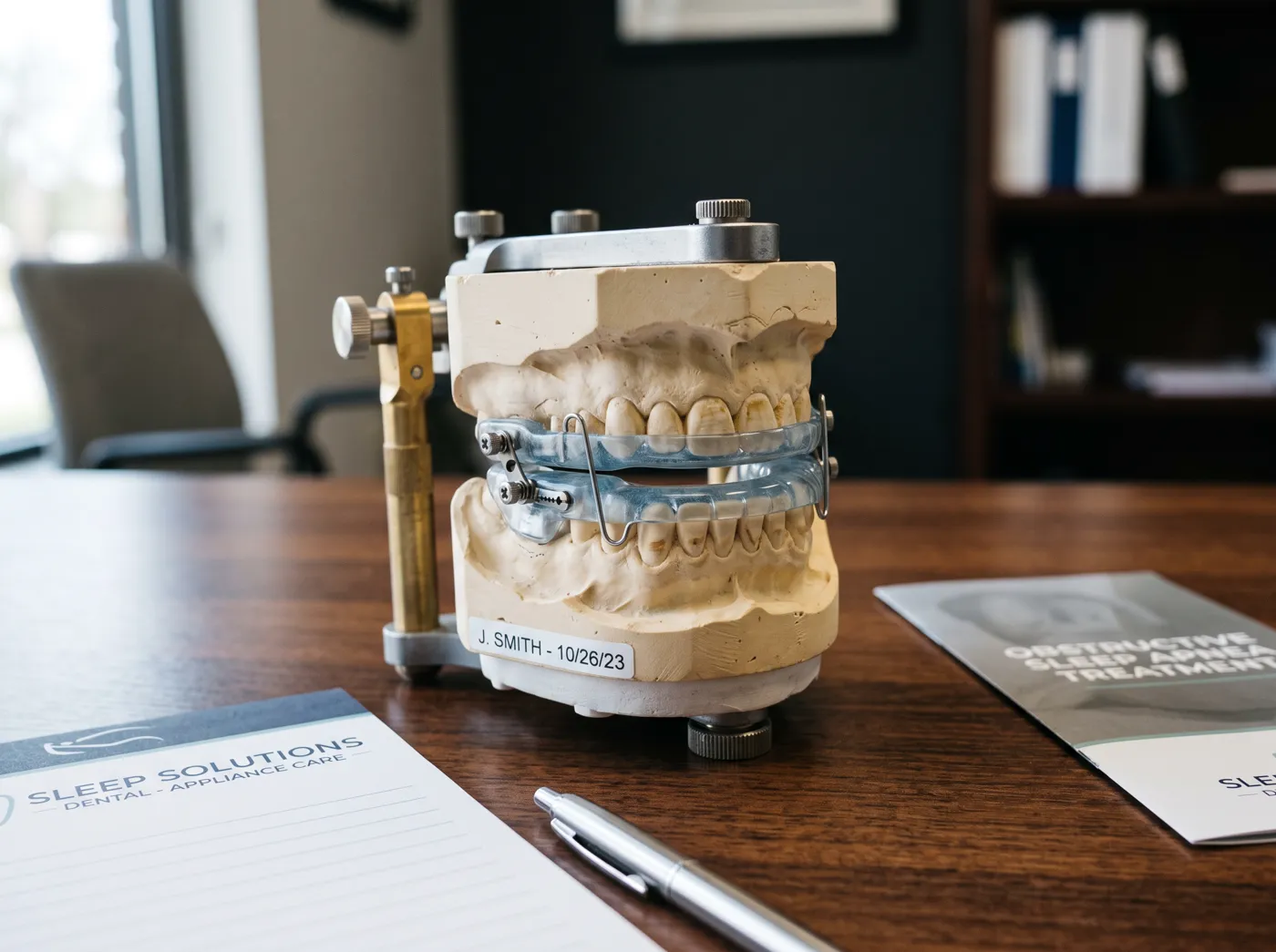
- 5.0Google rating
- 541Google reviews
- 2,500+Hours of continuing education
- 2Dental degrees (DDS)
- MAGD: Master of the Academy of General Dentistry
- ICOI and IDIA Board Certified Diplomate
- Most major dental plans accepted
Sleep apnea treatment at a dental office means oral appliance therapy. You wear a custom mouthpiece at night that holds your lower jaw slightly forward to help keep your airway open. A physician diagnoses sleep apnea first, and Omni Dental then fits, adjusts and follows up on your appliance.
What is obstructive sleep apnea?
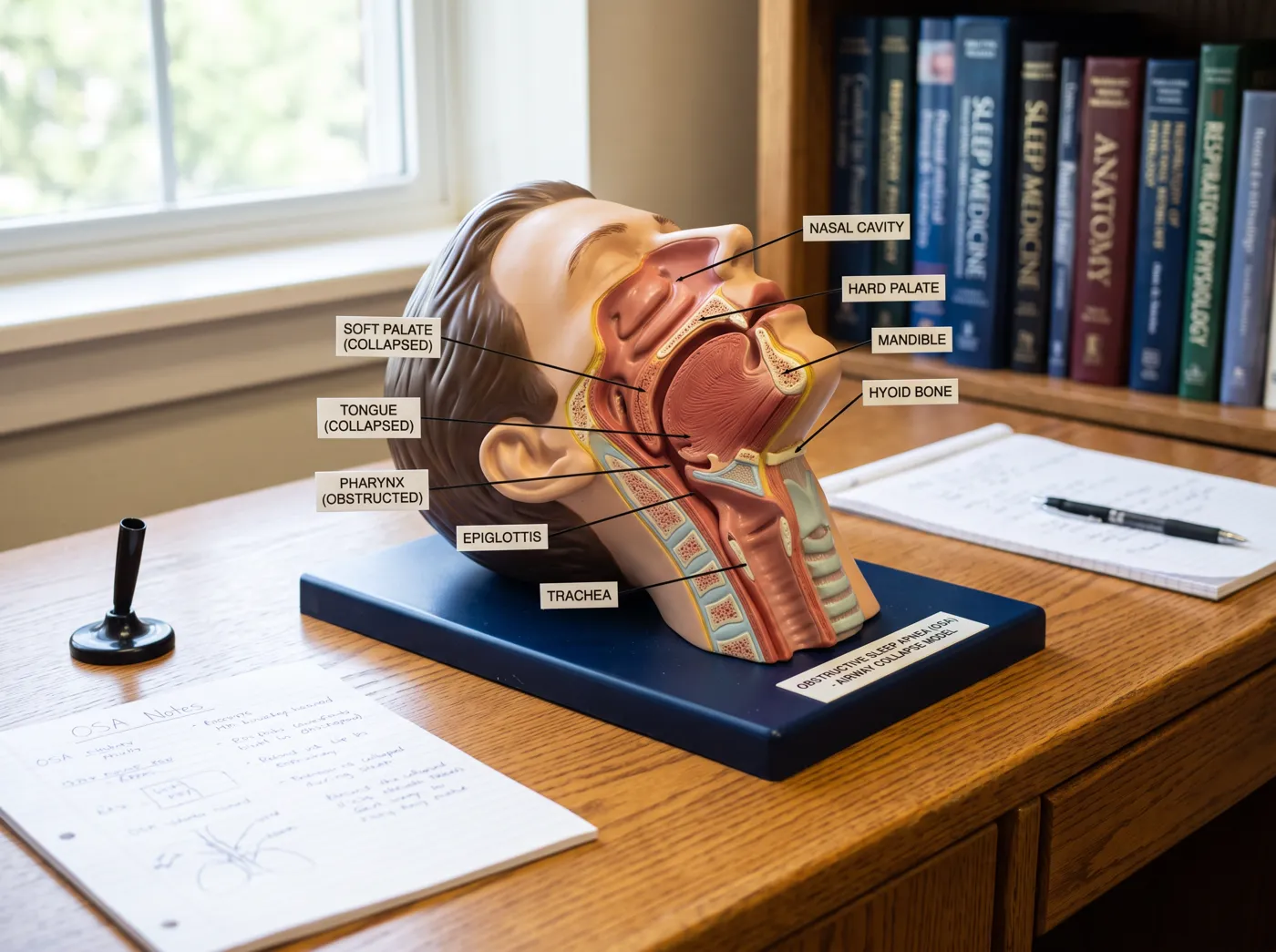
Obstructive sleep apnea is a sleep disorder. The soft tissues of the throat relax and block the airway during sleep, so breathing pauses or becomes very shallow.
Your brain briefly wakes you to restart breathing. This can repeat many times a night without you knowing.
Many people learn about it from a bed partner. Others notice the effects during the day, such as feeling tired no matter how long they sleep. Untreated sleep apnea has been linked with health problems such as high blood pressure, so it is worth checking with your physician.
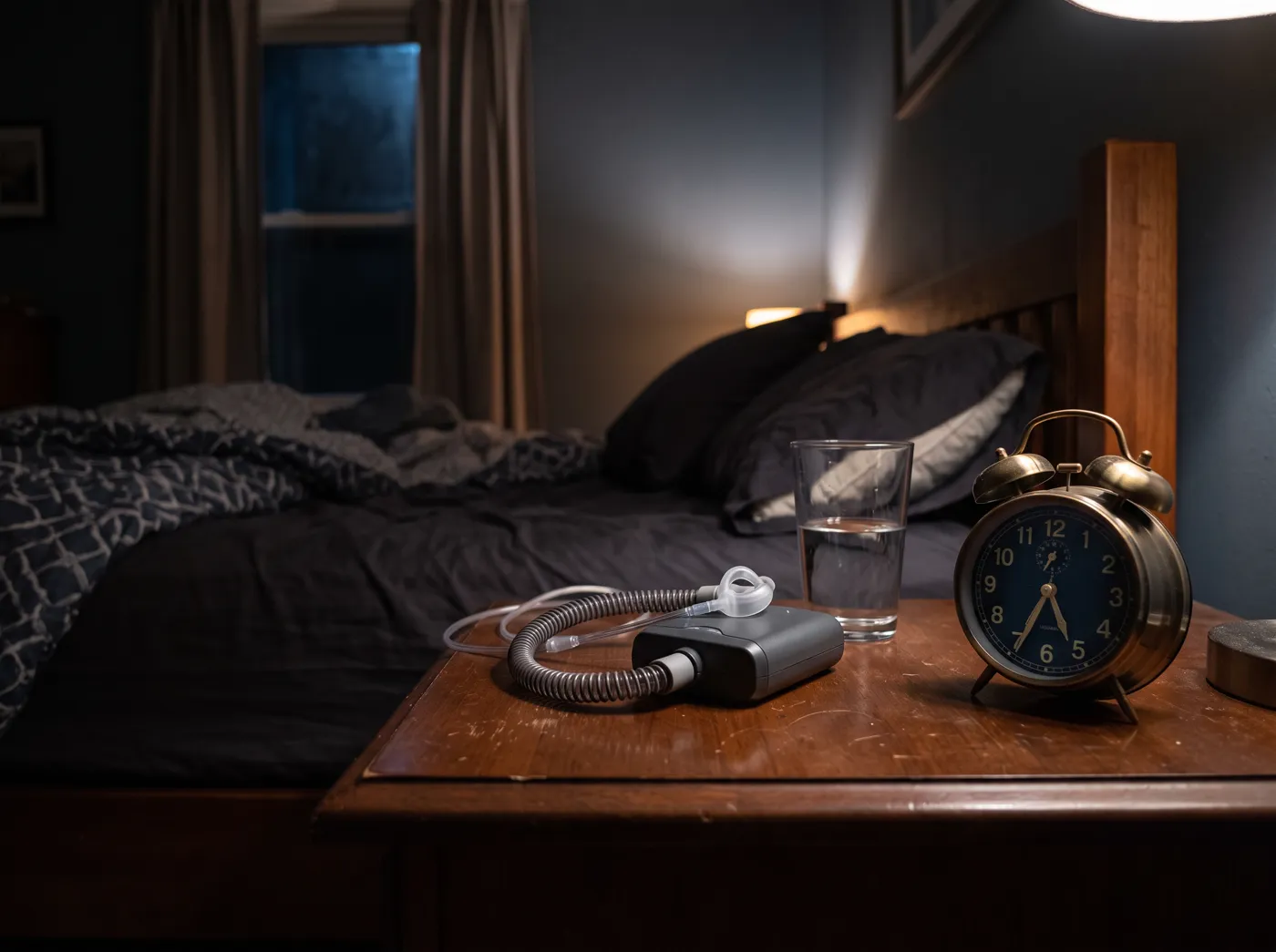
Common signs of sleep apnea
- Loud, frequent snoring
- Pauses in breathing, choking or gasping during sleep, often noticed by a partner
- Waking with a dry mouth, sore throat or morning headache
- Daytime sleepiness or trouble focusing
- Waking often at night to use the bathroom
Having one of these signs does not mean you have sleep apnea, and some people have few clear symptoms. A sleep study is the way to know. The National Heart, Lung, and Blood Institute explains how sleep studies are used.
Is snoring always sleep apnea?
No. Snoring happens when air moves past relaxed tissue in the throat and makes it vibrate. Many people snore without having sleep apnea.
Loud snoring with breathing pauses, gasping or heavy daytime tiredness can be a sign of obstructive sleep apnea, though. That is why snoring should be checked before it is treated, so a quieter night does not hide a serious problem.
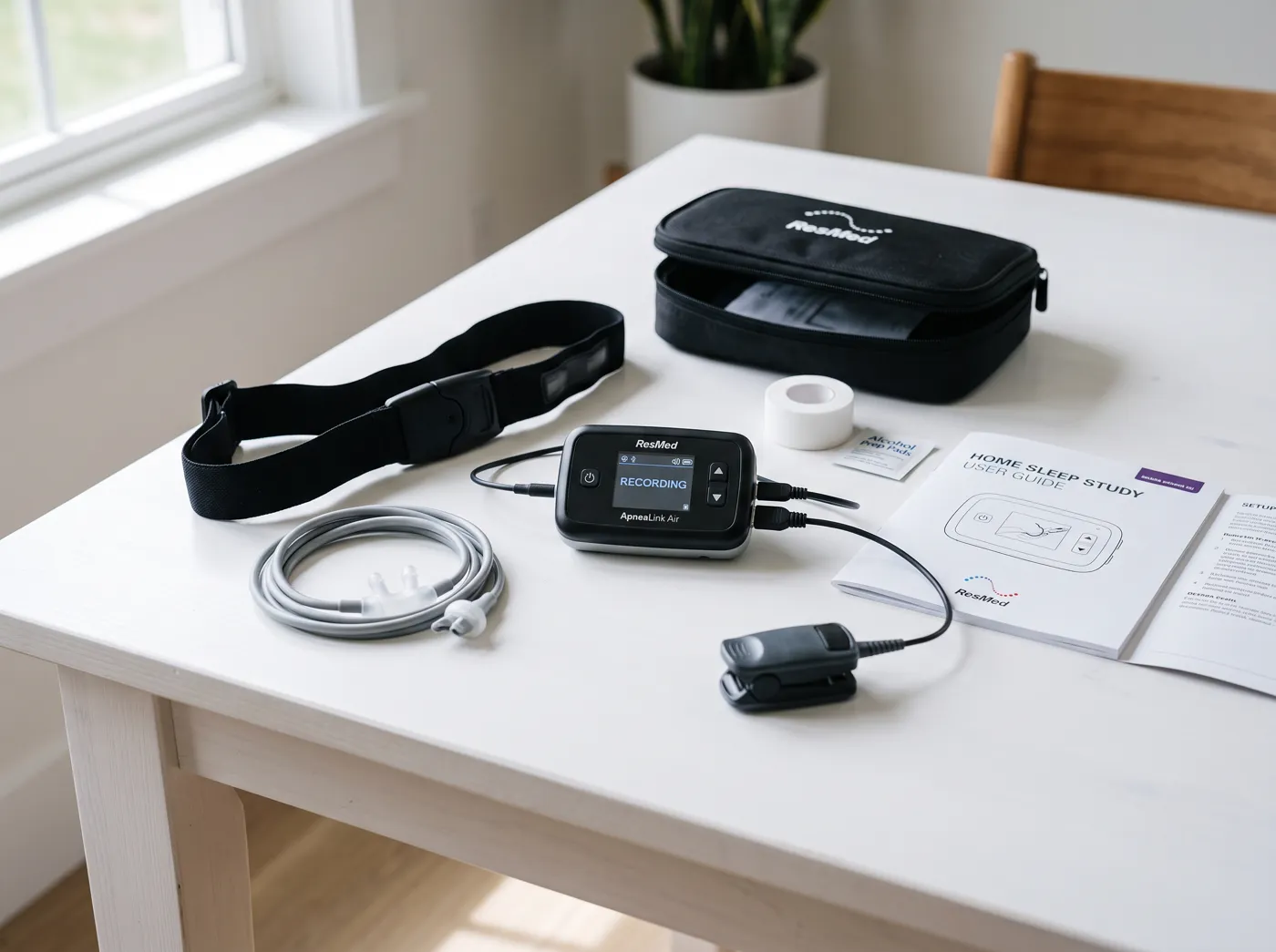
Who diagnoses sleep apnea?
A physician diagnoses sleep apnea, usually with a sleep study at home or in a sleep center. If you have not had a sleep study, we can talk about your symptoms and suggest that you see your physician for testing. If you already have a diagnosis, bring your sleep study report to your visit.
Sleep apnea treatments compared
The right treatment depends on how severe your apnea is, your anatomy, your health and what you can use every night. Your physician guides that choice.
| Treatment | How it works | Things to know |
|---|---|---|
| CPAP | Continuous positive airway pressure through a mask keeps the airway open | A standard treatment, though some people find the mask hard to sleep with |
| Oral appliance | A custom device moves the lower jaw forward | Quiet and easy to travel with; often considered for snoring, mild to moderate apnea or CPAP trouble |
| Lifestyle changes | Weight loss, side sleeping, less alcohol before bed | Helps some people, often alongside other treatment |
| Surgery and other options | Procedures or devices a physician recommends | Considered for some people when other options do not work |
The National Heart, Lung, and Blood Institute notes that a provider may prescribe an oral device for people who cannot use or do not want CPAP.
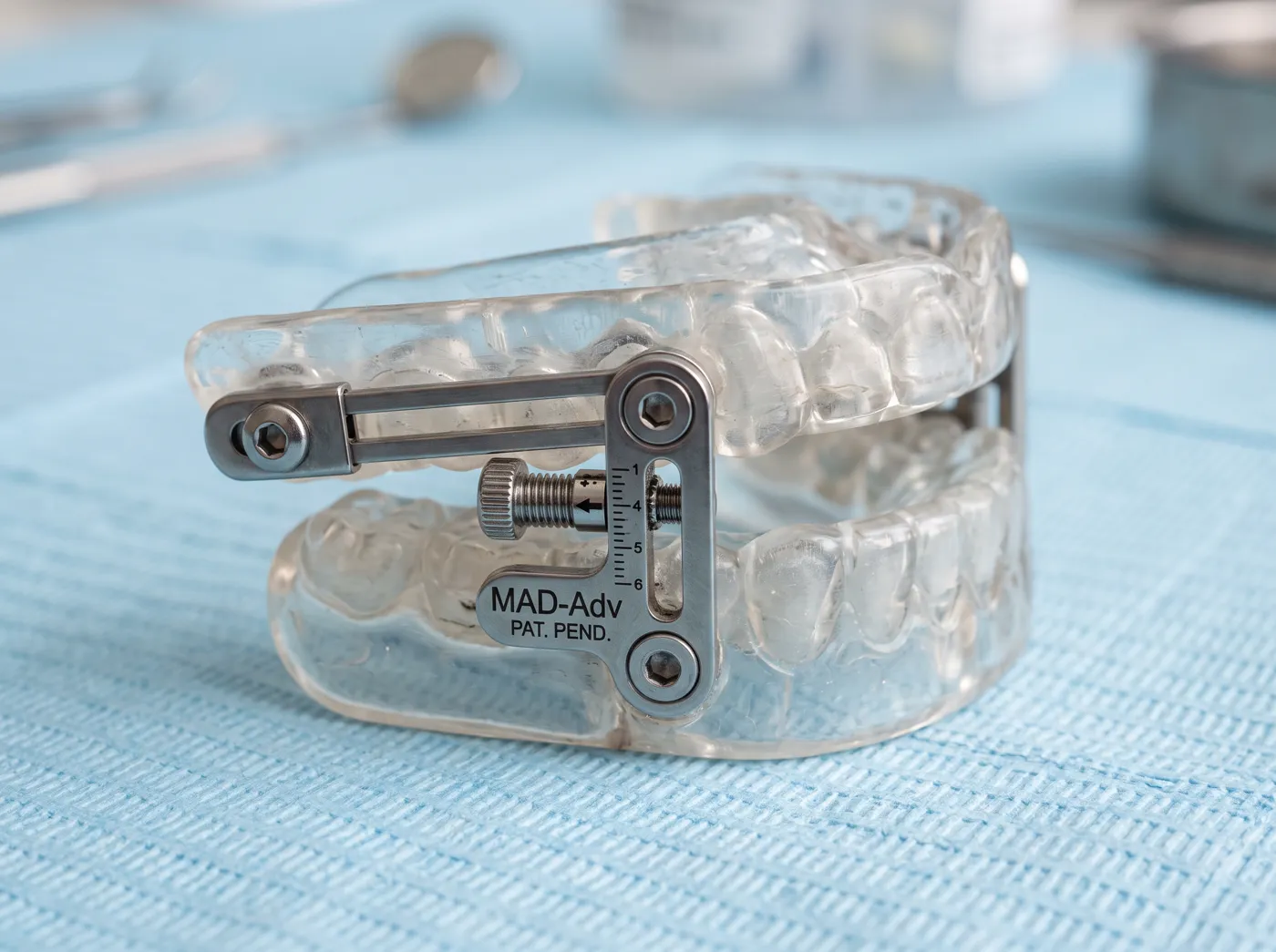
How does an oral appliance work?
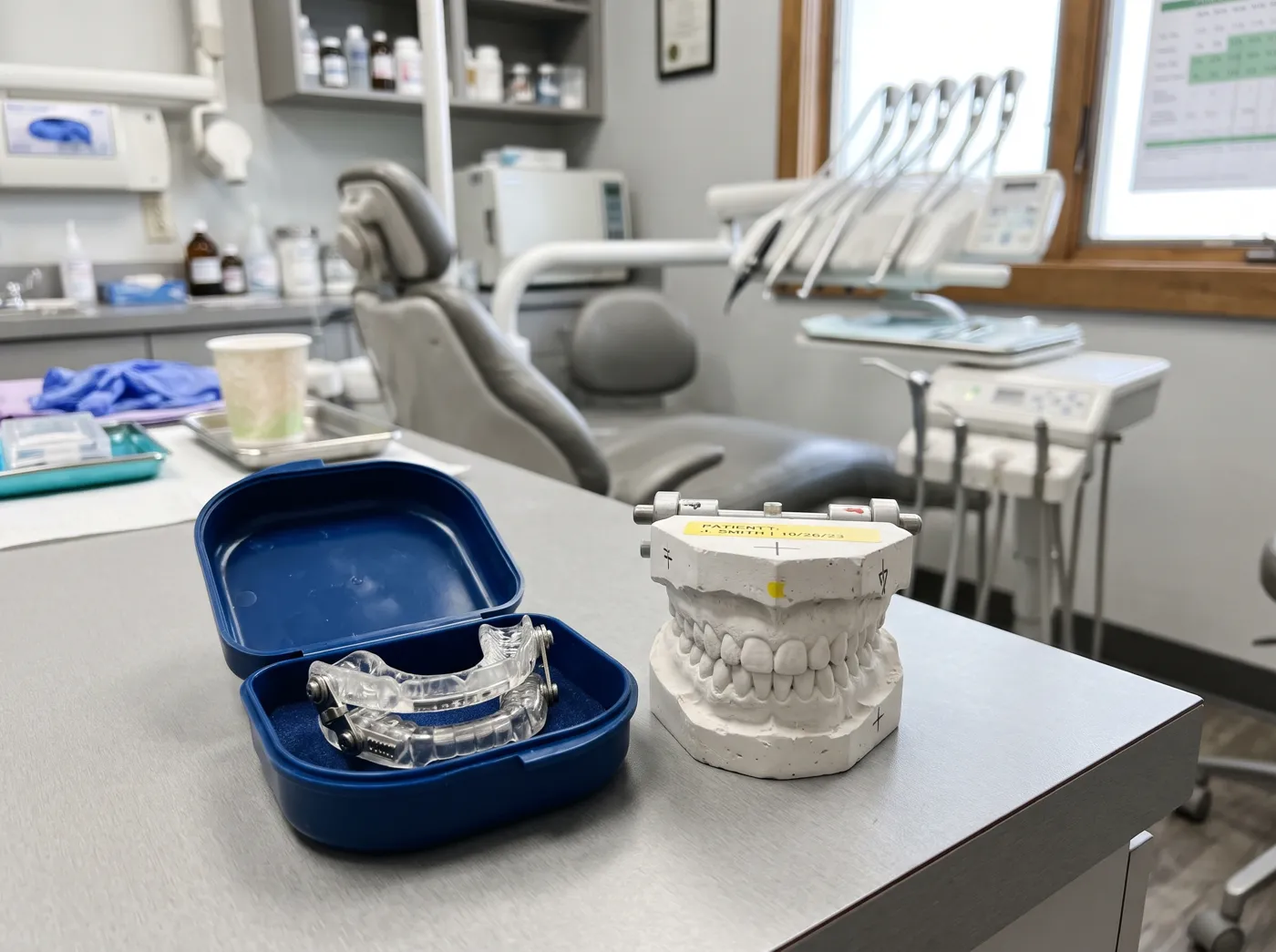
An oral appliance, also called a mandibular advancement device, looks a little like a sports mouthguard or a retainer. It fits over your upper and lower teeth and gently holds your lower jaw forward while you sleep.
Moving the jaw forward also moves the tongue and soft tissue forward, which helps keep the airway open.
Who is a good candidate for an oral appliance?
An appliance may be a good fit if:
- You snore and a physician has ruled out sleep apnea, or you have obstructive sleep apnea and your physician agrees an appliance is suitable
- You have tried CPAP and could not use it comfortably
- You travel often and want a small, quiet option
- You have enough healthy teeth to hold the appliance, and your jaw joints are healthy
An appliance may not suit you if you have few teeth left, jaw joint problems or untreated gum disease. If your gums need care first, we offer gum disease treatment at the same office.
What to expect when you start
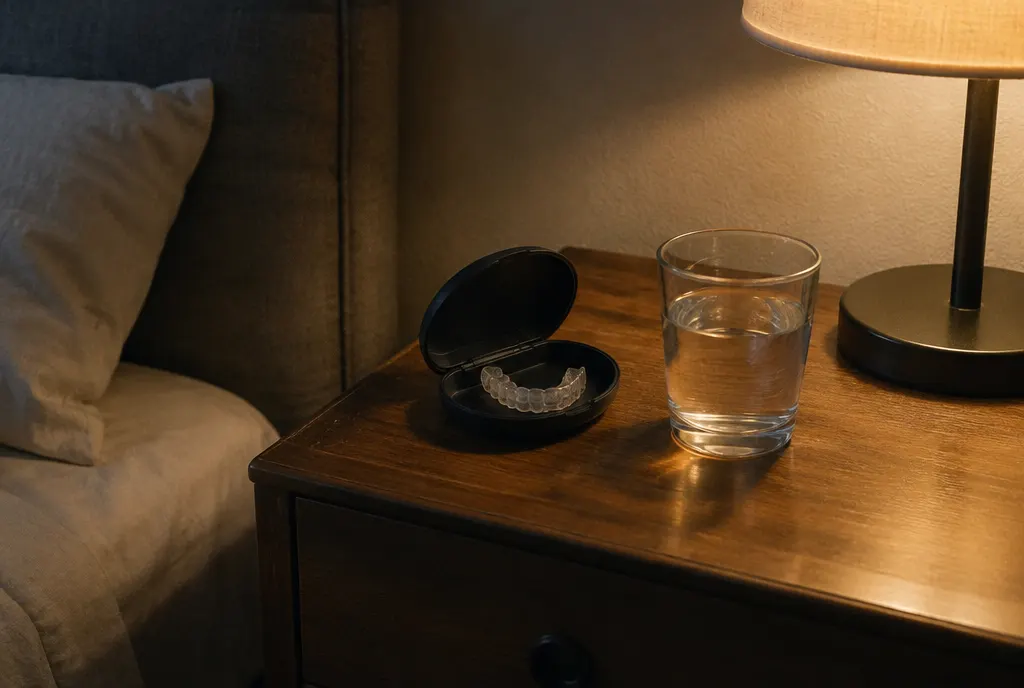
Most people need a short adjustment period. In the first weeks, it is common to notice:
- Extra saliva or a dry mouth
- Mild jaw or tooth soreness in the morning
- A bite that feels slightly different for a short time after you remove the appliance
You get instructions for your case, including how to clean the appliance and any morning jaw exercises that suit you. Regular checkups let us watch your bite and teeth over time.
Choosing a sleep apnea dentist
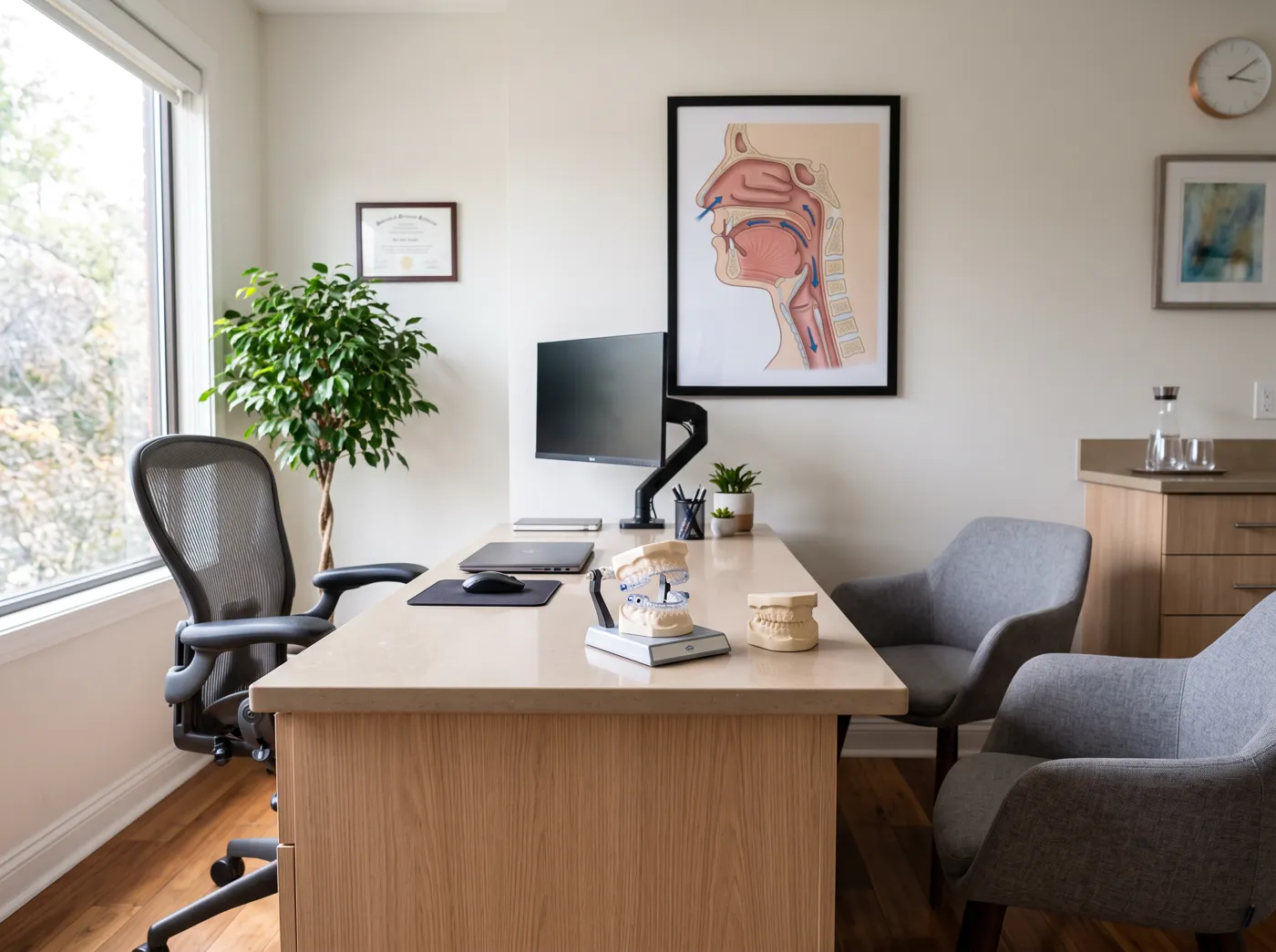
A sleep apnea dentist should check your teeth, gums and jaw with care and work from your physician’s diagnosis. The appliance should be adjusted until it feels right. Ask how the appliance is fitted, how adjustments work and how follow-up is handled.
Dr. Poles is a Master of the Academy of General Dentistry with 22+ years of experience and 2,500+ hours of continuing education.
Book a sleep apnea visit
Our office is at 305 E. Rand Road, open Monday to Friday, 10 AM to 6 PM.
Coming from nearby? See our page for patients from Elk Grove Village.
New to the practice? Visit our new patients page, or send us a message to book a visit.

Meet your dentist
Dr. Bilus D PolesDDS,MAGD,DICOI, DIDIA
Every treatment plan at Omni Dental is led by Dr. Poles, from checkups and cleanings to full-arch implant care.
- MAGDMaster of the Academy of General Dentistry
- ICOIBoard Certified Diplomate, Implantology
- IDIABoard Certified Diplomate, Implants
- LaserCertificate in Dental Laser Surgery
- Illinois license #019.027365
Your options
Sleep apnea and snoring treatment options
Your physician diagnoses sleep apnea. Dr. Poles provides the oral appliance part of your care.
Custom oral appliance
A mouthpiece made for your teeth that holds the lower jaw forward to help keep your airway open.
Snoring care
For people whose snoring has been checked by a physician, an appliance can reduce the vibration that causes it.
An option beside CPAP
For people who cannot use CPAP comfortably, an appliance may be considered with their physician's input.
Ongoing adjustments
The appliance is adjusted in small steps, and your teeth, bite and jaw are checked at follow-up visits.
Step by step
How oral appliance treatment works
- 1
Talk about your sleep
Share your symptoms and any sleep study. If you have not been tested, Dr. Poles suggests seeing your physician.
- 2
Dental exam
Dr. Poles checks your teeth, gums, bite and jaw joints to see whether an appliance suits you.
- 3
Custom fitting
Your teeth are recorded, the appliance is made to fit them, and you learn how to wear and clean it.
- 4
Adjust and follow up
The jaw position is fine tuned over several visits. Your physician may order a follow-up sleep test to check how well it works.
Trusted and recognized
Affiliated with leading dental organizations
Dr. Poles is a member of leading dental associations and has completed more than 2,500 hours of continuing education.








Proud member of our local chambers of commerce
Insurance
We accept most major dental plans
We accept most major dental plans, including Aetna, BlueCross BlueShield, Cigna, Delta Dental and MetLife. Bring your insurance card and we will check your benefits before treatment starts.
Not sure about your plan? Call (847) 483-8833 and our front desk will look it up with you.





- + most other major dental plans
Google reviews
Rated 5.0 on Google
Real words from real patients. Omni Dental holds a 5.0 rating from 541 reviews on Google.
- Katherine BastermajianMay 20, 2026★★★★★
He’s fabulous. Extremely nice and professional.
- AshtarMay 6, 2026★★★★★
I had a really great experience at Omni Dental! Everyone was so friendly and welcoming and the office was super clean and organized. Dr.Bilus is very honest and explained everything clearly without pushing unnecessary work. You can tell they genuinely care about their patients. Definitely recommend if you’re looking for a good dentist!!!
- George BitarMay 4, 2026★★★★★
The experience was amazing. I came in for a crown and I did not feel a thing. The process from beginning to end was the easiest process and I highly recommend Omni and Dr Poles. Thank you for everything
- SuNnY Mad1omApril 30, 2026★★★★★
Very careful with teeth and they treat you very nicely
- Rami LilouApril 30, 2026★★★★★
Been going to this doctor since I was 5, even at his old office, amazing and smooth experience everytime
- Jorge MendezApril 30, 2026★★★★★
Mayra and Atziri are very helpful with insurance. Isabel and Maribel are great assistants.
- Andrea ArroyoApril 30, 2026★★★★★
Such a mellow and genuine office and staff. Dr poles is genuinely honest and tells things like they are. Mayra at the front was such a sweet person and perfect customer service. Definitely found my dentist
- JessicaApril 28, 2026★★★★★
I had a great experience here ,all the staff is super friendly and great doctor :)
- Carlos Enrique Rodríguez SantanaApril 25, 2026★★★★★
Me fue muy bien con mis brakets muy buena atención muy atentos recomendado
Patient video testimonials
Real patients. Real stories.
Hear how patients feel about their care at Omni Dental, in their own words.
-
Joseph L.Joseph shares his experience with Dr. Bilus Poles
-
Asja S.Asja's patient experience at Omni Dental
-
Ramsen S.Why I keep coming back to Omni Dental
-
Lisa K.Lisa shares her experience with Dr. Bilus Poles
-
Sarah A.Outstanding dental care at Omni Dental
Questions
Frequently asked questions
Do not see your question? Call us and we will talk it through.
Call (847) 483-8833What kind of dentist treats sleep apnea?
A general dentist who provides oral appliances fits and adjusts them and watches your teeth, bite and jaw over time. At Omni Dental, Dr. Poles provides oral appliances for snoring and sleep apnea.
How much is a sleep apnea mouth guard from a dentist?
The price depends on the appliance design, the number of fitting and adjustment visits, and your coverage. Some medical plans may cover oral appliances for diagnosed sleep apnea, and dental plans vary. Bring your insurance cards and ask our front desk what your plans may cover before treatment starts.
Can a dentist diagnose sleep apnea?
No. A dentist cannot diagnose sleep apnea, but may notice warning signs at a checkup, such as teeth worn down by grinding, and suggest that you ask your physician about a sleep study.
What should I do if I think I have sleep apnea?
Talk with your physician about your symptoms and ask whether a sleep study makes sense. Bring notes from a bed partner about snoring or breathing pauses if you can. If you are diagnosed and an appliance is an option, Dr. Poles can check whether one suits your teeth and jaw.
Is a store-bought snoring guard the same as a custom appliance?
No. Store guards are not made for your teeth, can fit poorly and usually cannot be adjusted in small steps. A custom appliance is fitted to your teeth and checked at follow-up visits. Snoring should also be checked by a physician first, since it can signal sleep apnea.
Will an oral appliance change my bite?
Some people notice a slightly different bite for a short time after removing the appliance in the morning. With long-term use, bite changes can happen. That is why Dr. Poles checks your teeth and bite at regular visits and may suggest morning jaw exercises.