Pulpitis treatment depends on how inflamed the dental pulp inside your tooth has become. Mild, reversible pulpitis often heals once your dentist removes the cause, such as decay. Severe, irreversible pulpitis usually needs a root canal or tooth extraction. Early care can save the tooth and prevent serious infection.
Key Takeaways
- Pulpitis occurs when dental pulp (nerve and blood vessels inside your tooth) becomes inflamed from decay, trauma, or infection.
- Reversible pulpitis heals if you remove the cause early; irreversible pulpitis demands root canal treatment or extraction.
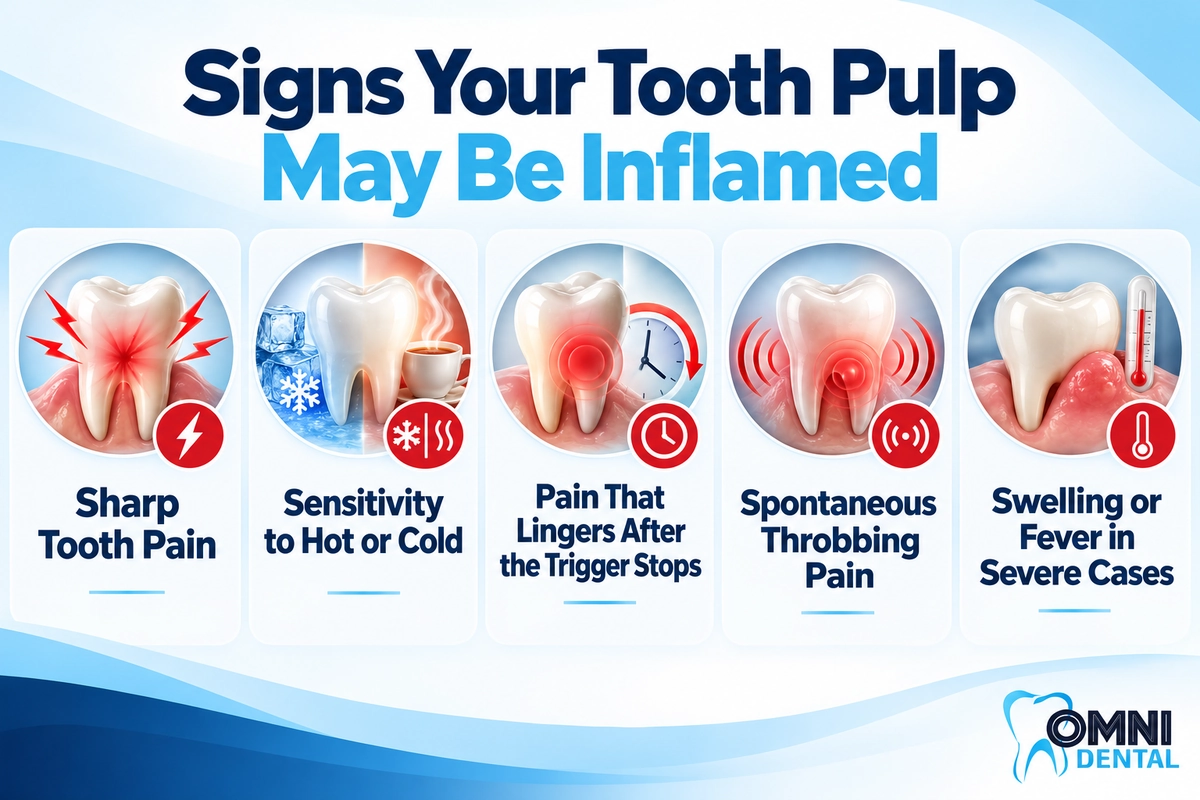
- You’ll experience sharp pain, sensitivity to hot/cold, spontaneous throbbing pain, and swelling in severe cases.
- Antibiotics alone cannot cure pulpitis; only professional dental treatment stops the infection and saves the tooth.
Read time: 6 min
What Is the Dental Pulp?
The dental pulp contains the innermost living tissue inside your tooth, blood vessels, nerves, and connective tissue. It runs from the crown down through root canals to the root tip. During development, the pulp nourishes your tooth and provides sensory function. However, once a tooth fully develops, it can survive without the pulp because the periodontal ligament surrounding the root supplies the tooth’s nutrients.
What Causes Pulpitis?
Deep Tooth Decay
Untreated cavities progress to the pulp, releasing toxins that inflame and infect it. Early cavity treatment prevents pulpitis.
Tooth Trauma or Injury
Cracked or knocked-out teeth can expose the pulp or damage blood vessels. Pulpitis can develop months after injury.
Repeated Dental Work
Multiple fillings or root canals can irritate the pulp. Heat from dental tools can damage pulp tissue if not cooled.
Gum Disease and Infection
Severe periodontitis (gum disease) creates a pathway for bacteria to invade the pulp through the root apex. When infections near the tooth root go untreated, bacteria travel inward and damage the pulp.
Reversible vs. Irreversible Pulpitis
Reversible Pulpitis
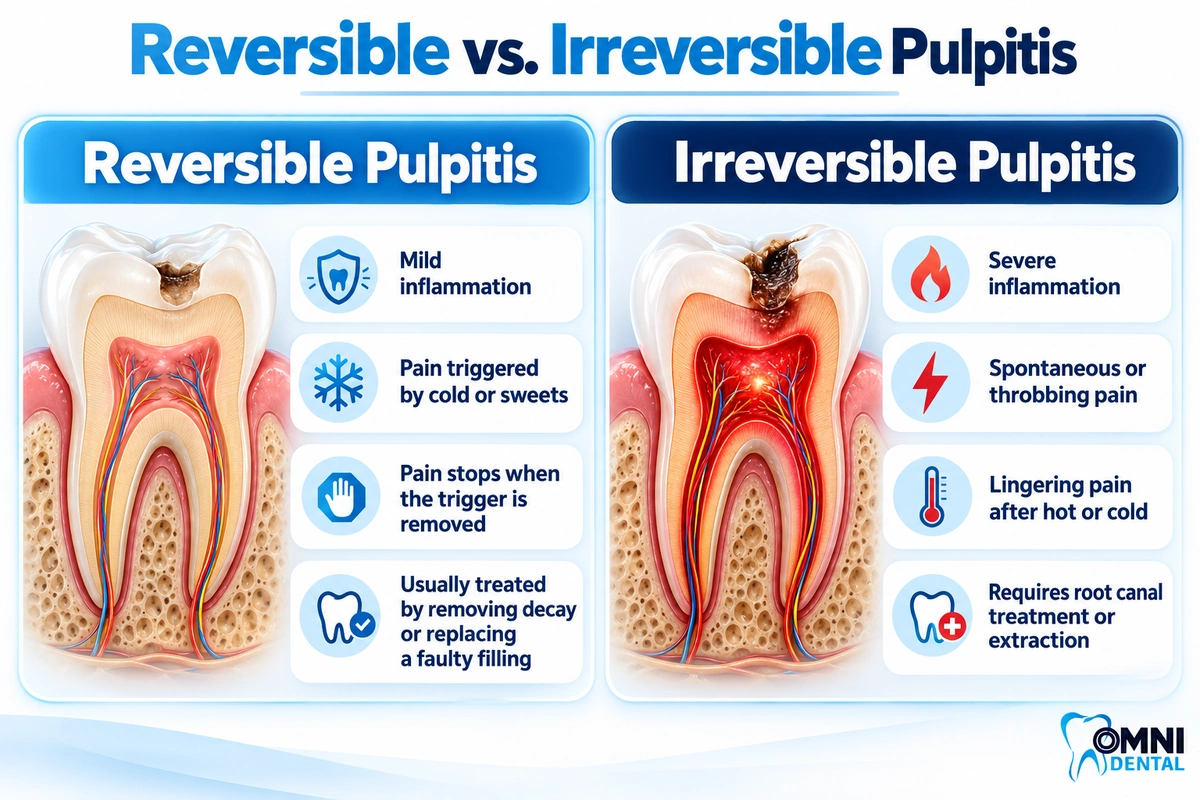
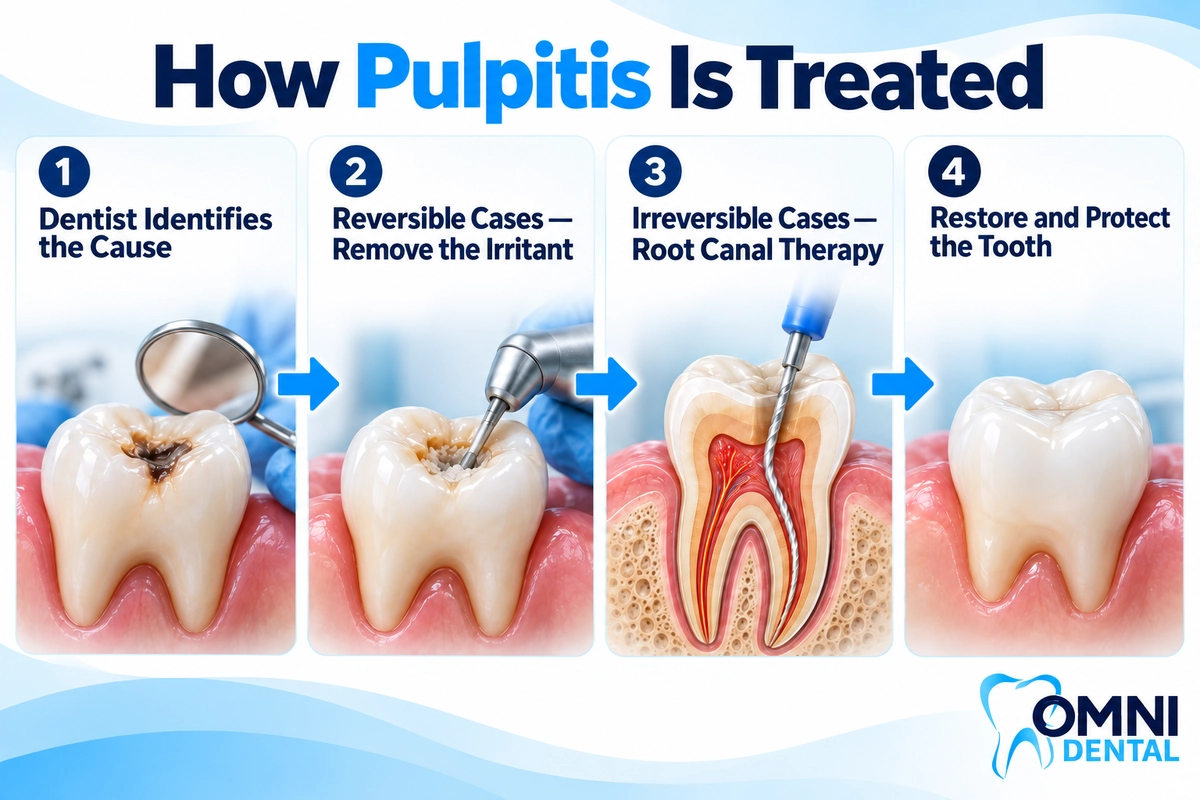
Reversible pulpitis represents mild inflammation; the pulp recovers once you remove the cause. You’ll notice cold sensitivity (pain subsides when stimulus stops) and sharp pain. Early decay or minor trauma trigger this type. Your dentist removes the irritant and lets the pulp heal naturally. Furthermore, a protective base under your filling shields the pulp from future irritation.
Irreversible Pulpitis
Irreversible pulpitis involves severe inflammation where the dying pulp cannot recover. You experience spontaneous, severe pain without any stimulus triggering it. Additionally, cold triggers intense, lingering pain that persists after the stimulus stops. The pulp has suffered permanent damage. In this case, only root canal treatment or extraction will resolve the problem. Left untreated, the infection spreads to surrounding bone and creates an abscess.
Symptoms of Pulpitis
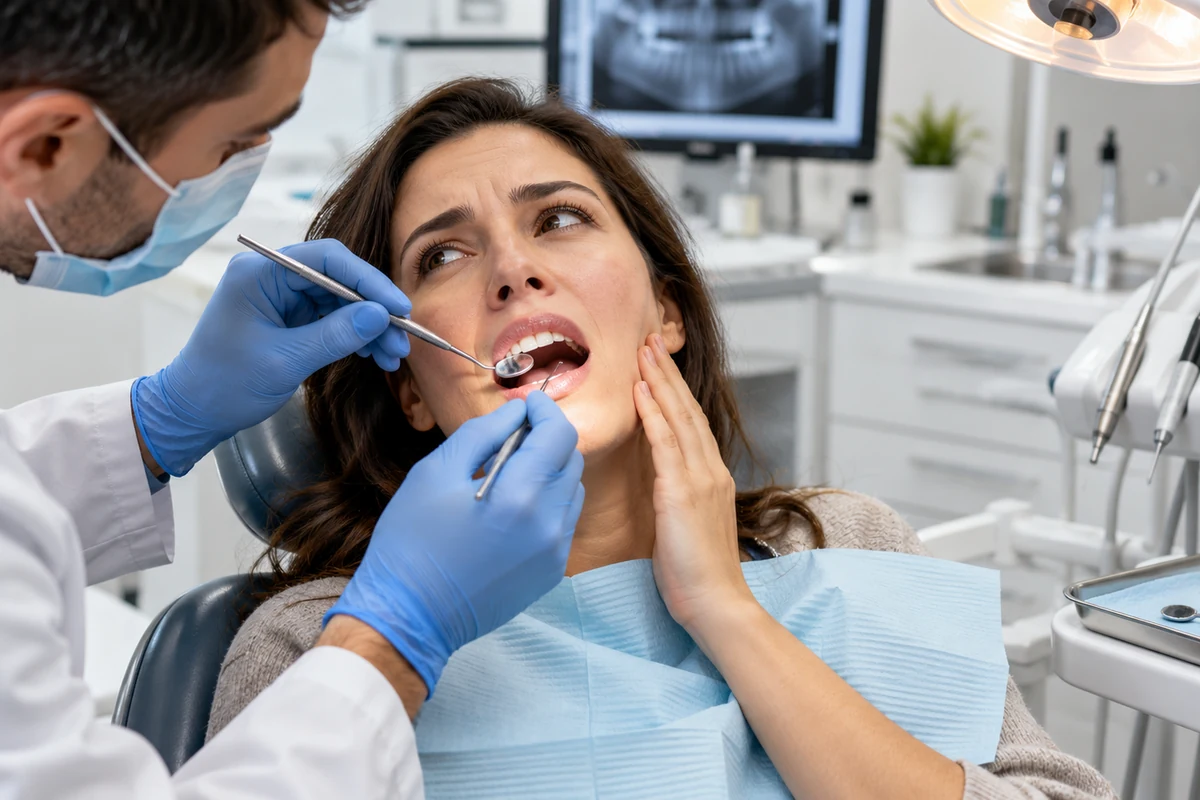
Sharp, localized tooth pain marks the primary symptom of pulpitis. Hot, cold, or sweet stimuli may trigger pain, or you might experience spontaneous pain without any obvious cause. If sensitivity persists after you remove the stimulus (especially cold), this suggests irreversible pulpitis. Furthermore, swelling in your gums or face near the affected tooth, along with fever, indicates infection spreading beyond the tooth. Additionally, discoloration or darkening of the tooth may signal pulp tissue death. Ultimately, if you experience severe, persistent tooth pain, contact your dentist immediately.
Treatment Options for Pulpitis
Reversible Pulpitis Treatment
Your dentist must eliminate the irritant causing inflammation. Specifically, if decay exists, your dentist removes it and places a new filling with a protective base. Similarly, if a faulty restoration irritates the pulp, your dentist replaces it. You should avoid thermal or chemical irritants during healing. Typically, reversible pulpitis resolves within weeks once your dentist eliminates the cause. As a result, your tooth remains vital and functional.
Irreversible Pulpitis Treatment: Root Canal Therapy
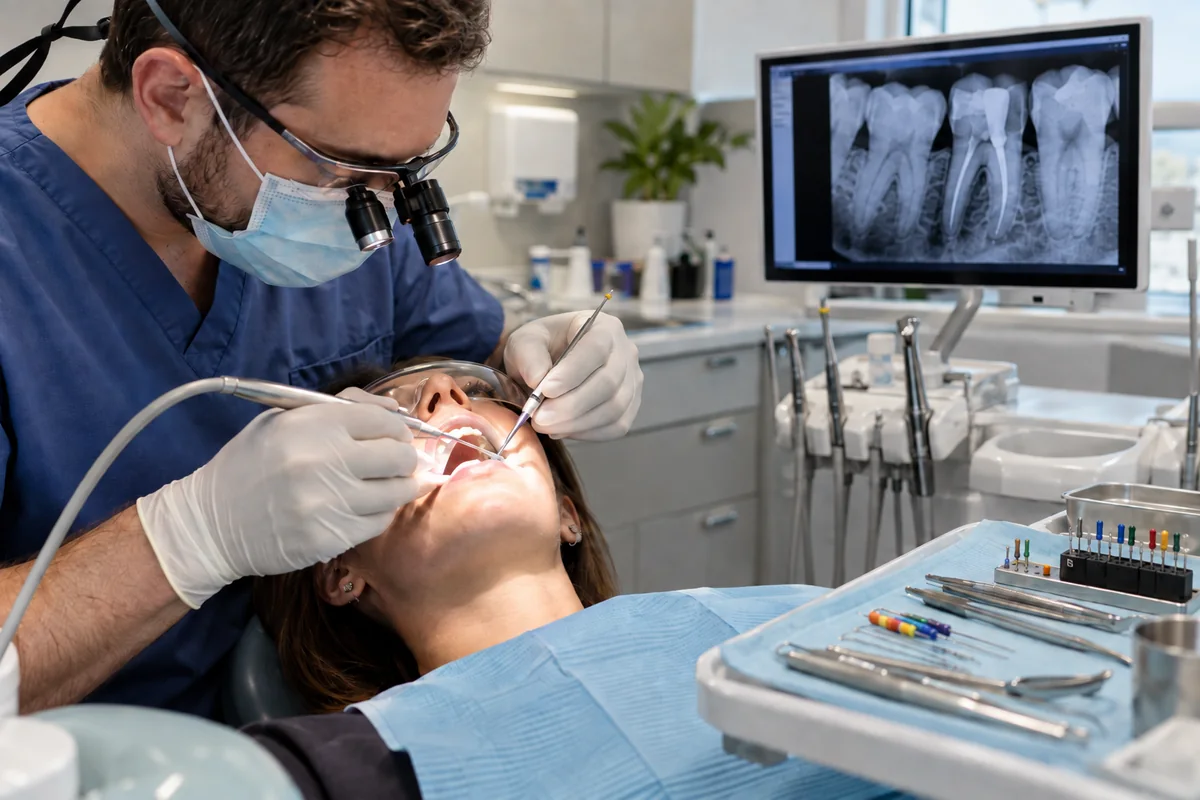
Root canal treatment (endodontic therapy) represents the gold standard for managing irreversible pulpitis. Your dentist removes the inflamed or infected pulp tissue, thoroughly cleans the root canal system, and seals it with an inert material called gutta-percha. Although the tooth remains in your mouth, it no longer contains vital tissue. This therapy stops pain and eliminates infection while preserving your tooth structure and function. Subsequently, a crown typically protects the treated tooth over the long term.
Tooth Extraction
Your dentist may recommend extraction if the tooth cannot be restored or you decline root canal treatment. However, tooth loss triggers other complications, shifting teeth, bite changes, and bone loss. For this reason, dentists prefer root canal therapy whenever possible to keep your natural tooth intact.
Why Antibiotics Cannot Cure Pulpitis
Antibiotics may reduce infection spreading beyond the tooth, but they cannot penetrate the sealed pulp chamber to reach infected pulp tissue effectively. Furthermore, antibiotics alone cannot eliminate dead or dying pulp tissue. Once pulpitis develops, antibiotics, without professional dental intervention, will not halt the infection. Only root canal treatment can resolve pulpitis caused by irreversible inflammation or infection.
Prevention
To prevent pulpitis, maintain excellent oral hygiene and limit sugar and acidic foods that promote decay. Additionally, wear a mouthguard during sports to shield your teeth from trauma. Moreover, treat cavities promptly before they penetrate the pulp. Furthermore, address tooth grinding with a night guard if you clench your teeth. Equally important, schedule regular dental checkups so your dentist catches problems early. Finally, if you injure a tooth, contact your dentist immediately, even if it appears fine on the surface.
Frequently Asked Questions
What is pulpitis?
Pulpitis describes inflammation of the dental pulp, the living tissue containing nerves and blood vessels inside your tooth. Bacteria from decay, trauma, or infection trigger it. Without treatment, pulpitis leads to tooth loss or serious infection spreading to your jaw. Essentially, two types exist: reversible pulpitis (mild inflammation where tissue can heal) and irreversible pulpitis (severe inflammation where tissue suffers permanent damage). Your dentist distinguishes between them based on your symptoms and specific tests.
What is the difference between reversible and irreversible pulpitis?
Reversible pulpitis involves mild inflammation, and the pulp can recover once you remove the irritant. Hot, cold, or sweet stimuli trigger pain, which subsides when you remove the stimulus. Your dentist treats this type by removing the cause (decay or a faulty filling). Importantly, your tooth remains vital and fully functional. In contrast, irreversible pulpitis represents severe inflammation where the dying or dead pulp cannot heal. You experience spontaneous and severe pain, even without any trigger. Additionally, cold causes intense, lingering pain that persists after the stimulus stops. At this stage, only root canal therapy or extraction can help. Ultimately, irreversible pulpitis signals that the pulp tissue has suffered permanent damage.
Will antibiotics cure pulpitis?
Antibiotics cannot cure pulpitis because they cannot penetrate the sealed tooth to reach infected pulp tissue. Although they may reduce surrounding infection, they cannot eliminate dead pulp. Only root canal treatment can address this problem. During this procedure, your dentist removes infected pulp, thoroughly cleans the root canal system, and seals it completely. Ultimately, this is the only treatment that eliminates pulpitis and stops your pain. Dentists may prescribe antibiotics to manage systemic infection, but they never serve as a substitute for professional dental treatment.
Experiencing tooth pain?
Contact our Arlington Heights dentists immediately if you have severe tooth pain. Early treatment can save your tooth and prevent serious complications from pulpitis.

About the author
Dr. Bilus D PolesDDS,MAGD,DICOI, DIDIA
Founder and lead dentist of Omni Dental of Arlington Heights. Master of the Academy of General Dentistry and Board Certified Diplomate of the ICOI and IDIA. Illinois license #019.027365.