Root Canal in Arlington Heights
Root canal treatment in Arlington Heights for an aching or infected tooth you would rather keep. Dr. Bilus D Poles DDS,MAGD,DICOI, DIDIA, examines your tooth and explains every step first.
5.0 on Google · 541 reviews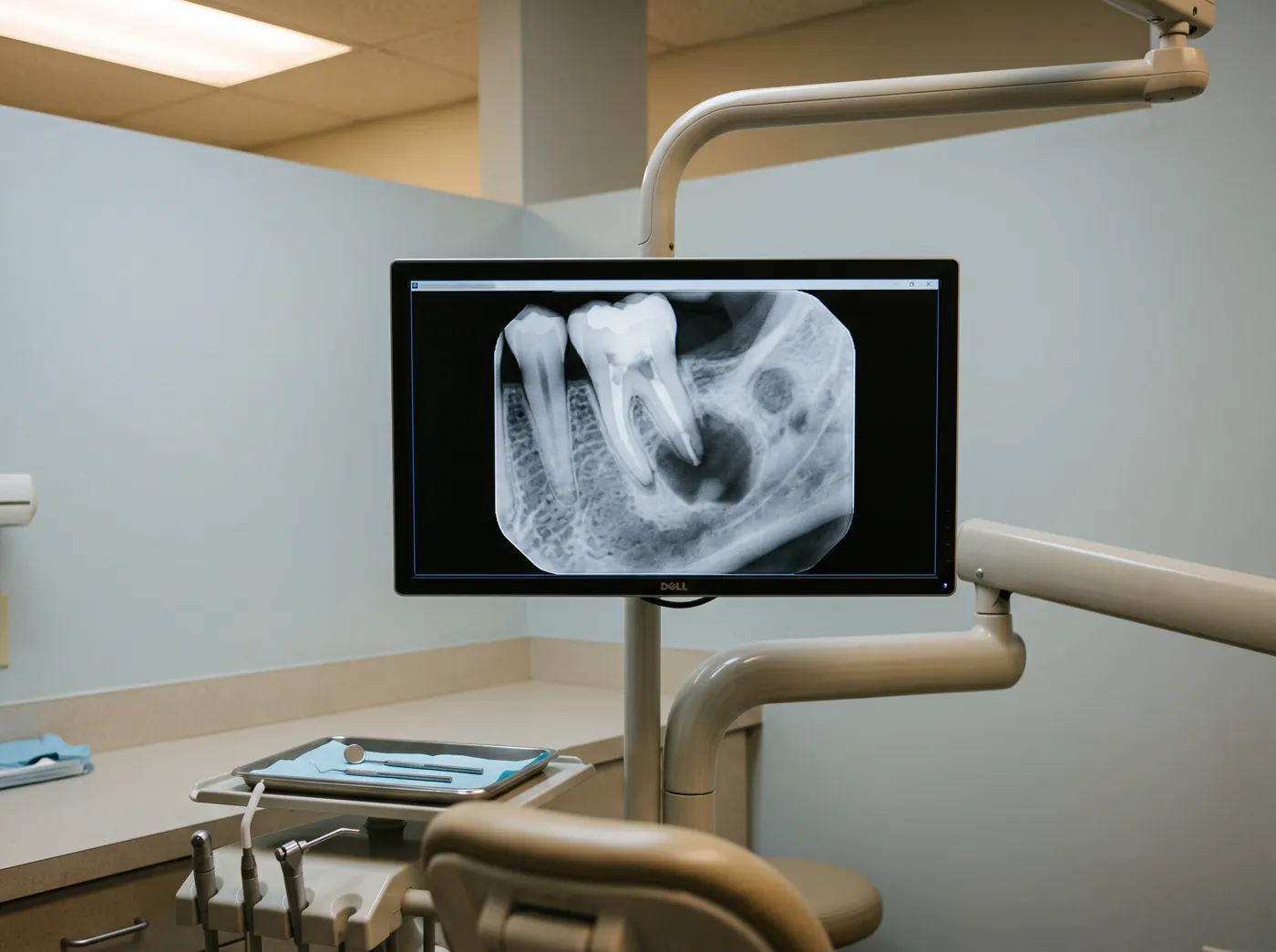
- 5.0Google rating
- 541Google reviews
- 2,500+Hours of continuing education
- 2Dental degrees (DDS)
- MAGD: Master of the Academy of General Dentistry
- ICOI and IDIA Board Certified Diplomate
- Most major dental plans accepted
A root canal treats an infected or inflamed nerve inside a tooth, so you can keep the tooth. The tooth is numbed, the damaged pulp is removed, and the canals are cleaned, sealed and protected with a filling or crown. Omni Dental offers root canal treatment in Arlington Heights, planned by Dr. Poles.
What is a root canal?
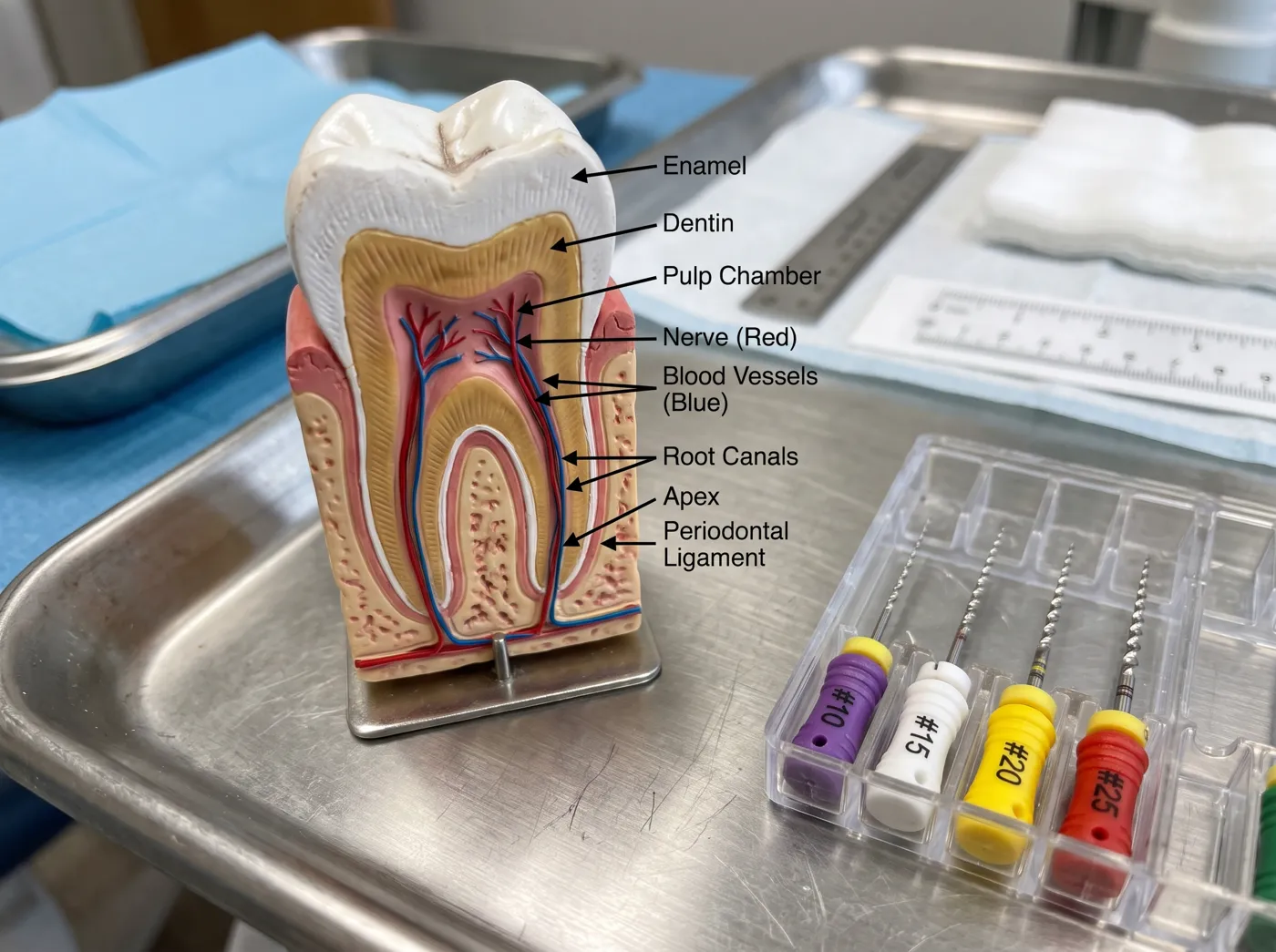
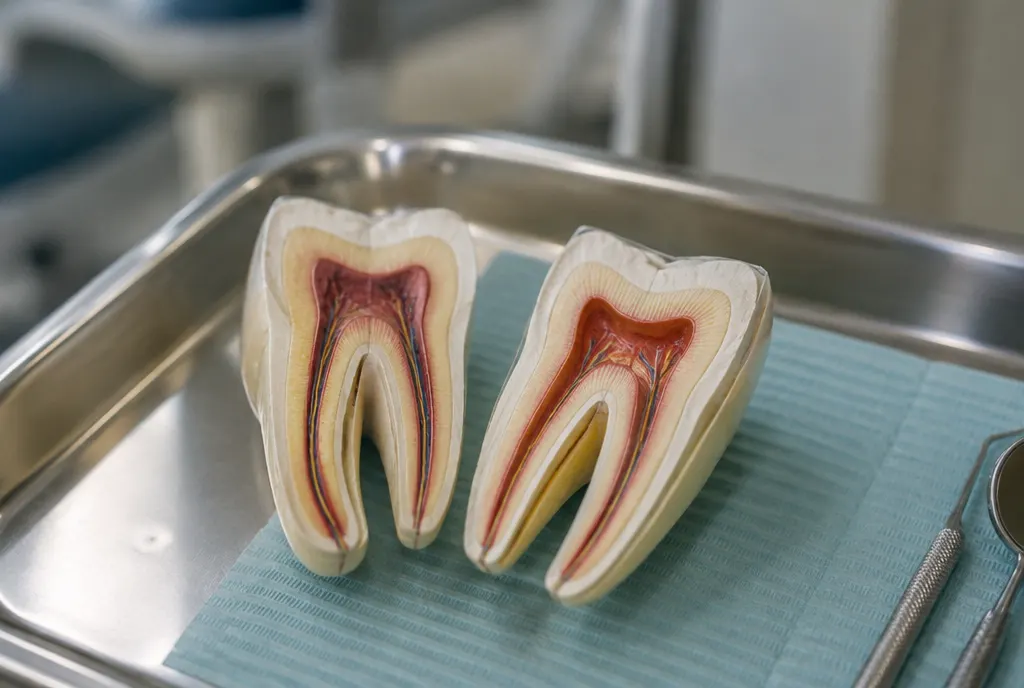
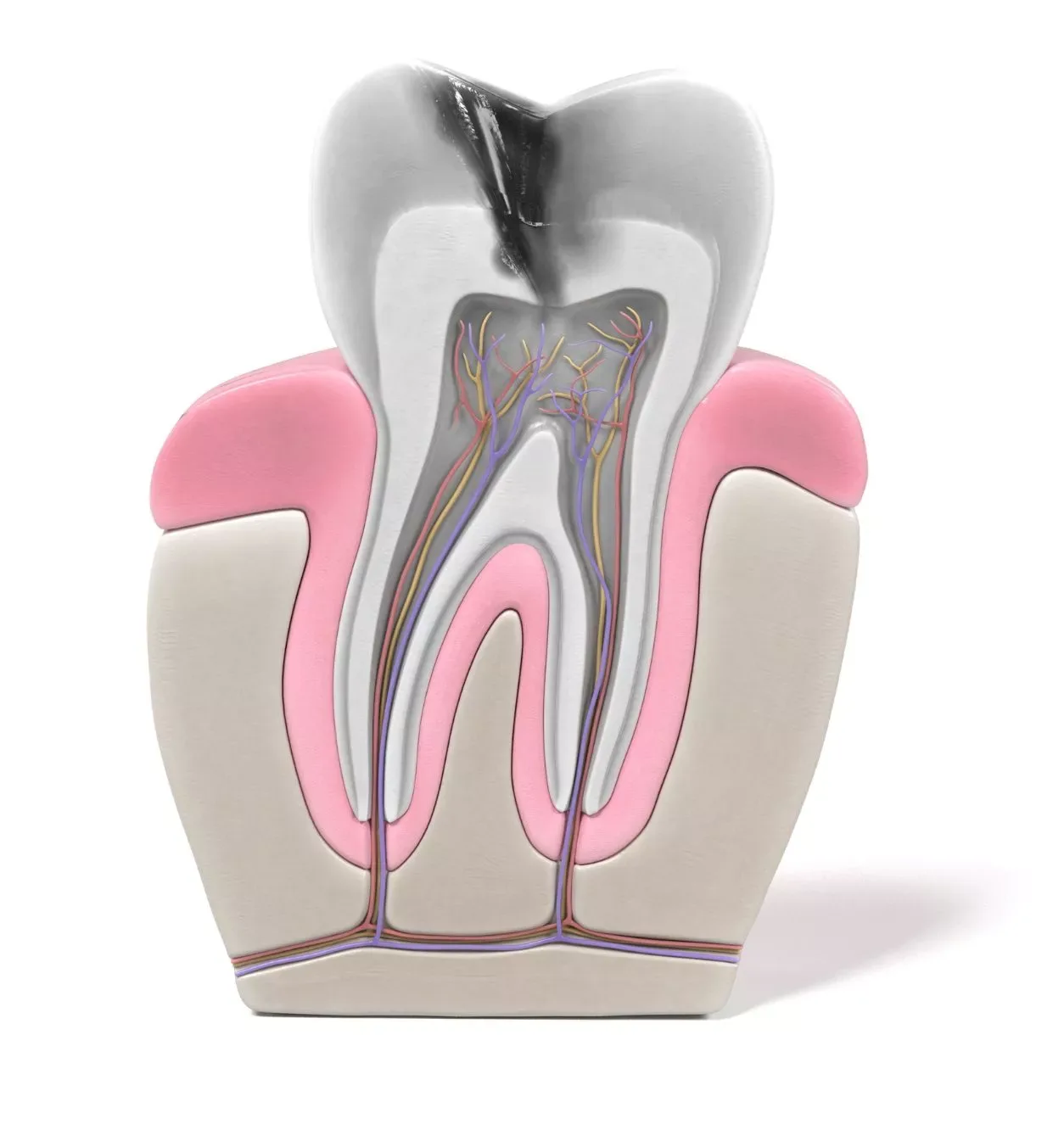
Inside every tooth is a soft core called the pulp. It holds nerves and blood vessels and runs down thin channels in the roots, called root canals.
Deep decay, a crack or an injury can let bacteria reach the pulp. The pulp then becomes inflamed or infected and cannot heal on its own. A dental root canal removes it, disinfects the space and seals it, so the tooth stays in your mouth and keeps working.
Signs you may need a root canal
Some infected teeth hurt a lot. Others give few warnings. Common signs include:
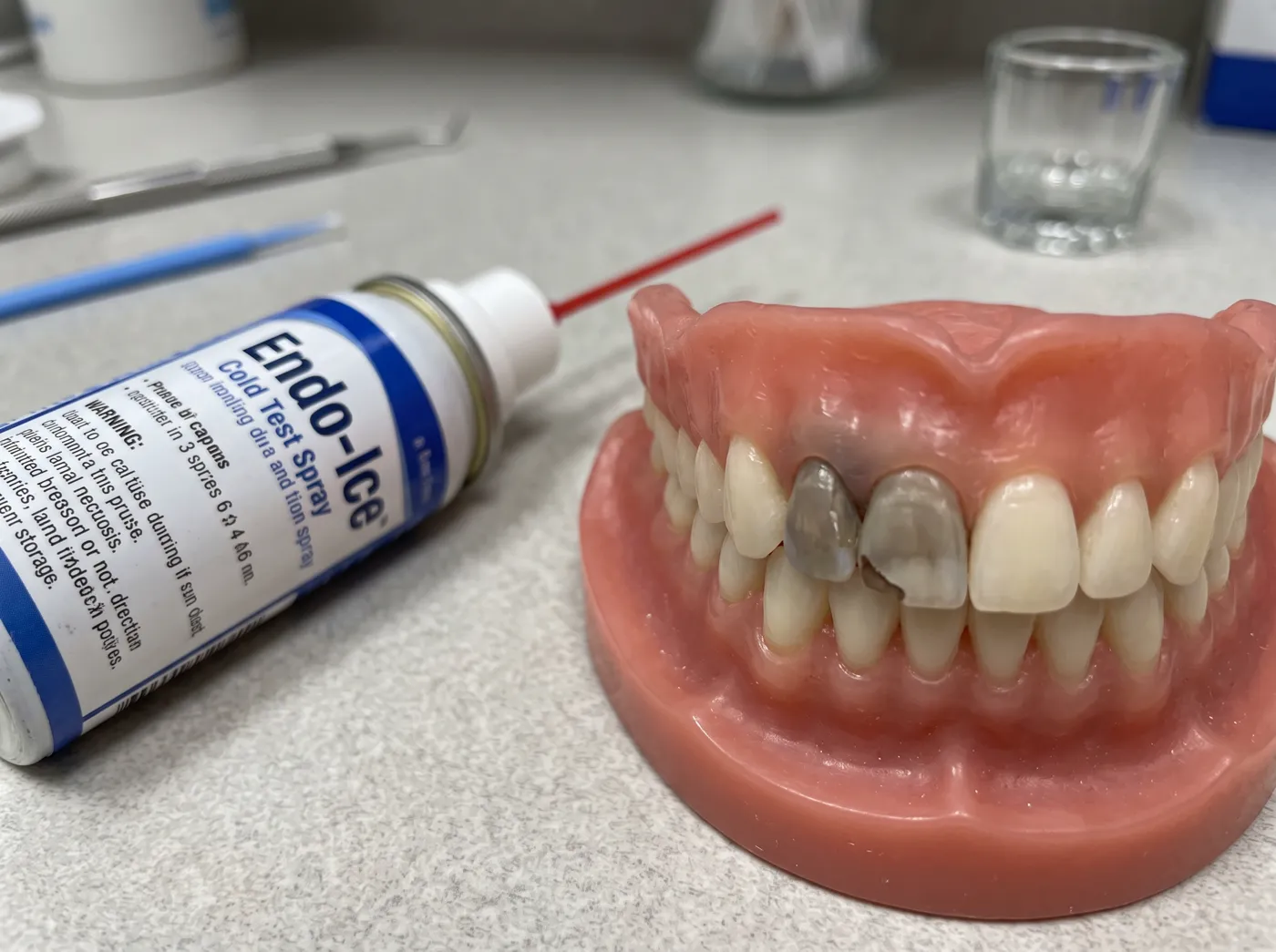
- Lingering pain after hot or cold that lasts after the food or drink is gone
- Throbbing or deep pain, especially when you bite or lie down
- A swollen or tender gum near one tooth, sometimes with a small bump like a pimple
- A tooth that has turned darker than its neighbors
- Pain that suddenly stops, which can mean the nerve has died while infection remains
Only an exam and X-ray can confirm it. If you notice any of these, call (847) 483-8833 so the tooth can be checked before the infection spreads.
Severe pain or swelling? Read our guide to urgent dental care for what to do first.
The root canal procedure, step by step
Most root canals take one or two visits. Knowing the tooth root canal process ahead of time takes much of the worry out of it.
The four main stages are shown on this page. A few details help you know what happens in the chair:
- Isolation. A thin rubber sheet keeps the tooth clean and dry.
- Cleaning the canals. A small opening is made in the top of the tooth, and the canals are shaped and rinsed.
- Sealing. The clean canals are filled with a rubber-like material and sealed to keep bacteria out.
- Restoring the tooth. A temporary or final filling closes the opening. Many back teeth then need a crown to protect them.
Root canal or extraction: how do they compare?
When a tooth is infected, there are usually two choices. You can save it with a root canal, or you can remove it.
| Root canal treatment | Extraction | |
|---|---|---|
| Your natural tooth | Kept in place | Removed |
| Chewing and bite | Works like a normal tooth once restored | Nearby teeth can drift unless the gap is filled |
| Jaw bone | The root keeps supporting the bone | Bone in the gap can shrink over time |
| Next step | Usually a filling or crown | An implant, bridge or denture, or leaving the gap |
| Visits | Often one or two, plus the crown | One for removal, more to replace the tooth |
Saving the tooth is usually the first goal, because a natural tooth protects your bite and your oral health. Some teeth cannot be saved, for example when a crack runs below the gum. In that case you will hear what removing the tooth involves before you decide.
Dr. Poles also places and restores dental implants, so he can lay out both paths for your tooth.
Why many teeth need a crown after a root canal
A tooth that needs a root canal has often lost a lot of structure to decay, old fillings or a crack. Back teeth carry heavy chewing forces. Without the pulp, they can become more brittle.
A crown covers the tooth and lowers the chance of it breaking later. Front teeth with little damage can often be restored with a filling alone.
Your exam shows which one your tooth needs. Our guide to root canal cost explains how both parts are priced.
Does a root canal hurt?
The pain people fear usually comes from the infection, not the treatment.
Nervous? Tell us at the start. We explain each step as we go, and you can ask for a break at any time.

Recovery after root canal treatment
Most people go back to their normal day after a root canal. Expect some tenderness when you bite for a few days while the area settles.
- Wait for the numbness to wear off before you eat.
- Chew on the other side until your final filling or crown is in place.
- Keep brushing and flossing as usual.
- Call the office if swelling grows, pain gets worse after a few days, or your bite feels off.
Dr. Poles gives you instructions for your own case, including what to take for discomfort.
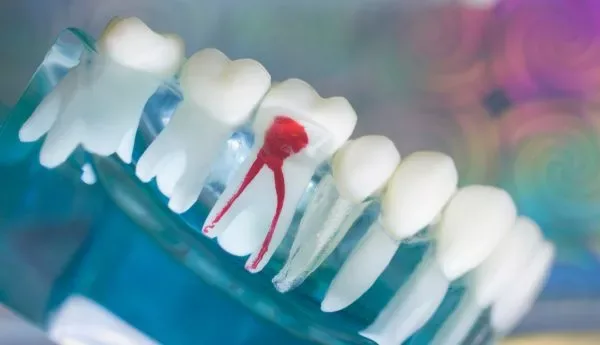
Root canal treatment at our Arlington Heights office
At Omni Dental, Dr. Poles examines your tooth and plans your treatment. He is a Master and Fellow of the Academy of General Dentistry with more than 2,500 hours of continuing education.
Some teeth have very complex root shapes that are better treated by an endodontist. If yours is one of them, you will hear why before any work starts.
Coming in for the first time? Here is what your first visit looks like.

Meet your dentist
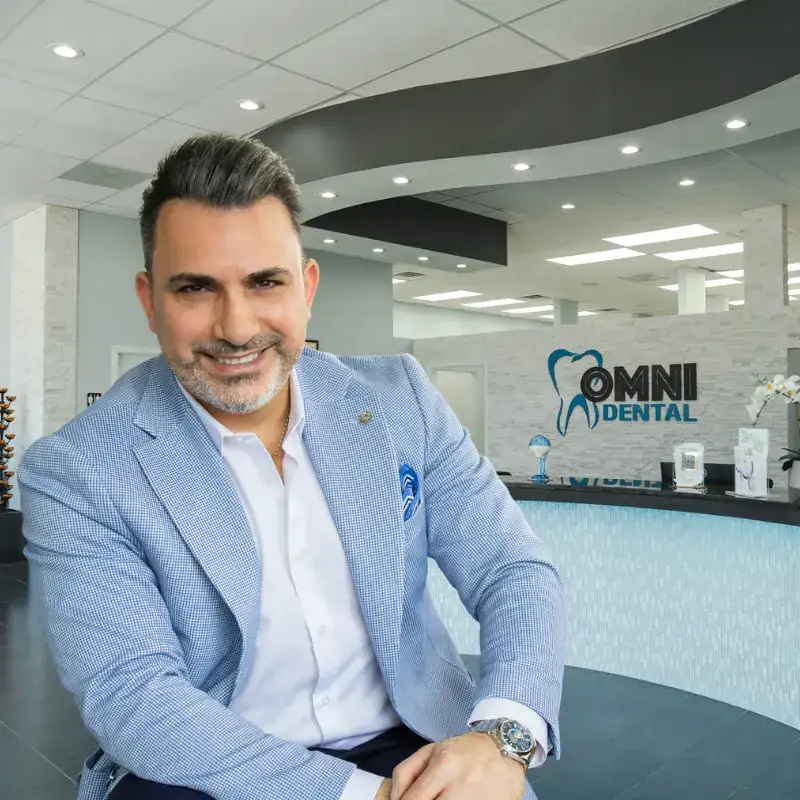
Dr. Bilus D PolesDDS,MAGD,DICOI, DIDIA
Every treatment plan at Omni Dental is led by Dr. Poles, from checkups and cleanings to full-arch implant care.
- MAGDMaster of the Academy of General Dentistry
- ICOIBoard Certified Diplomate, Implantology
- IDIABoard Certified Diplomate, Implants
- LaserCertificate in Dental Laser Surgery
- Illinois license #019.027365
Your options
What are your options for an infected tooth?
Dr. Poles walks you through each path so you can choose with the full picture.
Root canal treatment
Removes the infected pulp and seals the roots so you keep your natural tooth.
Crown after treatment
Covers and strengthens a back tooth after a root canal so it can handle chewing again.
Extraction
Removes a tooth that cannot be saved, with a plan for the gap before it comes out.
Implant replacement
If the tooth is removed, a dental implant can replace it without reshaping nearby teeth.
Step by step
How root canal care works at Omni Dental
- 1
Call about your tooth
Call (847) 483-8833 and describe the pain, swelling or sensitivity you notice.
- 2
Exam and X-ray
Dr. Poles checks whether the pulp is infected and whether the tooth can be saved.
- 3
Root canal treatment
The tooth is numbed, cleaned inside, sealed and closed with a filling.
- 4
Crown and follow-up
A crown is placed when the tooth needs one, and we check that the area has settled.
Smile gallery
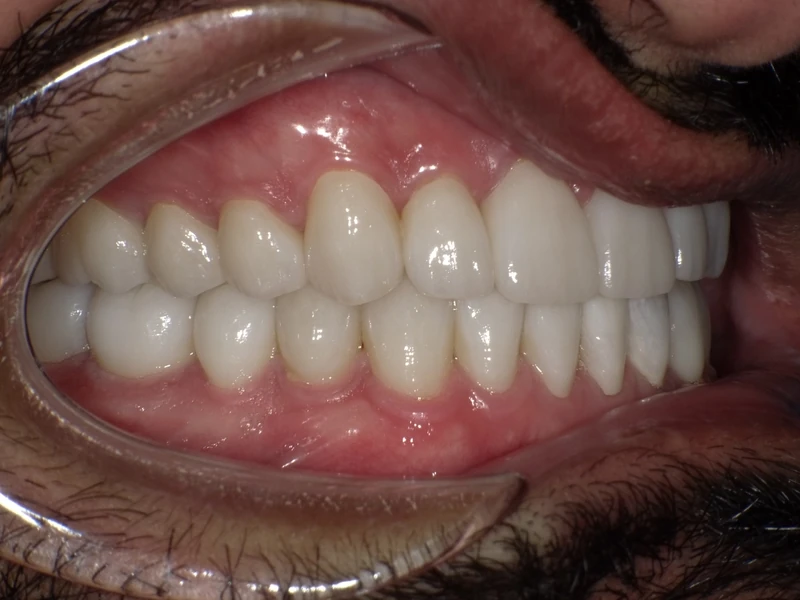
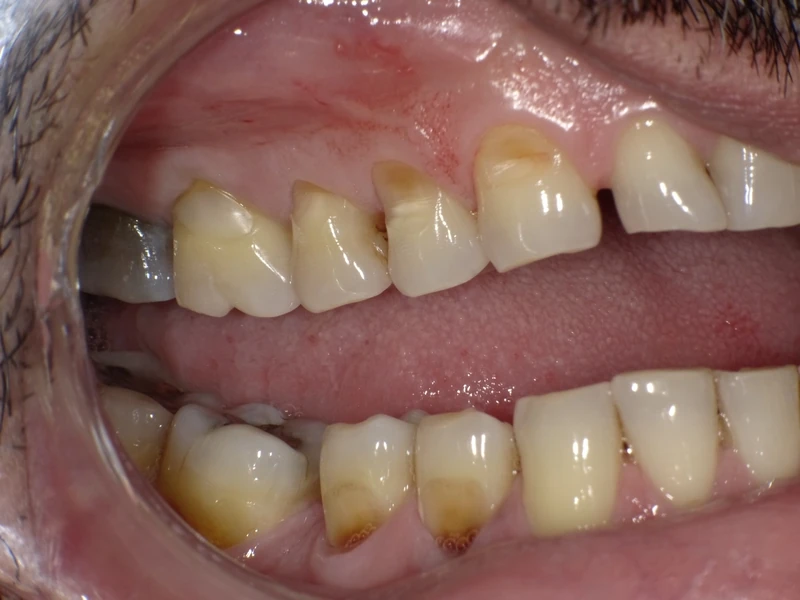
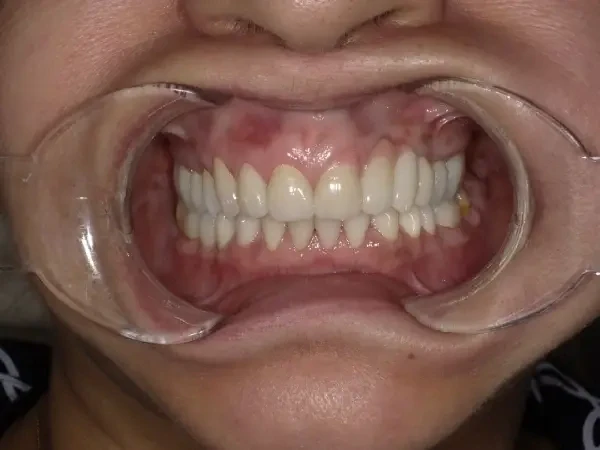
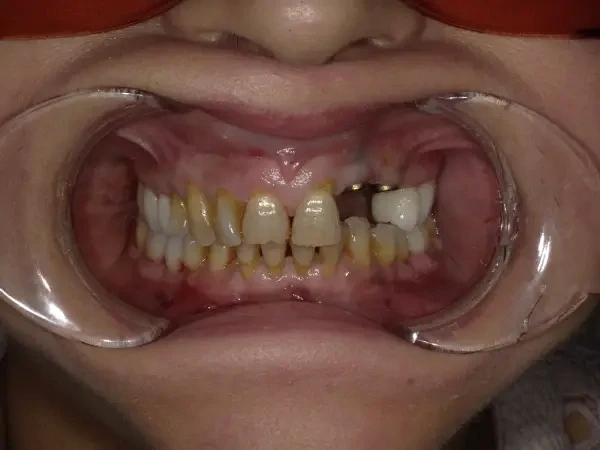
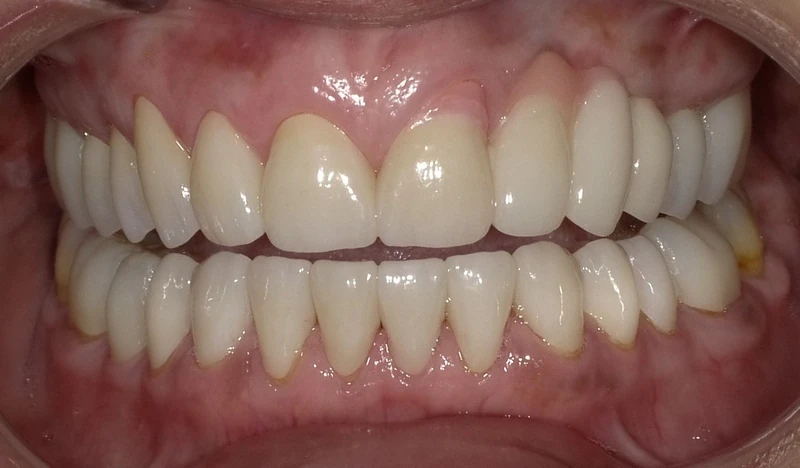
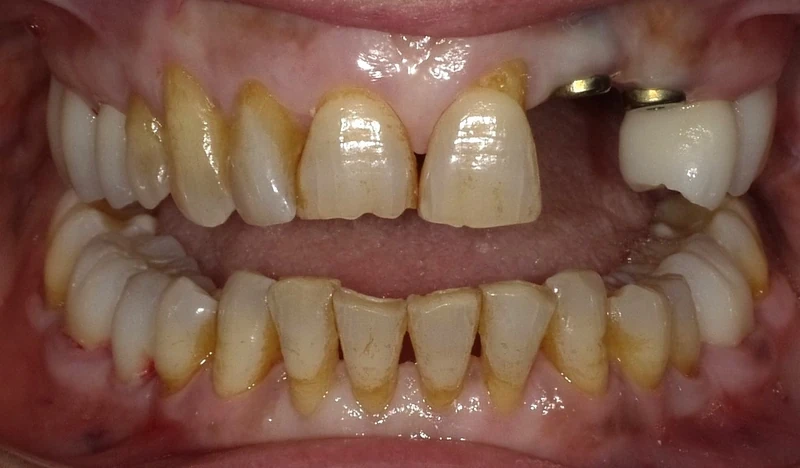
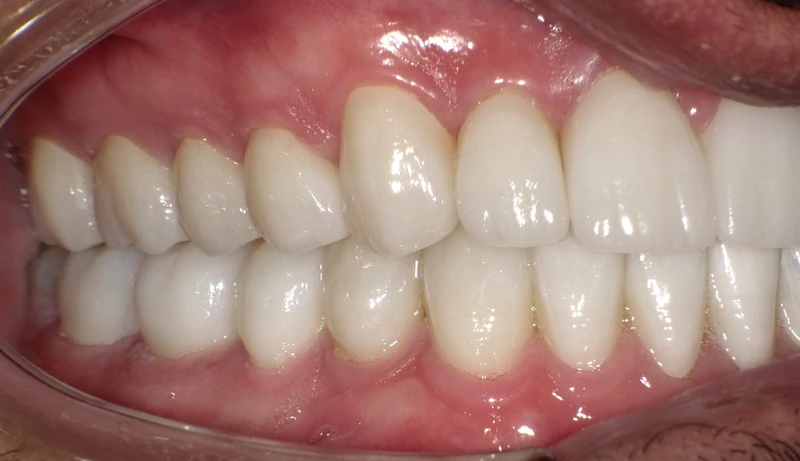
Real smiles from our office
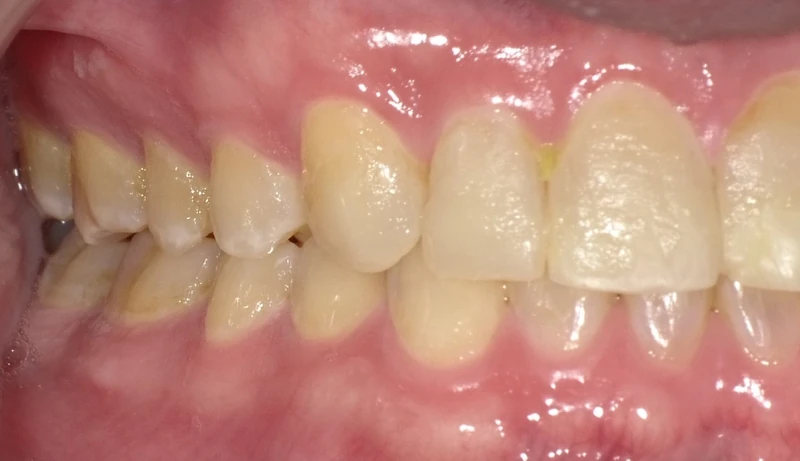
Drag the handle to compare. Every photo shows a real Omni Dental patient.
Trusted and recognized
Affiliated with leading dental organizations
Dr. Poles is a member of leading dental associations and has completed more than 2,500 hours of continuing education.








Proud member of our local chambers of commerce
Insurance
We accept most major dental plans
We accept most major dental plans, including Aetna, BlueCross BlueShield, Cigna, Delta Dental and MetLife. Bring your insurance card and we will check your benefits before treatment starts.
Not sure about your plan? Call (847) 483-8833 and our front desk will look it up with you.





- + most other major dental plans
Google reviews
Rated 5.0 on Google
Real words from real patients. Omni Dental holds a 5.0 rating from 541 reviews on Google.
- Katherine BastermajianMay 20, 2026★★★★★
He’s fabulous. Extremely nice and professional.
- AshtarMay 6, 2026★★★★★
I had a really great experience at Omni Dental! Everyone was so friendly and welcoming and the office was super clean and organized. Dr.Bilus is very honest and explained everything clearly without pushing unnecessary work. You can tell they genuinely care about their patients. Definitely recommend if you’re looking for a good dentist!!!
- George BitarMay 4, 2026★★★★★
The experience was amazing. I came in for a crown and I did not feel a thing. The process from beginning to end was the easiest process and I highly recommend Omni and Dr Poles. Thank you for everything
- SuNnY Mad1omApril 30, 2026★★★★★
Very careful with teeth and they treat you very nicely
- Rami LilouApril 30, 2026★★★★★
Been going to this doctor since I was 5, even at his old office, amazing and smooth experience everytime
- Jorge MendezApril 30, 2026★★★★★
Mayra and Atziri are very helpful with insurance. Isabel and Maribel are great assistants.
- Andrea ArroyoApril 30, 2026★★★★★
Such a mellow and genuine office and staff. Dr poles is genuinely honest and tells things like they are. Mayra at the front was such a sweet person and perfect customer service. Definitely found my dentist
- JessicaApril 28, 2026★★★★★
I had a great experience here ,all the staff is super friendly and great doctor :)
- Carlos Enrique Rodríguez SantanaApril 25, 2026★★★★★
Me fue muy bien con mis brakets muy buena atención muy atentos recomendado
Patient video testimonials
Real patients. Real stories.
Hear how patients feel about their care at Omni Dental, in their own words.
-
Joseph L.Joseph shares his experience with Dr. Bilus Poles
-
Asja S.Asja's patient experience at Omni Dental
-
Ramsen S.Why I keep coming back to Omni Dental
-
Lisa K.Lisa shares her experience with Dr. Bilus Poles
-
Sarah A.Outstanding dental care at Omni Dental
What does a root canal cost?
The price depends on the tooth, the number of canals and the final restoration.
What changes the price
Front, premolar or molar tooth, the number of canals, and whether you need a crown afterward.
Insurance accepted
We accept most major dental plans, including Aetna, BlueCross BlueShield, Cigna, Delta Dental and MetLife.
Areas we serve
Close to home in the northwest suburbs
Our one office at 305 E. Rand Road in Arlington Heights sees patients from these nearby cities.
- Arlington Heights
- Schaumburg
- Buffalo Grove
- Palatine
- Mount Prospect
- Des Plaines
- Rolling Meadows
- Dental implants in Hoffman Estates
- Sleep apnea care in Elk Grove Village
All 58 communities we serve
Prospect Heights · Wheeling · Northbrook · Deerfield · Park Ridge · Bensenville · Glenview · Niles · Bloomingdale · Hanover Park · Morton Grove · Addison · Highland Park · Franklin Park · Mundelein · Bartlett · Elmhurst · Skokie · Wilmette · Libertyville · Villa Park · Lake Forest · Carpentersville · Carol Stream · Elmwood Park · Lombard · Melrose Park · Bellwood · Glen Ellyn · Evanston · Cary · Elgin · Maywood · Wheaton · Algonquin · Lincoln Square · Rogers Park · Westchester · Avondale · Oak Park · South Elgin · North Chicago · Grayslake · West Chicago · Uptown · Berwyn · Brookfield · Downers Grove · Gurnee
Questions
Frequently asked questions
Do not see your question? Call us and we will talk it through.
Call (847) 483-8833How long does a root canal take?
Many root canals take one visit, often around an hour or a little longer. Molars with several canals, or teeth with a lot of infection, may need two visits. A crown, if your tooth needs one, is usually placed at a later appointment.
Is a root canal painful?
The tooth is fully numbed, so treatment usually feels much like a filling. If you still feel sharp sensations during treatment, tell Dr. Poles, and more numbing can usually be given.
What type of doctor do I need for a root canal?
Many root canals are done by general dentists. Dr. Poles is a general dentist and a Master of the Academy of General Dentistry. An endodontist is a dentist who focuses on root canals and handles some very complex cases. After your X-ray, Dr. Poles tells you plainly which one your tooth needs.
Do I always need a crown after a root canal?
Not always. Back teeth that carry heavy chewing forces usually need a crown to lower the chance of cracks. A front tooth with little damage may only need a filling. Dr. Poles decides based on how much healthy tooth remains.
What happens if I skip a root canal?
An infected pulp does not heal on its own. The infection can spread into the bone, form an abscess and cause swelling, and the tooth may eventually be lost. Pain may come and go, but the infection usually stays until it is treated.
How do I choose a dentist for a root canal?
Ask who does the treatment, how they decide between saving and removing the tooth, and whether they refer complex cases. Look at training and reviews too. Dr. Poles holds a Master of the Academy of General Dentistry, and Omni Dental is rated 5.0 on Google from 541 reviews.