
The benefits of routine dental x-rays start with spotting hidden decay, bone loss, and infections a visual exam misses. Catching these early usually means simpler, less expensive treatment. Modern digital x-rays use very low radiation, and how often you need them depends on your personal risk.
Key Takeaways
- Routine dental x-rays catch decay, bone loss, and other dental disease long before a visual exam can spot it.
- A single dental x-ray delivers less radiation than a single day of natural background radiation.
- The American Dental Association updated its guidance in 2024: lead aprons and thyroid collars are no longer recommended for dental x-rays.
- How often you need x-rays depends on your individual risk for dental disease, not a fixed yearly schedule.
Estimated read time: 5 minutes
What Routine Dental X-rays Actually Show
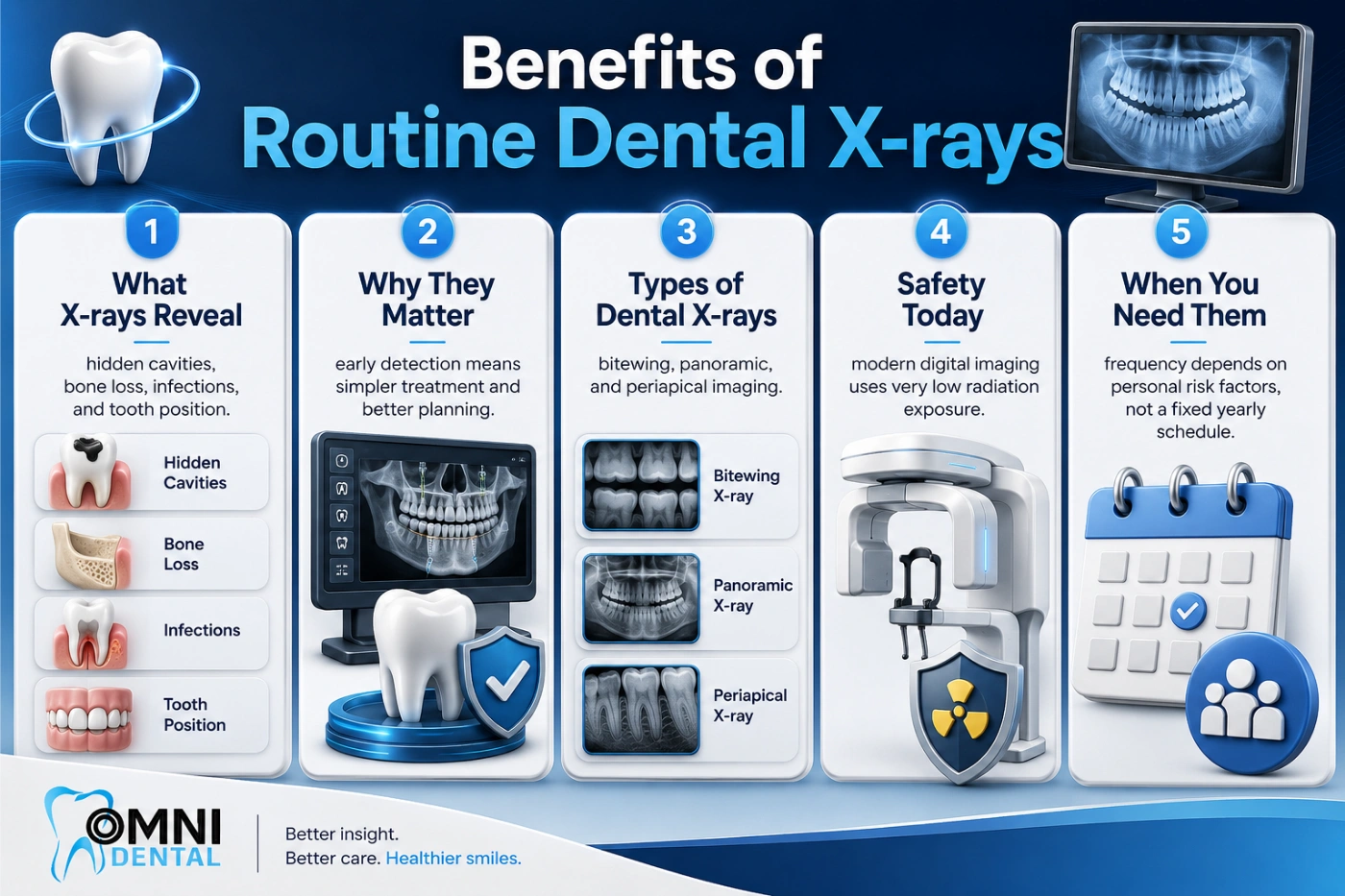
A visual exam only shows the surface of a tooth. X-ray imaging shows what’s happening underneath. That includes decay between teeth, bone loss around the roots, infections, and the position of teeth that haven’t erupted yet, like wisdom teeth.
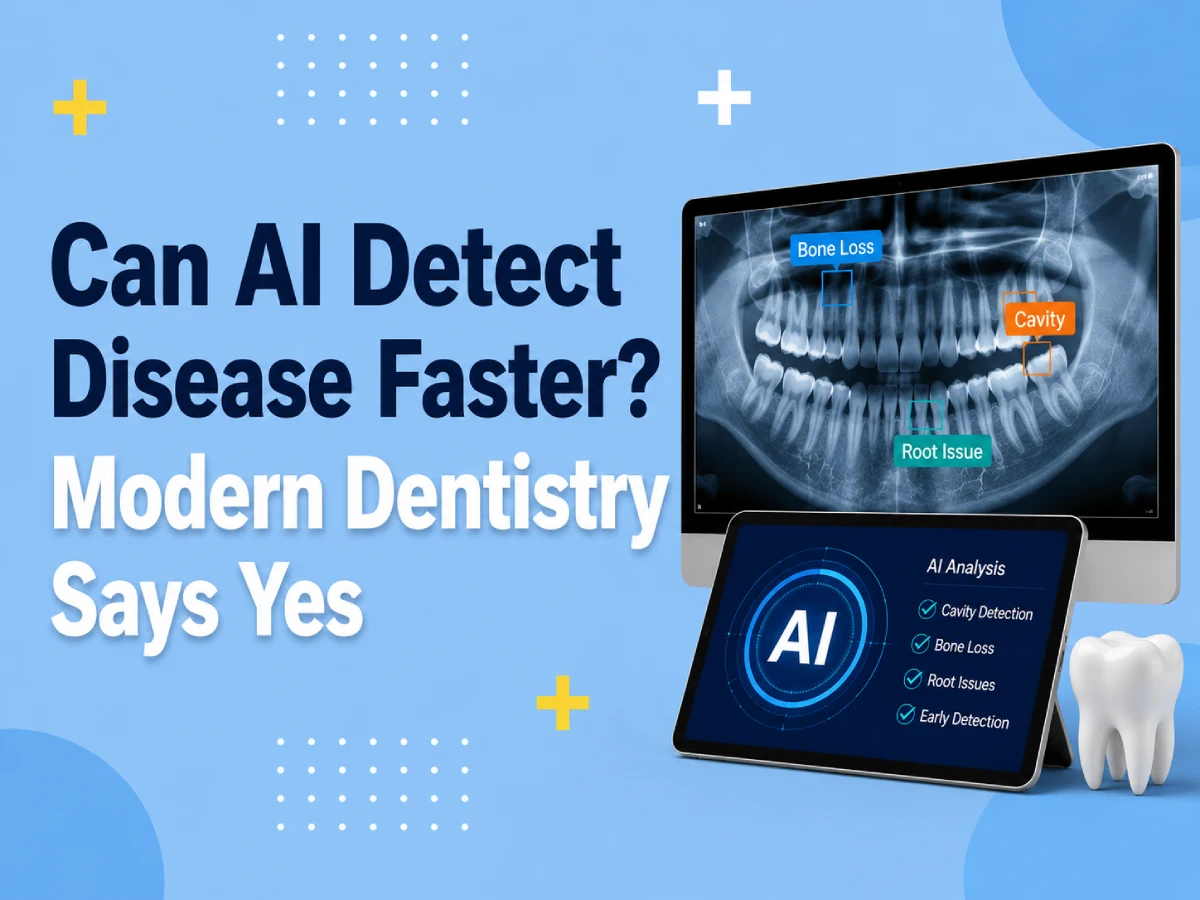
Dental professionals use a few different types of dental x-rays depending on what they need to see. Bitewing x-rays check for decay between back teeth. Panoramic x-rays capture the entire jaw in one image, which is useful for wisdom teeth and jaw joint issues. Periapical x-rays focus on a single tooth, root to crown, when something specific needs a closer look.
Benefits of Routine Dental X-rays for Long Term Oral Health
The biggest benefit of routine dental x-rays is catching problems while they’re still small, which usually means simpler, less expensive treatment. Cavities forming between teeth, bone loss from gum disease, and cysts or infections near the root often show no visible symptoms at first. They can progress significantly before you ever feel anything.
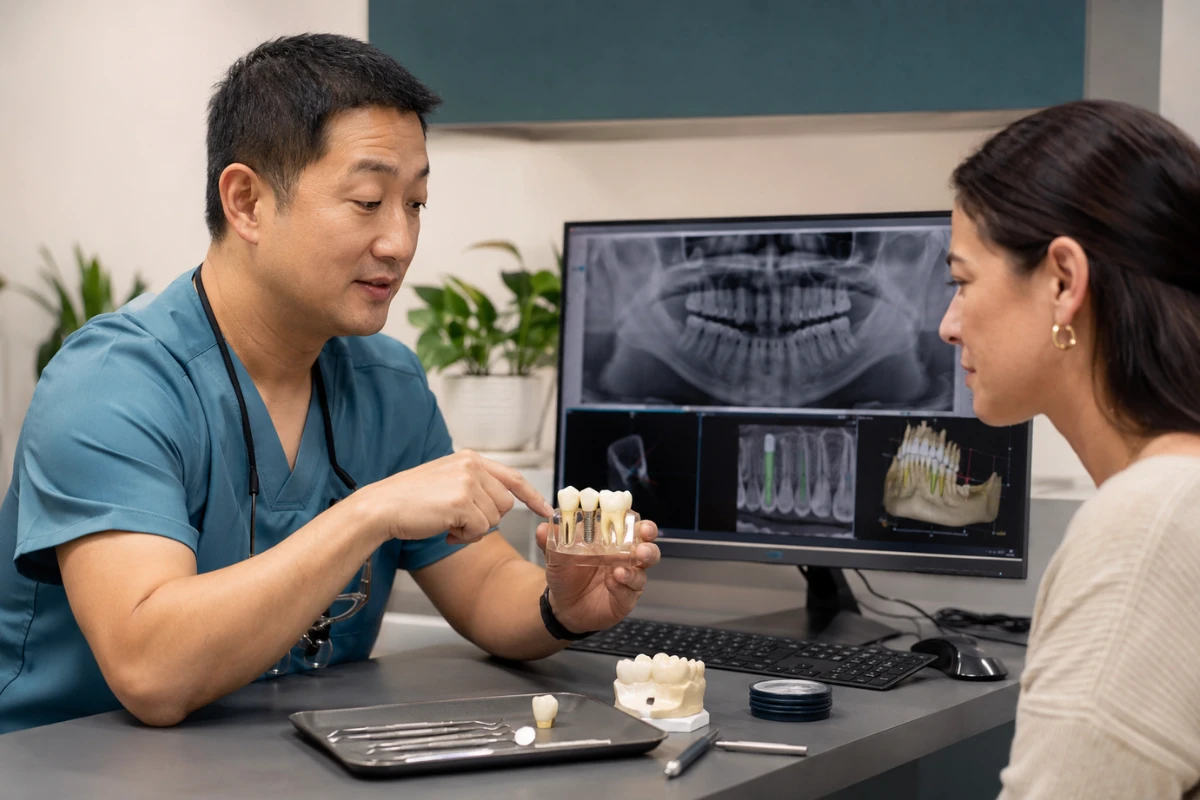
X-rays also support treatment planning. Before a crown, implant, or extraction, your dentist needs an accurate picture of bone structure and tooth position. A visual exam simply can’t provide that. Comparing x-rays over time also lets your dentist monitor tooth changes year to year. That catches gradual shifts that would otherwise go unnoticed.
| Type of Dental X-ray | What It Shows | Common Use |
|---|---|---|
| Bitewing X-rays | Decay between teeth and changes in bone levels around teeth. | Detecting cavities that are not visible during a regular exam. |
| Panoramic X-rays | A wide view of the entire jaw, teeth, and surrounding structures. | Evaluating wisdom teeth, jaw conditions, and overall dental structure. |
| Periapical X-rays | A detailed image of one tooth from the crown to the root. | Checking infections, root problems, and specific dental concerns. |
| Digital Dental X-rays | High-quality images created with modern digital technology. | Monitoring oral health changes while using lower radiation levels. |
Are Dental X-rays Safe?
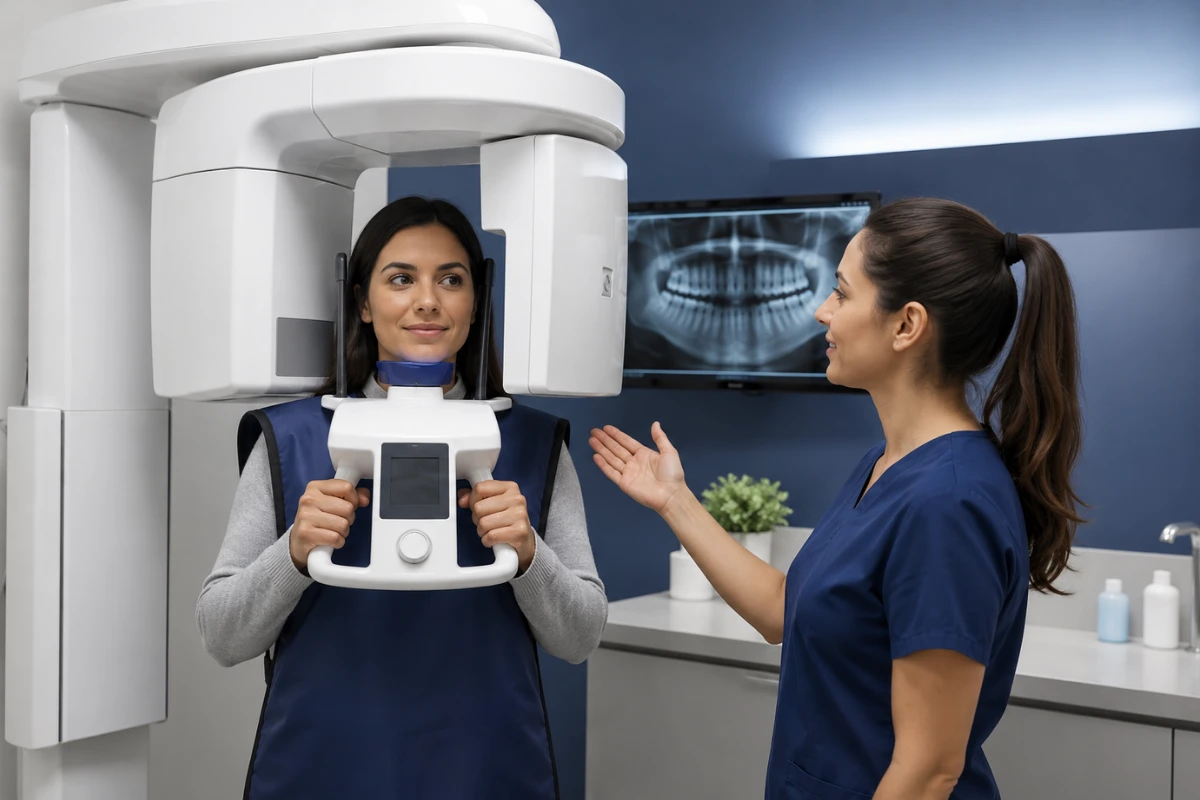
Yes. Modern digital dental x-rays use far lower radiation levels than older film-based equipment. The radiation dose from a single x-ray typically falls below what a person absorbs in a single day from natural background radiation. That’s the low-level exposure everyone gets simply from being alive on Earth.
Radiation safety in dental offices has also evolved. For years, lead aprons and thyroid collars were standard. In 2024, the American Dental Association updated its recommendations. Thyroid collars and lead aprons are no longer recommended for any dental imaging, including for children and pregnant patients. The panel found that modern equipment and precise beam targeting protect patients more effectively. Aprons and collars can actually block the beam and require a retake, adding unnecessary exposure rather than reducing it.
If your dental office still uses a leaded apron, that’s not a safety concern. It simply reflects a transition period as practices update their protocols to match the newest guidance.
How Often Do You Actually Need Dental X-rays?
There’s no single universal schedule for routine dental x-rays. Your dentist bases the interval on your personal risk for dental disease. Factors like your cavity history, gum health, and any ongoing treatment all play a role. Lower-risk patients may go a year or two between x-rays. Patients with a history of decay or gum disease may need them more often.
Our guide to AI x-ray technology in modern dental care covers how newer imaging tools support this kind of monitoring. For more on the safety guidelines above, the American Dental Association’s page on dental x-rays has the full 2024 recommendations.
Not sure when your last x-rays were taken? Schedule a checkup with our Arlington Heights team and we’ll review what you need.
Frequently Asked Questions
Are routine dental X-rays really necessary?
For most patients, yes, at intervals based on individual risk. Many forms of dental disease, like decay between teeth or early bone loss, don’t show any visible signs until they’ve progressed.
What is the 3-3-3 rule for teeth?
The 3-3-3 rule is an informal memory aid, not a formal dental guideline, and it’s described in different ways online. The standard advice is simpler: the American Dental Association recommends brushing twice a day for two minutes with fluoride toothpaste.
Can a dentist X-ray your TMJ?
Yes. Panoramic x-rays can show general TMJ structure. More detailed imaging like CBCT can capture the joint in more depth if a closer look is needed.
Why do dentists do routine X-rays?
To catch dental disease that a visual exam can’t see, like decay between teeth or bone loss. It also supports accurate treatment planning before procedures like crowns or implants.
Time for a Dental Checkup?
Our Arlington Heights team can help you figure out the right x-ray schedule for your needs. Contact us or call (847) 483-8833 to schedule a visit.

About the author
Dr. Bilus D PolesDDS,MAGD,DICOI, DIDIA
Founder and lead dentist of Omni Dental of Arlington Heights. Master of the Academy of General Dentistry and Board Certified Diplomate of the ICOI and IDIA. Illinois license #019.027365.