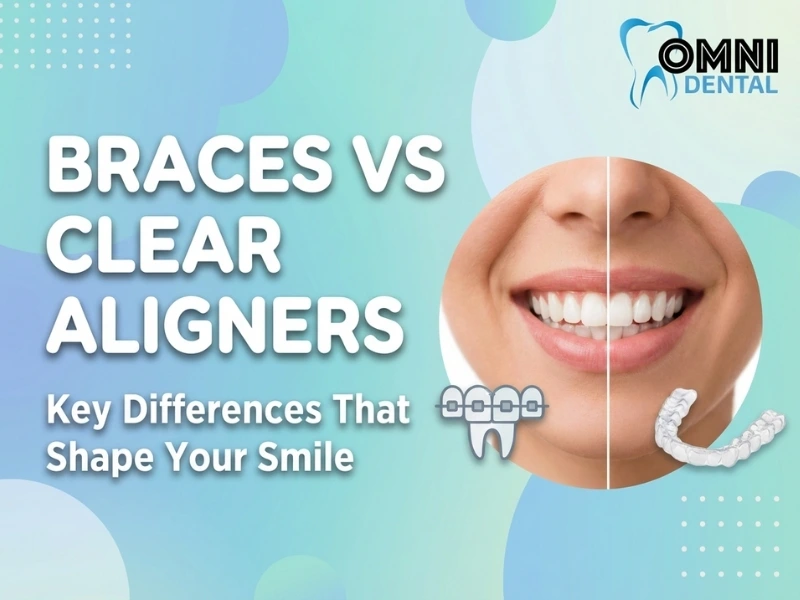
Choosing between braces and clear aligners comes down to case complexity: braces handle severe problems, while aligners suit mild to moderate cases. Aligners are nearly invisible and removable, but they only work if worn about 22 hours a day. Braces are more visible but are often more affordable.
Key Takeaways
- Braces use brackets and wires and are often best for severe bite or alignment problems.
- Clear aligners are removable trays that suit mild to moderate cases.
- Aligners must be worn about 22 hours a day to work.
- Aligners come out for eating and brushing, while braces require avoiding certain foods.
- Braces are generally more affordable, while aligners can cost more in some cases.
Estimated read: 5 min
Choosing Between Braces and Clear Aligners
When it comes to orthodontic treatment, many people are faced with the decision of whether to go for traditional braces or clear aligners. Both options are highly effective at straightening teeth, but they each come with their own set of benefits and considerations. In this blog, we’ll walk you through the key differences between these two treatment options to help you make an informed decision based on your needs, lifestyle, and desired outcomes.
Understanding Traditional Braces
What Are Braces?
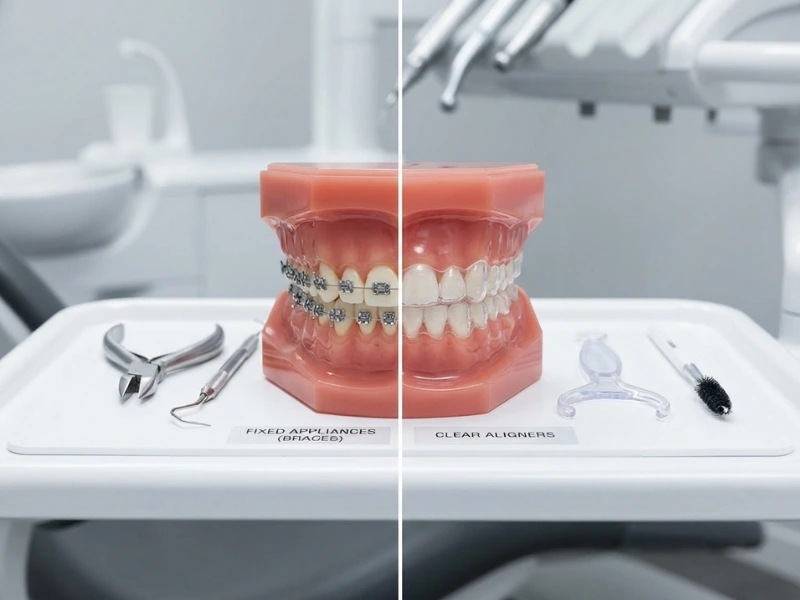
Traditional braces consist of metal brackets and wires that are attached to your teeth to gradually move them into alignment. Braces are a tried-and-true orthodontic solution that has been used for decades to treat various dental issues, including crowded teeth, bite issues, and crooked teeth.
How Do Braces Work?
Braces work by applying continuous pressure to your teeth over time, which gradually shifts them into the desired position. The brackets are bonded to the teeth, and the wire is threaded through them, with periodic adjustments made by your orthodontist to ensure the teeth move in the right direction.
Pros of Traditional Braces:
- Effective for Complex Cases: Traditional braces are often the best option for patients with severe alignment issues, bite problems, or crooked teeth.
- Versatile Treatment Option: Braces can address a wide range of orthodontic concerns, from small gaps between teeth to more complex bite issues.
- Works for All Ages: Braces are suitable for both children and adults and can accommodate people of all ages.
Cons of Traditional Braces:
- Appearance: Metal braces are visible, which can be a concern for those who prefer a more discreet treatment.
- Comfort: Braces can cause irritation to the inside of your mouth, especially after adjustments.
- Eating and Cleaning: Braces can make eating and brushing more challenging since food can get stuck in the brackets and wires.
Exploring Clear Aligners
What Are Clear Aligners?
Clear aligners are a modern alternative to traditional braces. These are custom-made, removable trays that fit snugly over your teeth and gradually shift them into alignment. The most popular brand of clear aligners is Invisalign, although there are other options available.
How Do Clear Aligners Work?
Clear aligners work by applying gentle, consistent pressure on your teeth, similar to traditional braces. However, instead of a metal bracket and wire system, aligners use a series of custom-fitted, clear plastic trays that are replaced every few weeks. Each set of aligners is designed to gradually move your teeth into a straighter position.
Pros of Clear Aligners:
- Virtually Invisible: Clear aligners are nearly invisible, making them an appealing choice for adults or teenagers who want a discreet treatment option.
- Removable: You can remove clear aligners when eating, drinking, brushing, and flossing, which makes them more convenient and hygienic.
- Comfortable: Aligners are smooth and do not irritate the inside of your mouth like metal braces can.
- Fewer Adjustments: Since clear aligners are removable, you don’t need to visit the orthodontist as often for adjustments.
Cons of Clear Aligners:
- Less Effective for Complex Cases: Clear aligners may not be the best choice for patients with complex dental issues, such as severe bite problems or large gaps.
- Compliance: For clear aligners to work, you must wear them for at least 22 hours a day. If you don’t consistently follow this regimen, your treatment may take longer or be less effective.
- Regular Replacements: As your teeth move, you’ll need a new set of aligners every few weeks, which can be more expensive than traditional braces in some cases.
Key Differences Between Braces and Clear Aligners
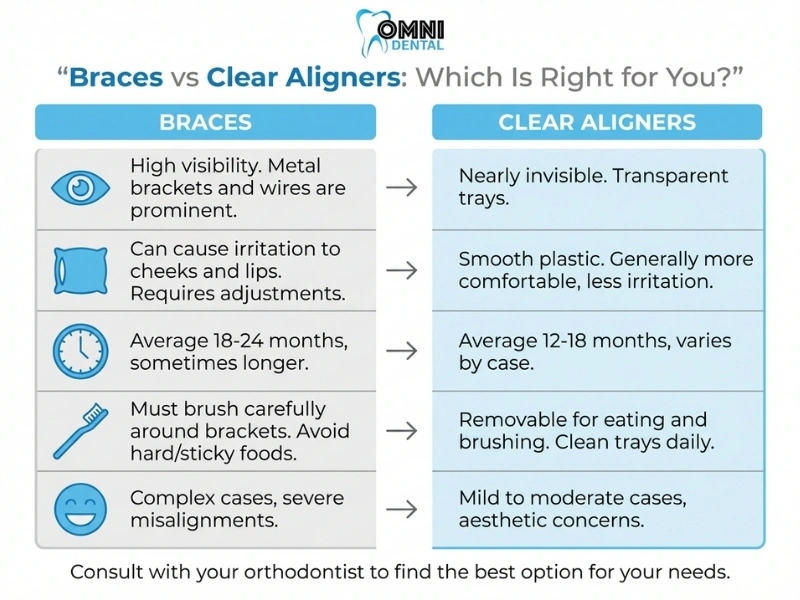
| Factor | Braces | Clear Aligners |
|---|---|---|
| Visibility | Visible metal brackets and wires | Virtually invisible, clear plastic trays |
| Comfort | Can cause irritation to the mouth | Smooth, no irritation to the mouth |
| Treatment Duration | Typically 18 months to 2 years | Duration varies but often shorter |
| Maintenance | Must avoid certain foods and regular cleaning required | Remove when eating or drinking, easy to clean |
| Effectiveness for Complex Cases | Effective for severe bite issues and alignment | Best for mild to moderate cases |
| Cost | Generally more affordable | Can be more expensive in some cases |
Which Treatment Option Is Right for You?
Consider Your Needs and Goals
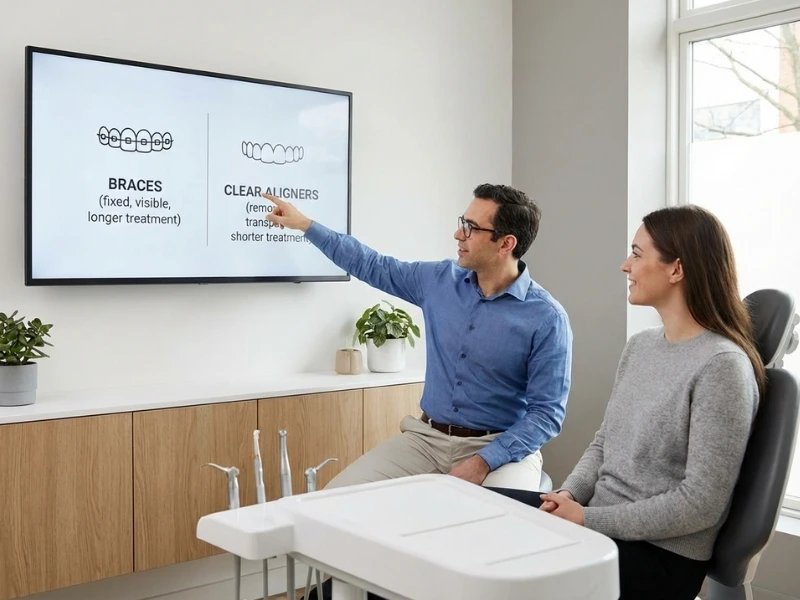
When choosing between braces and clear aligners, it’s important to consider the severity of your dental issues, your personal preferences, and your lifestyle. If you have complex alignment issues, bite problems, or crooked teeth, traditional braces may be the best solution. On the other hand, if you prefer a discreet, comfortable treatment with the flexibility to remove your aligners, clear aligners might be a better fit.
Consult with an Orthodontist
The best way to determine which option is right for you is to consult with an orthodontist. They will evaluate your teeth, discuss your goals, and recommend a treatment plan that suits your specific needs. Whether you choose braces or clear aligners, an experienced orthodontist will help you achieve a healthier, straighter smile.

Achieving Your Perfect Smile
Choosing between braces and clear aligners ultimately depends on your personal needs, treatment goals, and lifestyle. Both options can effectively straighten your teeth, but they come with different benefits and considerations. By working with an orthodontist and carefully considering your options, you can make the best decision for your oral health and enjoy the long-term benefits of a beautiful, straight smile.

Frequently Asked Questions (FAQs)
Which is better, clear aligners or braces?
The choice between clear aligners and braces depends on the severity of your dental issues. Braces are better for complex cases, while clear aligners are suitable for mild to moderate alignment problems
Should you get aligners or braces?
If you have a mild to moderate alignment issue, clear aligners may be a good option for their comfort and discretion. If you have more complex issues, traditional braces may be a better choice.
Do clear aligners work faster than braces?
Clear aligners can sometimes work faster than braces, but the treatment duration varies depending on the complexity of your case. On average, clear aligners take about 12 to 18 months.
Can I choose between braces and Invisalign?
Yes, you can choose between braces and Invisalign, but your orthodontist will help guide you toward the best treatment option based on your needs and preferences.

About the author
Dr. Bilus D PolesDDS,MAGD,DICOI, DIDIA
Founder and lead dentist of Omni Dental of Arlington Heights. Master of the Academy of General Dentistry and Board Certified Diplomate of the ICOI and IDIA. Illinois license #019.027365.