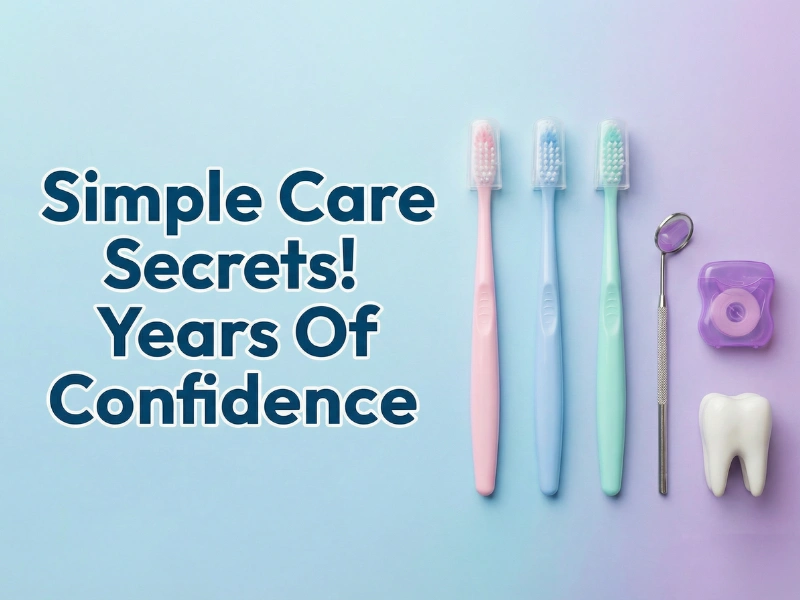
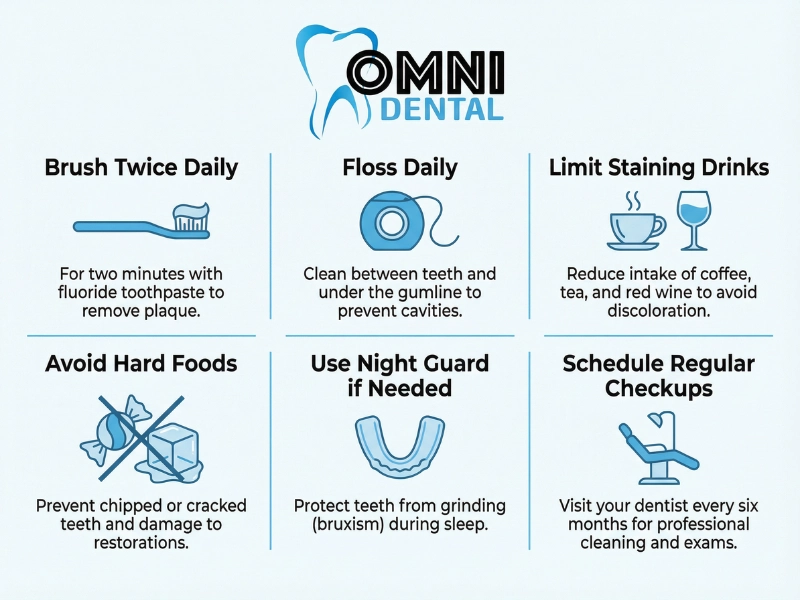
How to care for porcelain veneers comes down to brushing twice a day with a soft toothbrush, flossing daily, and avoiding hard foods. Wear a night guard if you grind your teeth, and limit coffee, tea, and red wine to keep veneers bright. Regular cleanings let your dentist check veneer edges and the teeth underneath.
Key Takeaways
- Brush twice a day with a soft-bristled toothbrush and light pressure along the gum line.
- Floss daily to remove plaque between teeth and around veneer edges.
- Avoid ice, hard foods, and using your teeth as tools, which can crack veneers.
- A night guard protects veneers if you grind your teeth.
- The natural teeth under veneers can still decay, so regular checkups matter.
Estimated read: 4 min
Simple daily habits that protect your smile and comfort
Learning how to care for porcelain veneers helps patients protect their investment and enjoy a beautiful smile for many years. This topic matters because veneers rely on healthy habits, clean surfaces, and strong support from natural teeth. Porcelain veneers are a popular cosmetic solution that improves shape, color, and balance while preserving much of the original tooth structure. With the right approach, veneers can look natural and feel comfortable every day.
Porcelain veneers are bonded to teeth using a durable bonding material. While veneers are strong, they still depend on good oral health. Proper care keeps gums healthy, prevents plaque buildup, and protects the tooth structure under each veneer. Small daily actions make a big difference over time.
Daily cleaning habits that protect veneers
Brush your teeth twice a day using a soft bristled toothbrush. Gentle brushing helps remove plaque without scratching the surface of veneers. Always brush and floss daily to clean areas where food and bacteria collect. This routine supports good oral hygiene and helps prevent gum disease around the veneers.
When you brush your teeth, use light pressure and move slowly along the gum line. Flossing is just as important because it removes plaque between teeth that brushing alone cannot reach. These habits protect both veneers and natural teeth while supporting long term oral health.
Foods and drinks to limit
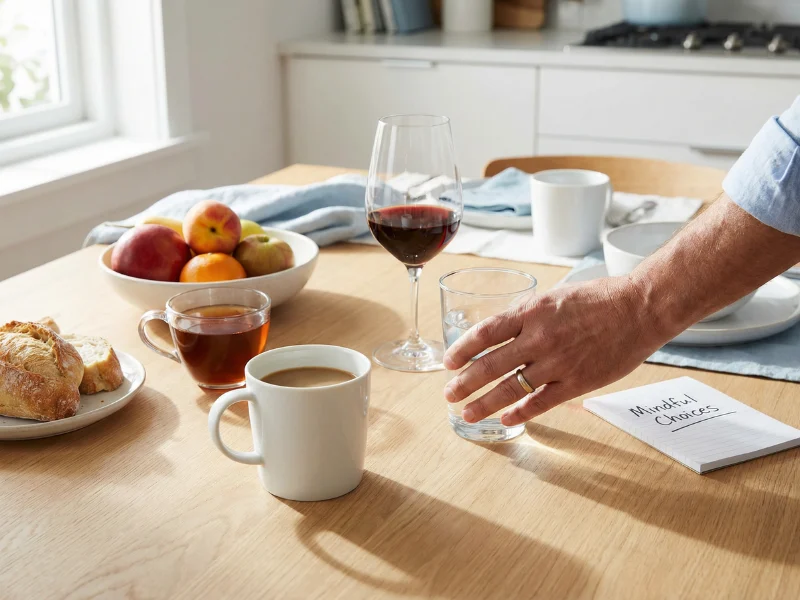
Certain foods and drinks can affect veneers over time. Coffee tea and red wine are known to stain surfaces when consumed often. While porcelain resists stains better than natural teeth, frequent exposure can still dull the shine. Rinsing with water after drinking helps reduce this risk.
Avoid chewing very hard foods, ice, or non food items. Teeth are not tools, and using teeth as tools can crack veneers or weaken the bonding material. Sticky foods may also pull on veneers and increase wear. A balanced diet supports a healthy smile and overall dental health.
Habits that help veneers last longer
Avoid chewing on hard objects and cut firm foods into smaller pieces before eating. If you grind your teeth at night, ask your dentist about a protective guard. Grinding places pressure on veneers and natural teeth, which may shorten their lifespan.
Professional cleaning plays a key role in veneer care. During professional cleaning visits, dental teams remove plaque buildup and examine veneer edges. These visits help detect early signs of wear or gum irritation. Regular care supports comfort and appearance while protecting oral health.
Protecting gums and surrounding teeth
Healthy gums help veneers stay secure and natural looking. Gum disease can cause swelling or recession, which may expose veneer edges. Gentle brushing and daily flossing help reduce irritation and keep gums firm.
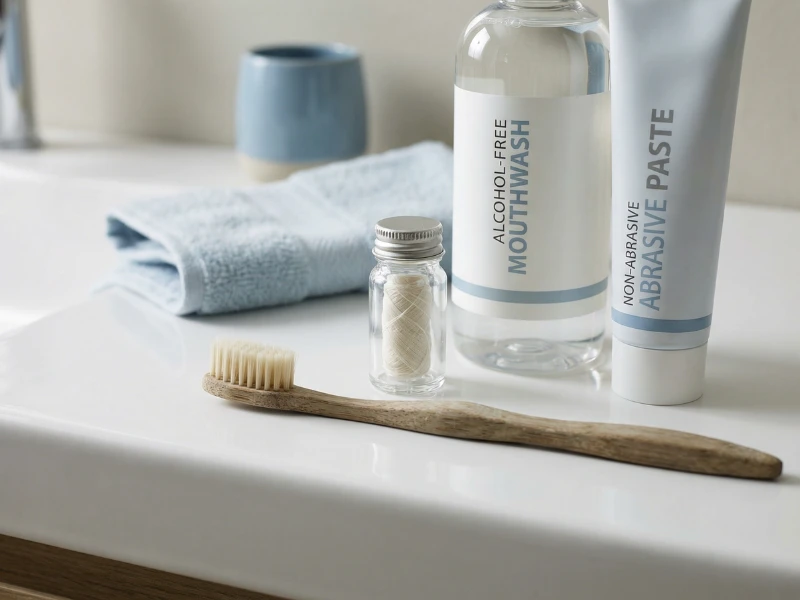
Veneers cannot decay, but the natural teeth beneath them still can. Good oral hygiene protects the tooth structure under each veneer. Alcohol free mouthwash and steady hydration help maintain saliva flow, which naturally helps remove plaque. These steps support comfort and reduce the risk of long term issues.
Choosing the right products for veneer care
Use dental products recommended by your provider. Abrasive toothpaste and unapproved whitening products may damage veneers or irritate gums. Whitening treatments do not change veneer color and may cause uneven results. Dentists can guide safe product choices that protect veneers and surrounding teeth.
Consistent routines matter more than aggressive products. Gentle tools, steady habits, and regular checkups help veneers stay strong and comfortable. This balanced approach supports a beautiful smile without unnecessary risk.
Long term care and everyday confidence
Patients who follow proper routines often enjoy stable results and fewer complications. Confidence grows when smiles feel natural and healthy. How to Care for Porcelain Veneers becomes simple when these habits become part of everyday life, supporting long term oral health and lasting comfort.
Learn more about How Long Do Dental Veneers Last?
Frequently Asked Questions About Porcelain Veneer Care
How do you maintain porcelain veneers?
Maintaining veneers requires brushing and flossing daily, avoiding hard foods, and attending professional cleaning visits. These steps help remove plaque, protect gums, and support oral health.
What should you avoid with porcelain veneers?
Avoid chewing hard items, using teeth as tools, and frequent exposure to red wine or coffee tea. These habits protect bonding material and prevent damage.
Do you have to brush porcelain veneers?
Yes, you should brush your teeth normally. Brushing helps remove plaque and protects natural teeth, which supports veneer stability.

About the author
Dr. Bilus D PolesDDS,MAGD,DICOI, DIDIA
Founder and lead dentist of Omni Dental of Arlington Heights. Master of the Academy of General Dentistry and Board Certified Diplomate of the ICOI and IDIA. Illinois license #019.027365.