Brush and floss daily, get regular checkups, and wear a nightguard if you grind your teeth. Knowing how to keep your dental work from failing matters because gum disease and grinding are common causes of failure. Report pain, sensitivity, or a loose crown early, since small repairs cost less than replacements.
Key Takeaways
- Common causes of dental work failure include gum disease, grinding, and skipped follow-up care.
- Consistent brushing and flossing protects both your natural teeth and any fillings or crowns you already have.
- Catching a small dental problem early is almost always cheaper and easier than fixing it later.
Estimated read time: 3 minutes
Why Dental Work Fails Over Time
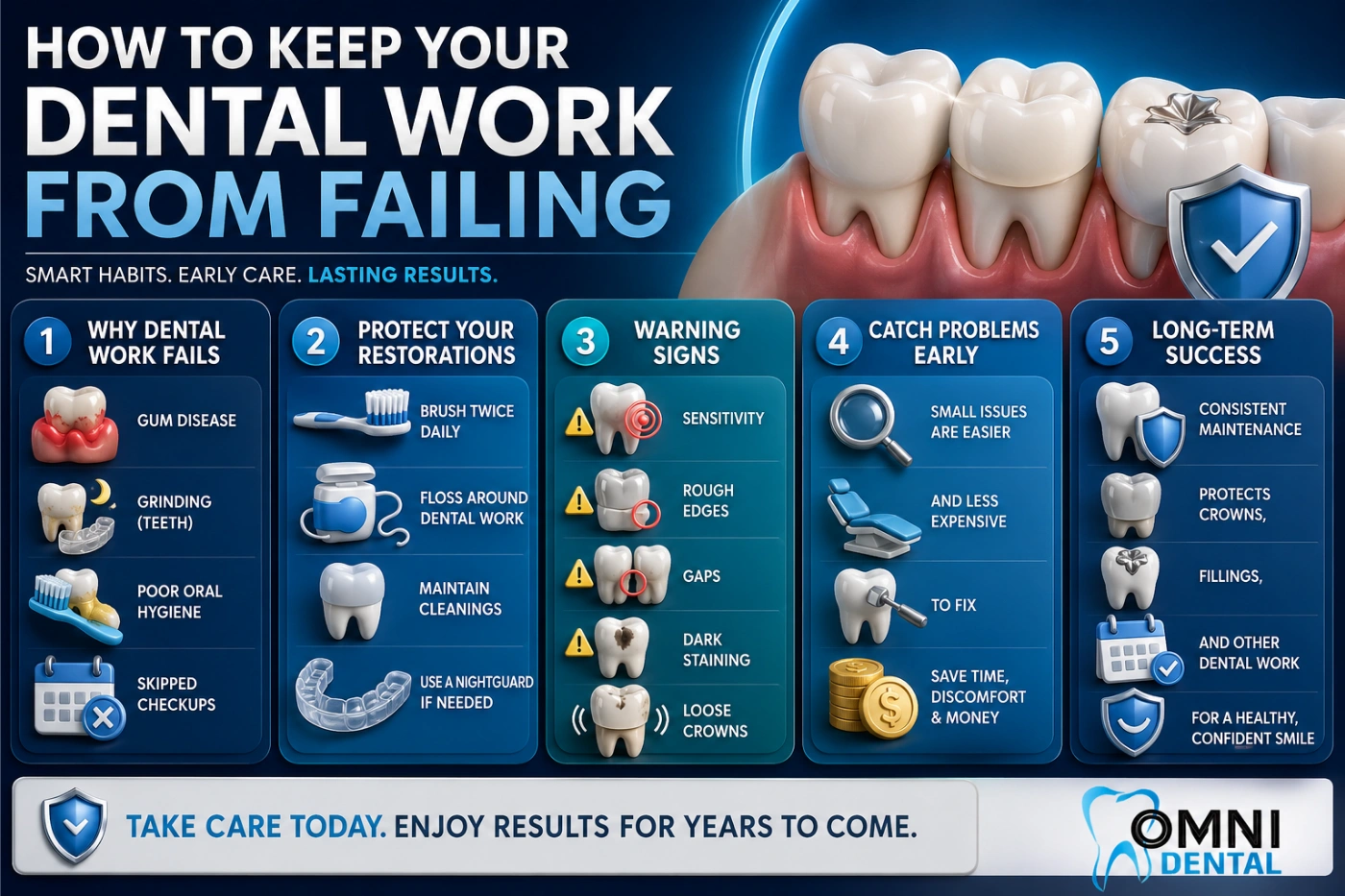
Fillings, crowns, and other dental work don’t fail randomly. Gum disease is one of the most common culprits, since it weakens the bone and tissue that hold restorations in place. Grinding, poor oral hygiene, and skipped checkups also wear down dental work faster than it should, sometimes years before it would otherwise need replacing.
Even well-placed fillings or crowns have a lifespan. Without proper care, that lifespan shrinks considerably. Small issues can spread into deeper dental problems that need more extensive treatment.
Tips to Help Your Dental Work Last
The most reliable way to keep your dental work from failing is consistent brushing, flossing, and prompt attention to any changes, like sensitivity or discomfort, before they get worse.
- Brush twice daily and floss once, focusing on the gumline around any dental work
- See your dentist twice a year for cleanings and checkups
- Wear a nightguard if you grind your teeth
- Avoid chewing ice, hard candy, or using teeth as tools
- Tell your dentist about pain or sensitivity right away, rather than waiting
Good oral hygiene isn’t just about your natural teeth. It’s what keeps fillings, crowns, and other dental treatment intact for the long haul.
| Preventive Habit | Why It Matters | Recommended Action |
|---|---|---|
| Daily Brushing and Flossing | Removes plaque that can damage teeth, gums, and dental restorations. | Brush twice daily and floss once daily, especially around dental work. |
| Regular Dental Checkups | Allows early detection of small issues before they require major repairs. | Schedule routine cleanings and exams as recommended by your dentist. |
| Protect Against Grinding | Reduces excessive pressure that can crack or wear down dental work. | Use a nightguard if you grind or clench your teeth. |
| Avoid Hard Habits | Prevents unnecessary stress on fillings, crowns, and other restorations. | Avoid chewing ice, hard candy, or using teeth as tools. |
| Address Changes Early | Small problems are usually easier and less expensive to fix. | Contact your dentist if you notice pain, sensitivity, or changes in your dental work. |
Signs Your Dental Work Might Already Be Failing
- Pain or pressure sensitivity when you bite down on a specific tooth
- A rough edge or gap you can feel with your tongue or floss
- Dark staining forming around the edge of a filling or crown
- A crown that feels loose or shifts slightly when you chew
These aren’t usually emergencies, but they’re worth mentioning at your next visit rather than waiting to see if they go away.
The Cost of Waiting Too Long
Putting off dental care rarely saves money in the long run. A small crack in a filling can let bacteria reach the tooth underneath, and by the time it hurts, the fix is usually bigger than it would have been a few months earlier.
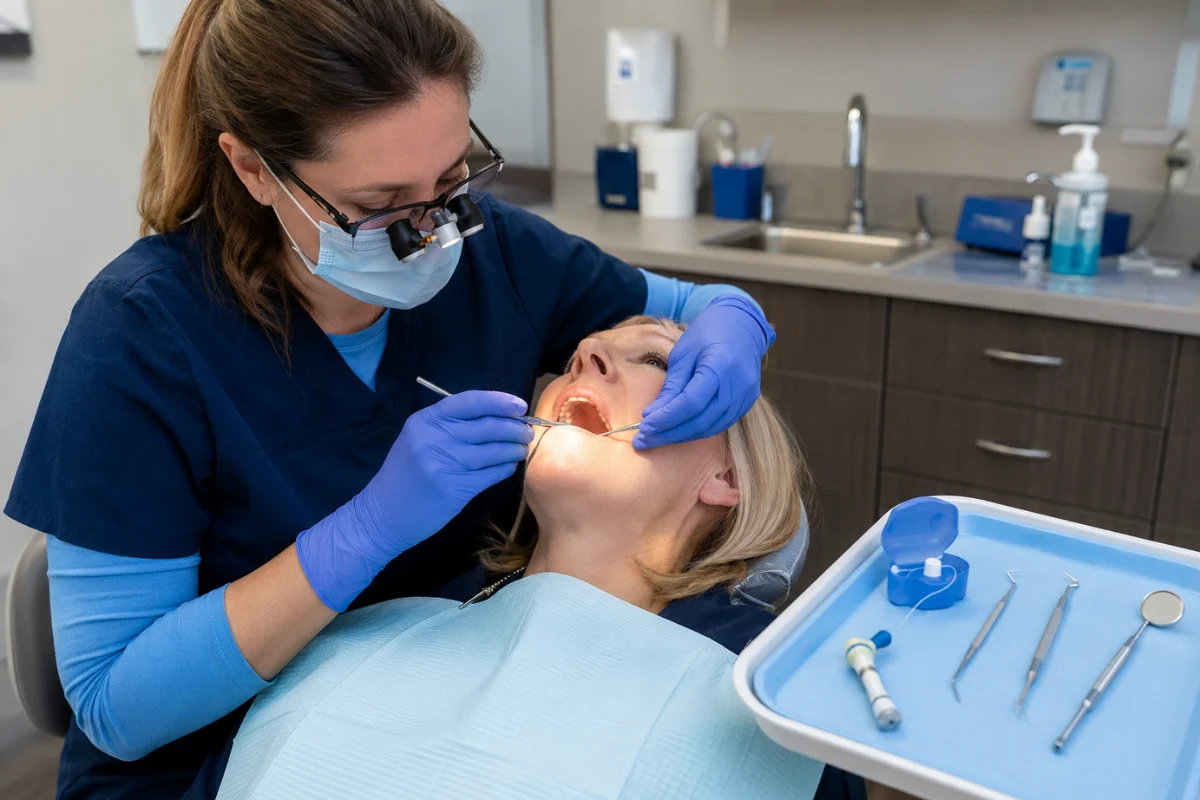
Regular checkups exist specifically to catch this kind of thing early, before it turns into a bigger dental problem. Your dentist can spot a loosening crown or a filling that’s starting to wear before you feel anything at all, which is often the difference between a simple adjustment and a full replacement.
If your dental work does fail, our guide to dental implant restoration covers what replacement options typically look like.
Noticed a change in an old filling or crown? Schedule a checkup with our Arlington Heights team before it becomes a bigger issue.
Frequently Asked Questions
What is the 3-3-3 rule in dentistry?
The phrase gets used a few different ways online, sometimes for brushing habits and sometimes for toothache pain management. Either way, it’s a memory aid, not an official dental guideline. For brushing, the American Dental Association recommends brushing twice a day for two minutes with fluoride toothpaste.
Why does my dental work keep failing?
Repeated failures usually point to an underlying cause, like grinding, gum disease, or a bite that puts uneven pressure on one area. It’s worth asking your dentist to look for a pattern rather than just replacing the work again each time, since fixing the root cause tends to prevent the next failure too.
What is the 2 year rule for dentists?
It refers to not going more than two years between dental visits. It’s treated as an outer limit, not a recommended schedule. Most dentists still recommend checkups every six months for most patients.
What is the red flag of the dentist?
Common warning signs include treatment recommendations you don’t understand, a dentist who won’t show you X-rays to support a diagnosis, or appointments that feel rushed. A good dentist explains their reasoning and welcomes questions.

Want a Second Set of Eyes on Existing Work?
Our Arlington Heights team can check your fillings, crowns, and overall oral health. Contact us or call (847) 483-8833 to schedule a visit.

About the author
Dr. Bilus D PolesDDS,MAGD,DICOI, DIDIA
Founder and lead dentist of Omni Dental of Arlington Heights. Master of the Academy of General Dentistry and Board Certified Diplomate of the ICOI and IDIA. Illinois license #019.027365.