
A new AHA report links oral health to cardiovascular disease risk, tying gum disease to more heart attacks, strokes, and heart failure. The statement, published December 16, 2025, in Circulation, points to chronic inflammation as a likely link. It does not prove that treating gum disease prevents heart disease.
Quick Summary
The AHA report connects gum disease to cardiovascular disease risk, highlighting the role of chronic inflammation. Poor oral hygiene and periodontal disease may increase the risk of serious cardiovascular events, including heart attack, stroke, and heart failure.
aha-report-gum-disease-cardiovascular-risk
|
The statement updates the American Heart Association’s 2012 position on gum disease and heart health with more than a decade of new research.
The Mouth-Heart Connection: Why It Matters
“Our message is simple,” said Dr. Andrew H. Tran, M.D., M.P.H., chair of the scientific statement writing group and pediatric cardiologist at Nationwide Children’s Hospital. “Your mouth and your heart are connected. Gum disease and poor oral hygiene can allow bacteria to enter the bloodstream, increasing inflammation and potentially damaging blood vessels. That inflammation may raise your risk of heart disease.”
In other words, oral health isn’t just about a clean smile; it may play a key role in heart health.
What Is Periodontal Disease?
Periodontal disease is a chronic inflammatory condition affecting over 40% of adults over the age of 30 in the U.S. It begins as gingivitis, marked by red, swollen gums, and progresses to periodontitis, where gum tissue pulls away from teeth, creating pockets that trap bacteria. In its severe form, periodontitis can destroy the bones supporting the teeth, potentially leading to tooth loss and even requiring surgical treatment.
Poor oral hygiene is a leading cause, but periodontal disease is also more common among people with traditional cardiovascular risk factors: smoking, high blood pressure, obesity, diabetes, and sedentary lifestyle. Additionally, adverse social determinants of health, like food insecurity, low income, or limited access to health care and dental services, raise the likelihood of developing periodontal disease.

Shared Risk Factors Complicate the Picture
Both gum disease and heart disease share many of the same risk factors, which has historically made it difficult for researchers to determine whether there’s an actual causal connection or merely a correlation. However, emerging data suggest that periodontal disease may independently contribute to cardiovascular conditions beyond shared lifestyle or genetic risk factors.
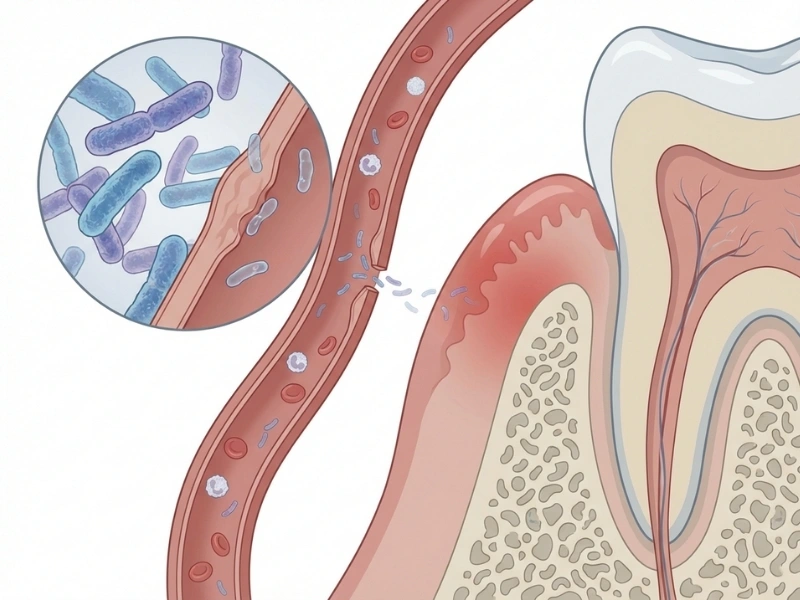
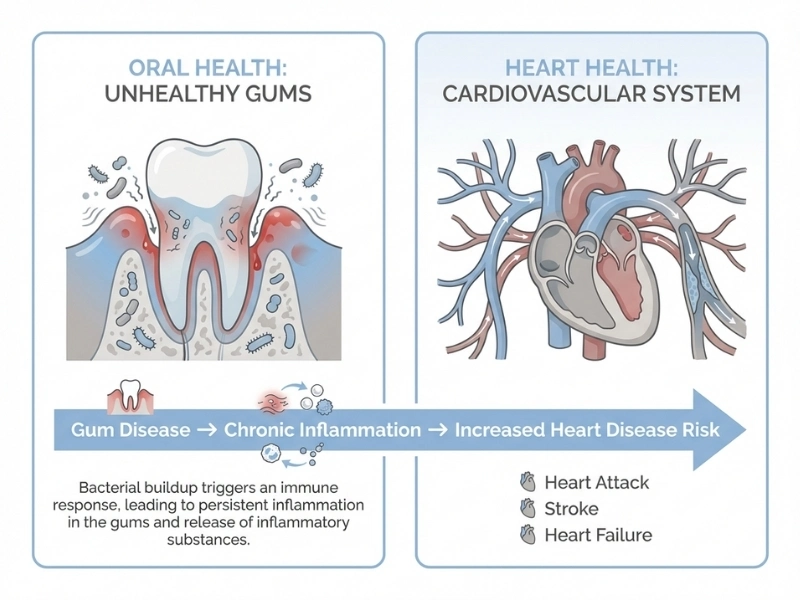
One possible link? Chronic systemic inflammation. Researchers theorize that inflammation from gum disease can travel through the bloodstream, affecting the lining of arteries and promoting the development of atherosclerosis (plaque buildup in arteries), the hallmark of most forms of cardiovascular disease.
Biological Mechanisms Behind the Link
The AHA report identifies both direct and indirect mechanisms by which periodontal disease may increase the risk of heart disease. Directly, bacteria from infected gums may enter the bloodstream (a process known as bacteremia) and contribute to vascular infection or plaque buildup in arteries.
Indirectly, the body’s immune response to these bacteria triggers chronic systemic inflammation. Inflammatory markers like C-reactive protein and interleukins, which are elevated in gum disease, are also known contributors to cardiovascular risk.
Over time, this persistent inflammatory state can damage the endothelium (inner lining of blood vessels), increase arterial stiffness, and accelerate the progression of atherosclerosis. These changes may ultimately increase the risk of cardiovascular events.
Evidence Is Mounting, But Proof Remains Elusive
Numerous observational studies have shown that individuals with periodontal disease are more likely to experience heart attack, stroke, atrial fibrillation, heart failure, peripheral artery disease, and even chronic kidney disease.
For example, one long-term study found that people who brushed their teeth three or more times a day had a 10-year cardiovascular risk of 7.3%, compared with 13.7% among those who brushed once or fewer times daily. Regular flossing has also been associated with reduced risk of ischemic stroke.
But despite this strong evidence, researchers emphasize that correlation does not equal causation. No large-scale randomized controlled trial has definitively proven that periodontal treatment prevents cardiovascular events. Most existing studies are observational or too small to draw firm conclusions.
Benefits of Periodontal Treatment for Heart Health
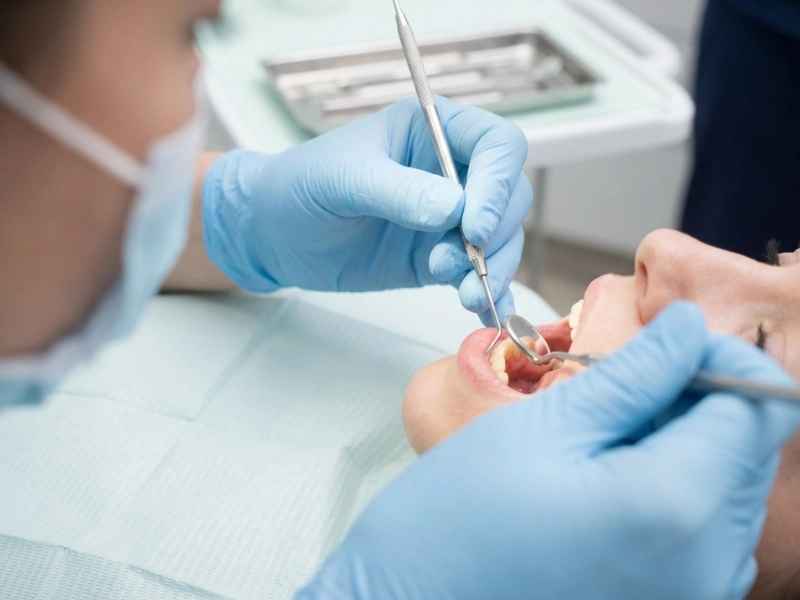
Still, some clinical trials have suggested that treating periodontal disease can improve intermediate markers of cardiovascular health. These include lower blood pressure, reduced inflammatory markers, and improved cholesterol levels, particularly increases in HDL, the “good” cholesterol.
Such findings hint at a potential role for periodontal treatment in reducing cardiovascular risk, even if we can’t yet say it prevents heart attacks or strokes directly.
“Treatments that reduce a person’s lifetime exposure to inflammation appear to be beneficial,” the report notes. “The control of periodontal disease and associated inflammation may contribute to improved cardiovascular health.”

Focus on Prevention: Brushing, Flossing, and Beyond
Until more definitive studies are completed, prevention remains the most practical advice. Good oral hygiene, including brushing at least twice daily, flossing regularly, and visiting the dentist for cleanings, is a low-cost and straightforward way to reduce inflammation and protect both your gums and your heart.
This is especially important for people with existing heart disease or other risk factors. According to the AHA, these individuals may benefit from targeted periodontal care to reduce chronic inflammation.
Addressing Health Disparities in Oral and Heart Health
The AHA statement also calls for action to reduce disparities in access to dental care. Populations with lower socioeconomic status or limited healthcare access are disproportionately affected by both periodontal disease and cardiovascular disease. By improving access to preventive dental services and oral health education, public health leaders may reduce the burden of both conditions.
Initiatives like the AHA’s “Healthy Smiles, Healthy Hearts” campaign aim to integrate oral health more fully into preventive cardiology and promote a more holistic view of patient care.
More Research Is Needed
The AHA emphasizes the urgent need for more long-term studies and randomized trials to confirm whether periodontal treatment can directly lower cardiovascular risk. Such research could lead to new clinical guidelines that incorporate oral health into cardiovascular disease prevention strategies.
Researchers are also exploring the role of genetics in this relationship. Some gene variants linked to a higher risk of gum disease also appear to raise cardiovascular risk, further supporting the possibility of a biological connection between the two.
Small Daily Habits, Big Long-Term Impact
In the meantime, the message is clear: take care of your gums, and you might be taking care of your heart too. While brushing and flossing may seem like small acts, their potential ripple effects on overall health, including cardiovascular outcomes, could be significant.
“Association should be enough for clinicians to pay attention,” said Dr. Nathan Estrin, a periodontist not involved in the report. “If you have plaque on your gums, you likely have plaque in your arteries.”
A New Frontier in Preventive Medicine
This new AHA report connects oral health to cardiovascular disease risk in a compelling way, reinforcing the idea that our bodies are interconnected systems. By viewing oral health not as an isolated issue but as part of the broader cardiovascular picture, clinicians, researchers, and public health advocates can pursue more comprehensive strategies for prevention and care.
As more evidence emerges, the hope is that better dental care can one day become a recognized pillar of heart disease prevention. Until then, the humble toothbrush might be your heart’s first line of defense.

About the author
Dr. Bilus D PolesDDS,MAGD,DICOI, DIDIA
Founder and lead dentist of Omni Dental of Arlington Heights. Master of the Academy of General Dentistry and Board Certified Diplomate of the ICOI and IDIA. Illinois license #019.027365.