
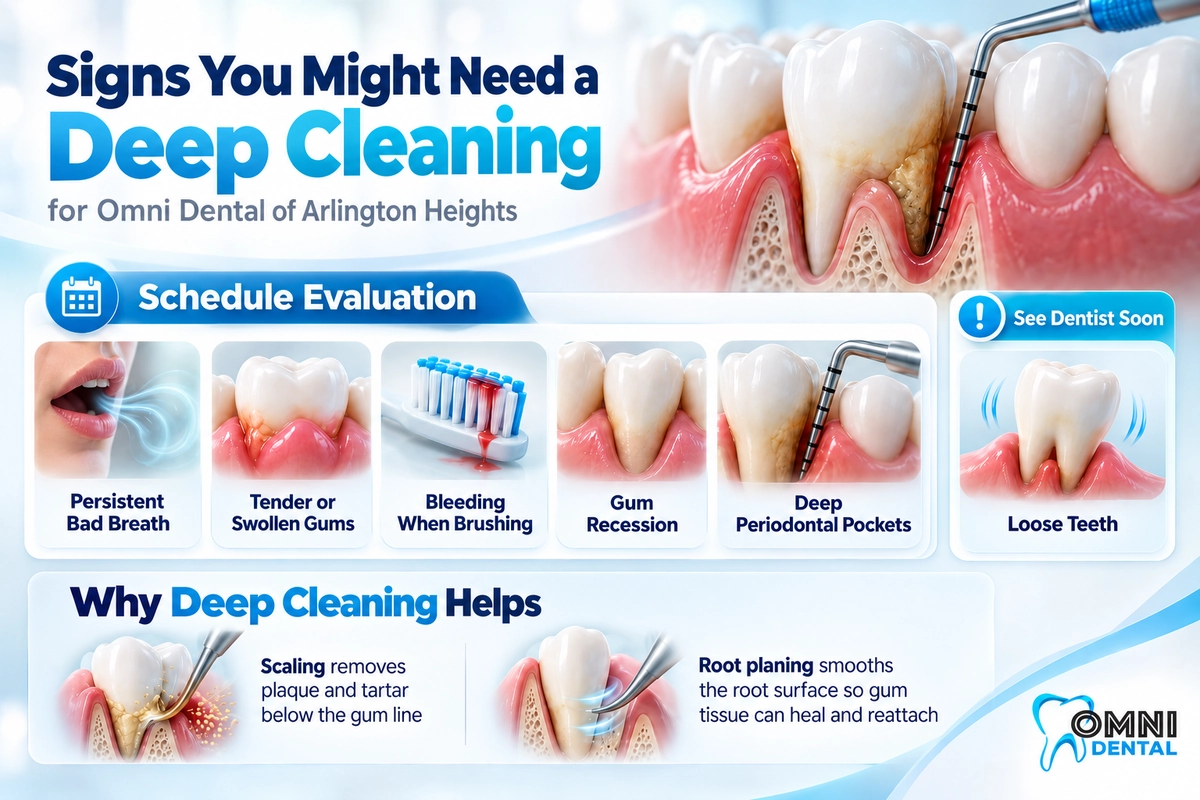
Common signs you need a deep cleaning include bleeding gums, gums that pull away from teeth, persistent bad breath and loose teeth. These signs often mean gum disease has spread below the gum line. A deep cleaning removes plaque and tartar there before it causes bone loss and tooth loss.
Key Takeaways
- Signs you might need a deep cleaning include persistent bad breath, tender or bleeding gums, gum recession, and deep periodontal pockets.
- A deep cleaning (scaling and root planing) removes plaque and tartar from tooth roots and below the gum line where routine cleanings can’t reach.
- Early detection of gum disease makes treatment more effective and can prevent bone loss and tooth loss.
- A periodontal evaluation helps determine if you’re in the early stages of gum disease requiring intervention.
Read time: 6 min
Your routine dental cleanings keep your teeth and gums healthy in most cases. However, sometimes even with good oral hygiene, gum disease develops below the gum line where your toothbrush cannot reach. In these situations, you might need a deep cleaning.
Here’s what to watch for and what signs you might need a deep cleaning to prevent serious complications such as bone loss and tooth loss.
Warning Signs: When Your Gums Need Help
In most cases, gum disease develops silently. By the time you notice symptoms, the infection has progressed significantly. Here are the most common signs you might need a deep cleaning:
| Warning Sign | What It Means | Urgency |
|---|---|---|
| Persistent Bad Breath | Bacteria beneath gum line releasing sulfur compounds | Schedule evaluation |
| Tender or Swollen Gums | Inflammation from bacterial infection | Schedule evaluation |
| Bleeding When Brushing | Gum tissue breaking down from plaque below surface | Schedule evaluation |
| Gum Recession | Gum line pulling away, exposing tooth root | See dentist soon |
| Loose Teeth | Bone loss from advanced gum disease | See dentist soon |
| Deep Pockets | Spaces between gum and tooth (diagnosed by dentist) | May need deep cleaning |
In fact, the most telling sign is tender gums. Healthy gums do not bleed and should not hurt when you brush or floss. If yours do, it’s time for a periodontal evaluation.
Early Stages of Gum Disease
Additionally, gum disease progresses in stages, and catching it early makes treatment significantly more effective. For this reason, early detection is critical.
Stage 1: Gingivitis
- Inflammation caused by plaque at the gum line
- Reversible with improved oral hygiene + regular cleanings
- Signs: slight redness, mild bleeding when brushing
Stage 2: Early Periodontitis
- Infection has spread below gum line, destroying gum tissue
- May require scaling and root planing to treat
- Signs: deeper pockets (3-4mm), noticeable gum recession
Stage 3: Advanced Periodontitis
- Bone loss and tooth mobility present
- Deep cleaning may not be enough; additional therapy needed
- Risk of tooth loss and health complications (heart disease risk increases)
Why it matters: early intervention prevents complications.
Gum disease is linked to heart disease, diabetes complications, and other health conditions. Reducing your risk through early treatment protects your oral health and overall wellness.
What is a Deep Cleaning?
If your dentist finds signs you might need a deep cleaning, here’s what that procedure involves:
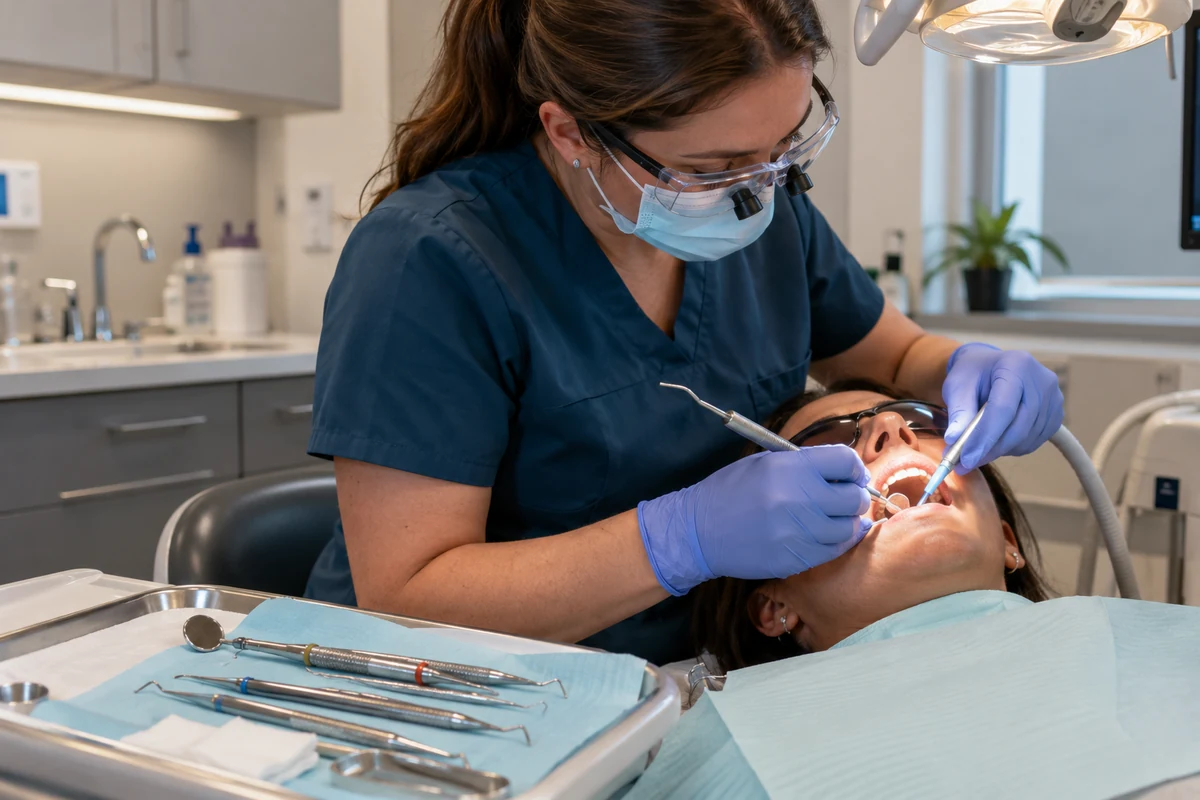
Scaling and root planing is the clinical name for a deep cleaning. Importantly, this procedure targets areas below your gum line: the spaces where routine cleanings cannot reach.
Here’s how the procedure works:
- Scaling: Your dentist or hygienist removes plaque and tartar (hardened plaque) from tooth surfaces and just below the gum line using specialized instruments
- Root Planing: The tooth root is smoothed to help gum tissue reattach and prevent bacteria from colonizing hard-to-clean areas
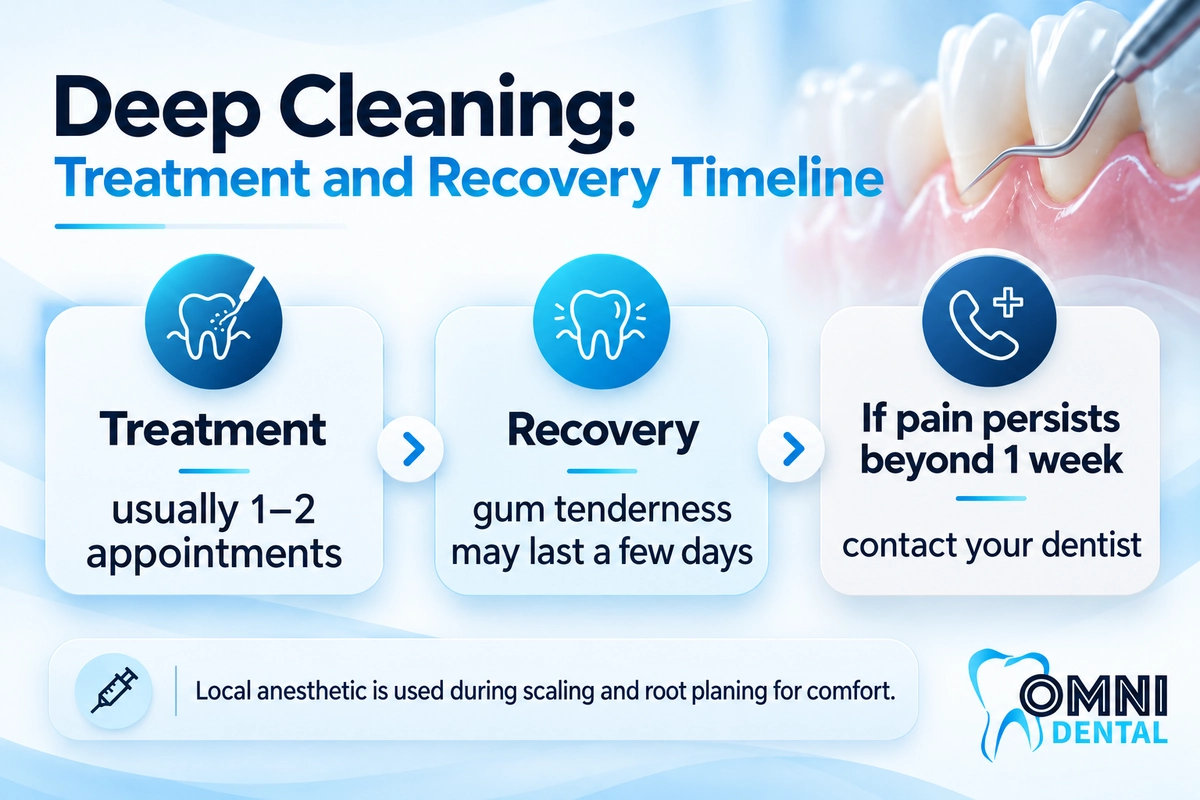
- Local anesthetic: Your gums will be numbed so you stay comfortable
- Follow-up care: Antimicrobial rinses and antibiotics may be recommended to support healing
Typically, most deep cleanings require one or two appointments, depending on severity. Moreover, recovery takes a few days, during which your gums may feel tender.
Ultimately, the main goal is to stop the infection, allow gum tissue to reattach to teeth, and restore your gum health before bone loss becomes permanent. As a result, early intervention prevents irreversible damage. Dentists can reach and clean pockets far deeper than brushing alone using scaling and root-planing techniques.
Think you might need a deep cleaning?
Contact us today for a periodontal evaluation.
Frequently Asked Questions
How painful is a deep cleaning?
In reality, deep cleaning should not be painful because your dentist or hygienist numbs your gums with a local anesthetic before starting. During the procedure, you may feel pressure and vibration from the instruments, but no sharp pain. After the appointment, it is normal to have mild tenderness or sensitivity for a few days, especially when eating or brushing. If pain persists beyond a week, you should contact your dentist.
What happens if you never get a deep cleaning?
When gum disease progresses untreated, the consequences become quite serious. Specifically, plaque and tartar continue building up below the gum line, allowing bacteria to destroy gum tissue and bone that supports your teeth. Subsequently, this leads to tooth mobility, gum recession, and eventually tooth loss. Moreover, advanced gum disease is also linked to systemic health complications, including increased risk of heart disease and stroke. Fortunately, early treatment through deep cleaning can prevent these outcomes.
Does deep cleaning stop gum recession?
In fact, deep cleaning can halt further gum recession by removing the bacterial infection that damages gum tissue. However, it cannot reverse gum recession that has already occurred. The primary goal of scaling and root planing is to stop the disease process, allow the remaining gum tissue to reattach to teeth, and prevent additional bone and gum loss. In some cases, advanced gum recession may require gum grafting or other surgical procedures for restoration.
Your Next Step
If you recognize any of these warning signs, do not wait. Early detection and treatment of gum disease can prevent complications and preserve your teeth for life. In summary, a periodontal evaluation is the critical first step toward healthier gums and improved oral health overall.

About the author
Dr. Bilus D PolesDDS,MAGD,DICOI, DIDIA
Founder and lead dentist of Omni Dental of Arlington Heights. Master of the Academy of General Dentistry and Board Certified Diplomate of the ICOI and IDIA. Illinois license #019.027365.