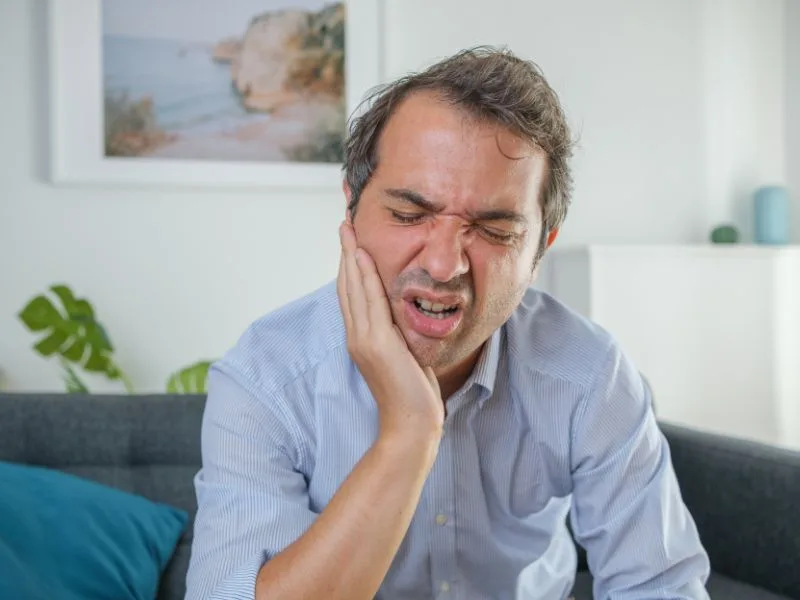
In most cases, what causes a bruised tooth is impact or pressure that injures the tissues holding the tooth in place. Common triggers include sports injuries, falls, accidents, and teeth grinding. A bruised tooth often feels tender when you bite, even when it looks completely normal.
Key Takeaways
- Dentists call a mild bruise a dental concussion, where the tooth stays in place.
- Tenderness, sensitivity, and slight looseness are common warning signs.
- Food and tobacco stains change color but do not injure the tooth.
- An injury can cut blood supply to the pulp, so follow-up exams matter.
- A properly fitted mouthguard lowers the risk of sports injuries to teeth.
Estimated read: 5 min
What Causes a Bruised Tooth?
Simply put, a bruised tooth is a mild injury to the tissues around the tooth, not the enamel. Cleveland Clinic describes this injury as a dental concussion. The supporting tissues are hurt, but the tooth has not moved, so it can look fine and still feel sore.
This table shows the most common causes and how each one affects the tooth.
| Cause | How it affects the tooth |
|---|---|
| Sports injury | A hit to the mouth strains the supporting tissues |
| Fall or accident | Sudden impact injures the tissues around the root |
| Teeth grinding or clenching | Repeated pressure can leave teeth sore or loose |
| Deeper injury | Reduced blood supply can damage the pulp inside |
Grinding deserves extra attention because it often happens without you noticing. The National Institute of Dental and Craniofacial Research says bruxism can happen while you are awake or asleep. It also lists tooth pain, sensitivity, and loose teeth among its signs.
Bruised Tooth Symptoms to Watch For
Bruised tooth symptoms are often subtle at first. Tenderness when you bite or touch the tooth is a classic sign, because the injured tissues sit right around the root.
Watch for these signs after an injury or a stretch of heavy grinding:
- Soreness when you chew or tap the tooth
- Sensitivity to hot or cold foods
- A tooth that feels slightly loose, which can mean a more serious injury
- Bleeding near the gumline
- A tooth that slowly turns darker than its neighbors
Color change deserves the closest look. MedlinePlus lists tooth nerve damage as one cause of abnormal tooth color. Cleveland Clinic also names tooth discoloration as a reason to contact your dental provider after an injury.
Bruised Tooth vs. Stained Tooth: How to Tell
Not every color change is a bruise. According to MedlinePlus, coffee, tea, red wine, and tobacco can stain teeth. However, those stains sit on the tooth and do not injure the tissue that holds it.
This comparison shows the main differences between a bruised tooth and a stained tooth.
| Feature | Bruised tooth | Stained tooth |
|---|---|---|
| Usual cause | Impact, a fall, or grinding | Coffee, tea, wine, or tobacco |
| Teeth affected | Usually the injured tooth | Often several teeth |
| How it feels | Tender when biting | Usually no pain |
| Next step | Dental exam | Cleaning or cosmetic options |
If you are unsure which one you have, a dentist can tell the difference with an exam. So a darkening tooth after a bump is worth a visit, even when it does not hurt.
How to Care for a Bruised Tooth and When to See a Dentist
Home care can ease soreness while you wait for your visit.
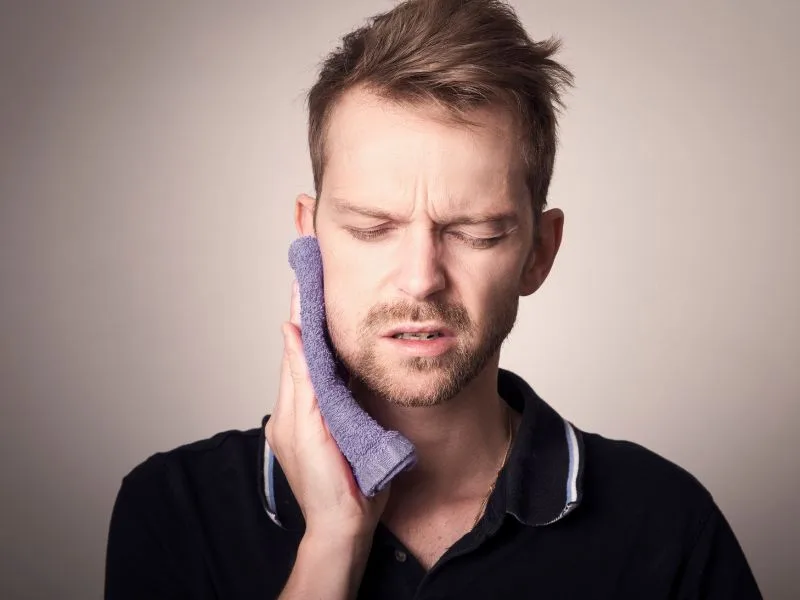
Cleveland Clinic’s dental emergency guide suggests a cold compress on the outside of the cheek. It also lists an over the counter pain reliever if needed. The guide warns never to put aspirin or other painkillers against your gums or tooth.
- Hold a cold compress on the outside of your cheek.
- Chew on the other side of your mouth while the tooth is sore.
- Take an over the counter pain reliever only as the label directs.
- Book a dental exam, even if the pain fades.
See a dentist promptly if the tooth feels loose or keeps bleeding. Cleveland Clinic says a loosened or shifted tooth needs immediate medical attention. Also call your dentist if the tooth turns gray or dark.
A follow-up visit also matters because some damage stays hidden at first. According to Cleveland Clinic, an injury can affect the blood supply to the pulp and cause the tissue to die. When that happens, the dentist must remove the pulp, often with root canal therapy or, in some cases, an extraction.
How to Prevent a Bruised Tooth
A mouthguard is the simplest protection for sports. The American Dental Association says mouthguard use reduces the risk of sport-related dental injuries. It also calls properly fitted mouthguards the best available protection.
Custom mouthguards made by a dental office give the best fit, while stock guards are the least effective type, per the ADA. Still, the best guard is the one you actually wear every game.
For grinding, a guard worn at night separates the teeth while you sleep. NIDCR notes that a mouth guard can prevent tooth damage from bruxism. You can learn more in our guide to when to use a nightguard.
Hurt a tooth recently? Our emergency dental team can check it for you.
Frequently Asked Questions About Bruised Teeth
Can a bruised tooth heal on its own?
Cleveland Clinic notes that a mildly injured tooth does not always need treatment, but it still needs a prompt dental exam. At later checkups, the dentist also checks the health of the tooth pulp. Those visits help catch hidden damage before it causes bigger problems.
What does a bruised tooth look like?
Over time, an injured tooth may turn darker than its neighbors, even when it looked normal at first. In fact, MedlinePlus lists nerve damage as one cause of abnormal tooth color. So any tooth that changes color after an injury should get a dental exam, even without pain.
Is a bruised tooth the same as a dead tooth?
No, a bruised tooth has injured supporting tissues, while a dead tooth has pulp tissue that has died. According to Cleveland Clinic, an injury can reduce blood supply to the pulp and lead to pulp necrosis. Dead pulp must be removed, so early exams help catch the change.
Can teeth grinding cause a bruised tooth?
Yes, heavy grinding and clenching can leave teeth sore. NIDCR lists tooth pain or sensitivity and loose teeth among the signs of bruxism. A dentist can check for wear and may suggest a mouth guard that separates the teeth to help prevent damage.
Should I wear a mouthguard for every sport?
The ADA recommends a properly fitted mouthguard to reduce how often oral injuries happen and how severe they are. Contact sports carry the clearest risk, but falls and collisions happen in many activities. Because a custom guard offers the best fit, ask about one at your next visit.
Not Sure What Causes a Bruised Tooth Like Yours?
Omni Dental can examine the tooth and explain your options in plain terms. Request an appointment or visit us at 305 E. Rand Road in Arlington Heights.

About the author
Dr. Bilus D PolesDDS,MAGD,DICOI, DIDIA
Founder and lead dentist of Omni Dental of Arlington Heights. Master of the Academy of General Dentistry and Board Certified Diplomate of the ICOI and IDIA. Illinois license #019.027365.