
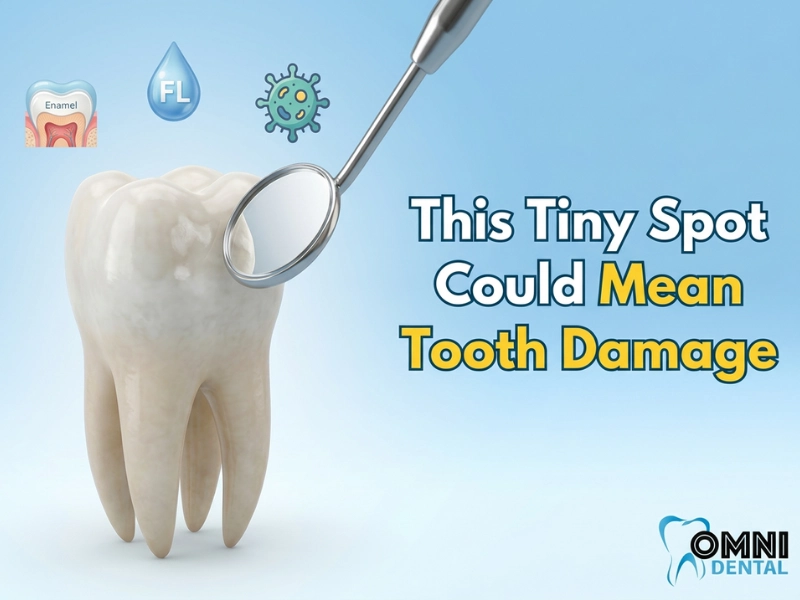
What causes white spots on teeth is usually early tooth decay, plaque buildup, too much fluoride in childhood, or weak enamel. Early decay spots can sometimes be reversed with fluoride and better brushing. For spots from fluorosis or enamel hypoplasia, a dentist may suggest whitening or veneers.
Key Takeaways
- White spots are often the first sign of early tooth decay.
- Too much fluoride while teeth are forming in childhood can cause dental fluorosis.
- Enamel hypoplasia, or enamel that did not form properly, leaves weak areas that show as white patches.
- Brushing, flossing, and limiting sugary or acidic foods help prevent new spots.
- Treatment depends on the cause and can include remineralizing products, whitening, or veneers.
Estimated read: 5 min
Understanding White Spots on Teeth
White spots on teeth are small, pale patches that appear on the enamel. Many people wonder, “what causes white spots on teeth?” These spots may look harmless, but they can signal early problems with your teeth. Identifying the cause early can help prevent tooth decay and maintain a bright, healthy smile.
White spots are often caused by issues with tooth enamel, poor oral care, or exposure to too much fluoride. Additionally, they may appear during childhood or even later in life. Understanding the causes and treatment options is essential for healthy teeth.
Common Causes of White Spots
Poor Oral Hygiene
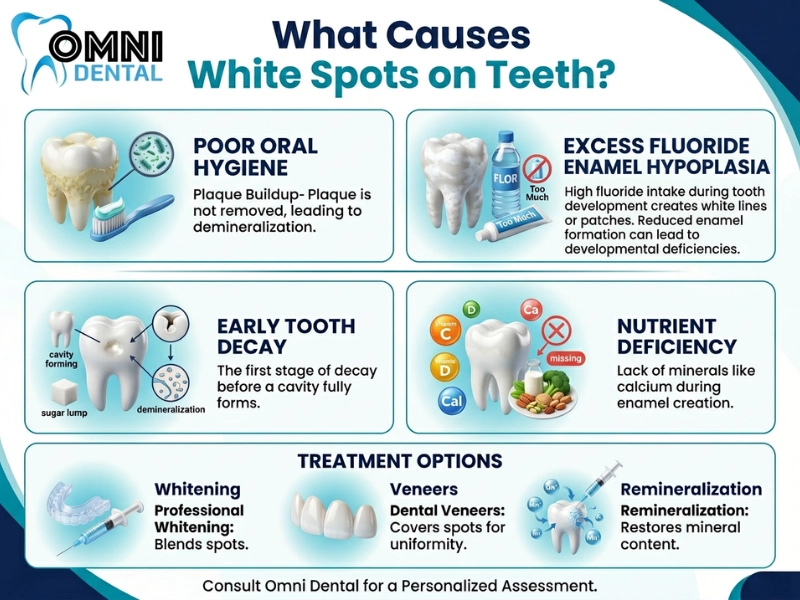
One of the main causes of white spots is poor oral hygiene. If you do not brush and floss regularly, plaque and bacteria can build up on your teeth. This may lead to white spots and early-stage tooth decay. In addition, practicing good oral hygiene helps prevent the formation of white spots and keeps teeth strong.
Excessive Fluoride and Dental Fluorosis
Excessive fluoride intake is another reason for white spots. Dental fluorosis occurs when children consume too much fluoride from sources like fluoridated water or fluoride toothpaste. As a result, white marks appear on the teeth. While fluoride protects against decay, too much can damage enamel and cause visible spots.
Enamel Hypoplasia
Enamel hypoplasia happens when enamel does not form properly. Consequently, teeth may have weak areas that appear as white spots. This condition can make teeth more prone to decay and sensitivity. Therefore, it’s important to protect enamel from early damage with good oral care.
Tooth Decay
Tooth decay is another common reason for white spots. At first, the decay shows as pale or white patches on the tooth surface. If untreated, the spots can turn yellow or brown. Consequently, noticing white spots early can prevent cavities and larger dental problems.
Diet and Nutrient Deficiencies
A poor diet can also cause white spots. For instance, not getting enough calcium, vitamin D, or phosphorus can weaken enamel. Additionally, frequent consumption of sugary or acidic foods may wear down teeth and make white spots more visible.
| Cause | Description | Recommended Action |
|---|---|---|
| Poor Oral Hygiene | Plaque buildup weakens enamel and leads to early white spots | Brush and floss daily, maintain proper oral care routine |
| Excessive Fluoride (Fluorosis) | Too much fluoride during childhood causes visible white marks | Use fluoride products in moderation and follow dental advice |
| Enamel Hypoplasia | Weak or thin enamel formation creates visible white patches | Seek dental evaluation and consider remineralizing treatments |
| Early Tooth Decay | White spots may be the first sign of cavity formation | Visit a dentist early to prevent progression |
| Nutrient Deficiencies | Lack of calcium, vitamin D, or phosphorus weakens enamel | Improve diet and consider supplements if recommended |
| Acidic or Sugary Diet | Frequent exposure to acids and sugars erodes enamel | Limit sugary foods and rinse mouth after meals |

How to Treat White Spots
Professional Dental Treatments
Dentists offer treatments for noticeable white spots. For example, dental veneers can cover the front surface of teeth for a uniform look. Other options include teeth whitening or remineralizing treatments to strengthen enamel and reduce the appearance of spots.
At-Home Care
At home, maintaining good oral hygiene is key. Brush and floss regularly, use fluoride toothpaste, and consider products designed to reduce the formation of white spots. Additionally, avoiding sugary or acidic foods helps protect your enamel.
Early Detection
If you have noticed white spots, it is important to see your dentist early. Addressing the problem in the early stage can prevent serious tooth decay and reduce the need for extensive treatments.

Preventing White Spots
- Brush and floss regularly for effective oral care
- Use fluoride toothpaste in moderation
- Avoid excessive sugary and acidic foods
- Maintain a balanced diet with enough calcium and vitamins
- Attend regular dental checkups for early detection
By following these steps, you can protect your enamel and keep your teeth healthy, while reducing the chance of white spots forming.
Takeaway: Maintaining a Bright Smile
White spots on teeth are usually caused by poor oral hygiene, enamel hypoplasia, dental fluorosis, excessive fluoride, or early-stage tooth decay. Fortunately, practicing good oral care, using fluoride products wisely, and seeing your dentist regularly can help prevent white spots. If you noticed white spots on your teeth, acting early is the key to maintaining a healthy, confident smile.

Local Dental Care in Arlington Heights
For patients in Arlington Heights and nearby areas like Buffalo Grove, Palatine, Mount Prospect, Rolling Meadows, Schaumburg, Wheeling, Des Plaines, and Elk Grove Village, we provide expert dental care. From preventing white spots on teeth to teeth whitening and dental veneers, our team helps you maintain a healthy, bright smile.
Visit us at 305 E. Rand Road, Arlington Heights, IL 60004, or call 847-483-8833 to schedule your
FAQ
Will white spots on teeth go away?
Some white spots may fade with good oral hygiene, fluoride treatments, or teeth whitening. Spots caused by enamel hypoplasia or fluorosis often require dental veneers for a lasting solution.
What vitamin deficiency causes white spots on teeth?
A lack of calcium, vitamin D, or phosphorus can weaken enamel and lead to white spots. Eating a balanced diet and taking supplements if needed can prevent this problem.
How do you get rid of white marks on your teeth?
White marks can be reduced with removal of plaque, proper brushing and flossing, fluoride toothpaste, or cosmetic procedures like dental veneers and teeth whitening.

About the author
Dr. Bilus D PolesDDS,MAGD,DICOI, DIDIA
Founder and lead dentist of Omni Dental of Arlington Heights. Master of the Academy of General Dentistry and Board Certified Diplomate of the ICOI and IDIA. Illinois license #019.027365.