
Why adults skip dental visits usually comes down to no pain, cost, dental anxiety, or lack of time. Many adults benefit from a checkup every six months, and the CDC recommends at least one checkup and cleaning a year. Schedule sooner for bleeding gums, tooth pain, swelling, loose teeth, or a sore that won’t heal.
Quick SummaryDespite 91% of adults recognizing oral health’s importance, many delay dental visits due to no pain, cost, anxiety, or time. Routine checkups (every six months for many) and professional cleanings prevent cavities and gum disease. Warning signs include bleeding gums, tooth pain, swelling, loose teeth, persistent bad breath, dry mouth, or non‑healing sores. Higher risk groups (diabetes, smokers, pregnancy, history of gum disease) need more frequent visits. Preventive care catches problems early, avoiding costly emergencies.
|
New oral health findings show awareness is rising, but dental habits still fall behind
A new Delta Dental report shows that 91% of adults now say oral health plays a key role in overall health. This finding matters because many adults still delay dental visits, even though a healthy mouth helps support comfort, confidence, and long-term wellness.
Delta Dental’s 2026 oral health report found that adults better understand the link between the mouth and the body. The report points to growing awareness of how oral health connects to conditions such as diabetes, dementia, and kidney disease.
The same report found that 90% of adults see preventive dental checkups as just as important as an annual physical. Still, many people do not act on that belief right away.
That gap raises an important question: why adults skip dental visits and when to schedule a checkup if nothing feels wrong.

Why adults still delay dental care
Some adults avoid visiting the dentist because they have no pain. Others worry about cost, time, dental anxiety, or the chance of hearing bad news. These concerns are common, but waiting can lead to larger problems later.
Dental problems often start small. A small cavity may not hurt at first. Early gum irritation may cause only slight bleeding. At the same time, plaque and tartar can build up in places a toothbrush cannot fully reach, even with strong brushing and flossing habits.
Because of this, regular dental care matters. A dentist can find issues early, before they become painful, costly, or harder to treat.
What happens during a routine dental visit
A routine dental visit usually includes an exam, cleaning, and review of your teeth and gum health. The dental team may check for cavities, gum swelling, bite problems, and signs of oral cancer. They may also measure pocket depths, which helps show whether the gums have pulled away from the teeth.
During professional cleanings, hygienists remove hardened buildup that brushing at home cannot remove. These visits also give patients time to ask about tooth sensitivity, dry mouth, bleeding gums, bad breath, or changes in their smile.
The CDC says adults can support oral health by brushing twice daily, flossing daily, limiting added sugar, and getting at least one dental checkup and cleaning each year. Some people need more visits based on their health needs. See the CDC’s adult oral health guidance.
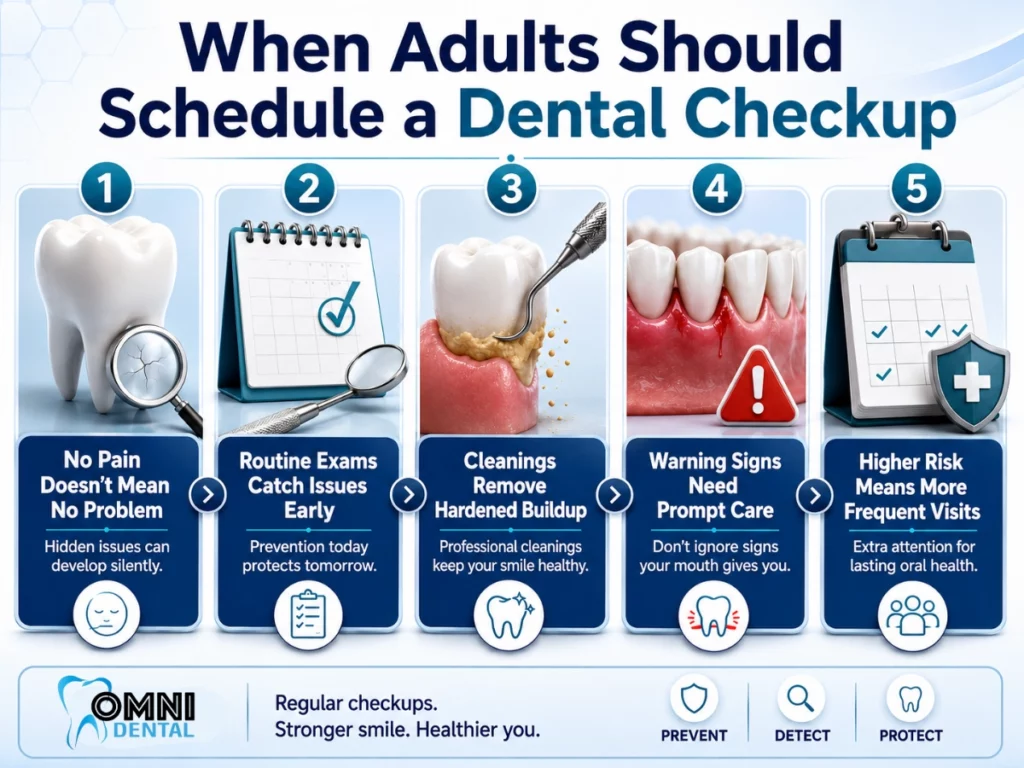
When should adults schedule a dental checkup?
Many adults benefit from a checkup every six months. However, the right schedule depends on your risk level, medical history, and current oral health.
Schedule a checkup soon if you notice bleeding gums, tooth pain, swelling, loose teeth, ongoing bad breath, dry mouth, sensitivity, or a sore that does not heal. These signs can point to tooth decay gum disease, infection, or another problem that needs care.
You may also need more frequent visits if you have diabetes, smoke, are pregnant, wear dentures, have frequent cavities, take medicine that causes dry mouth, or have a history of periodontal disease, also called gum disease.
| Sign or Situation | Why It Matters | Recommended Action |
|---|---|---|
| Bleeding Gums | May be an early sign of gum disease | Schedule a dental checkup soon |
| Tooth Pain or Sensitivity | Could indicate decay, infection, or enamel damage | Book a dental appointment promptly |
| Swelling in the Gums or Face | May signal infection or inflammation | Seek dental care as soon as possible |
| Persistent Bad Breath | Can be linked to gum disease or oral bacteria buildup | Discuss symptoms during a dental visit |
| Loose Teeth | May indicate advanced gum disease or bone loss | Schedule an evaluation immediately |
| Dry Mouth | Can increase the risk of cavities and gum problems | Ask about prevention and treatment options |
| More Than 6 Months Since Last Cleaning | Plaque and tartar may build up over time | Schedule a preventive cleaning |
| Higher-Risk Health Conditions | Diabetes, smoking, pregnancy, or gum disease increase oral health risks | Follow a dentist-recommended visit schedule |

Why cleanings are essential even when your teeth feel fine
Many adults assume they can delay a dental visit when they have no pain. However, cleanings are essential because they help prevent problems before symptoms appear.
For example, tartar can irritate the gums and raise the risk of gum health problems. Over time, untreated gum disease can lead to bone loss and tooth loss. Dentists can also find early changes in the mouth that patients may not see at home.
The American Dental Association explains that daily home care helps lower the risk of cavities and gum disease. Still, professional care supports prevention and early treatment. The ADA’s home oral care guidance also stresses the value of brushing, cleaning between teeth, and getting dental exams.
How to make dental visits easier to keep
Fear, cost, and a busy schedule can make dental care harder to manage. Start by calling the dental office and asking what to expect during a preventive visit. Many offices can explain costs, insurance coverage, payment options, and appointment length before you arrive.
You can also tell the dental team if you feel nervous. Dentists hear this often. Many can slow the visit down, explain each step, and help you feel more in control.
Do not wait until you have pain before making an appointment. Preventive visits are usually simpler than emergency care. They also help protect your smile, comfort, and overall health.

Book the checkup before a small problem becomes a bigger one
Adults may understand that oral health matters, but daily life still gets in the way. A checkup works best before pain starts.
A regular visit can remove buildup, protect your gums, catch cavities early, and support long-term health. So, if more than six months have passed since your last cleaning or more than a year since your last exam, now is a good time to schedule one.

About the author
Dr. Bilus D PolesDDS,MAGD,DICOI, DIDIA
Founder and lead dentist of Omni Dental of Arlington Heights. Master of the Academy of General Dentistry and Board Certified Diplomate of the ICOI and IDIA. Illinois license #019.027365.