

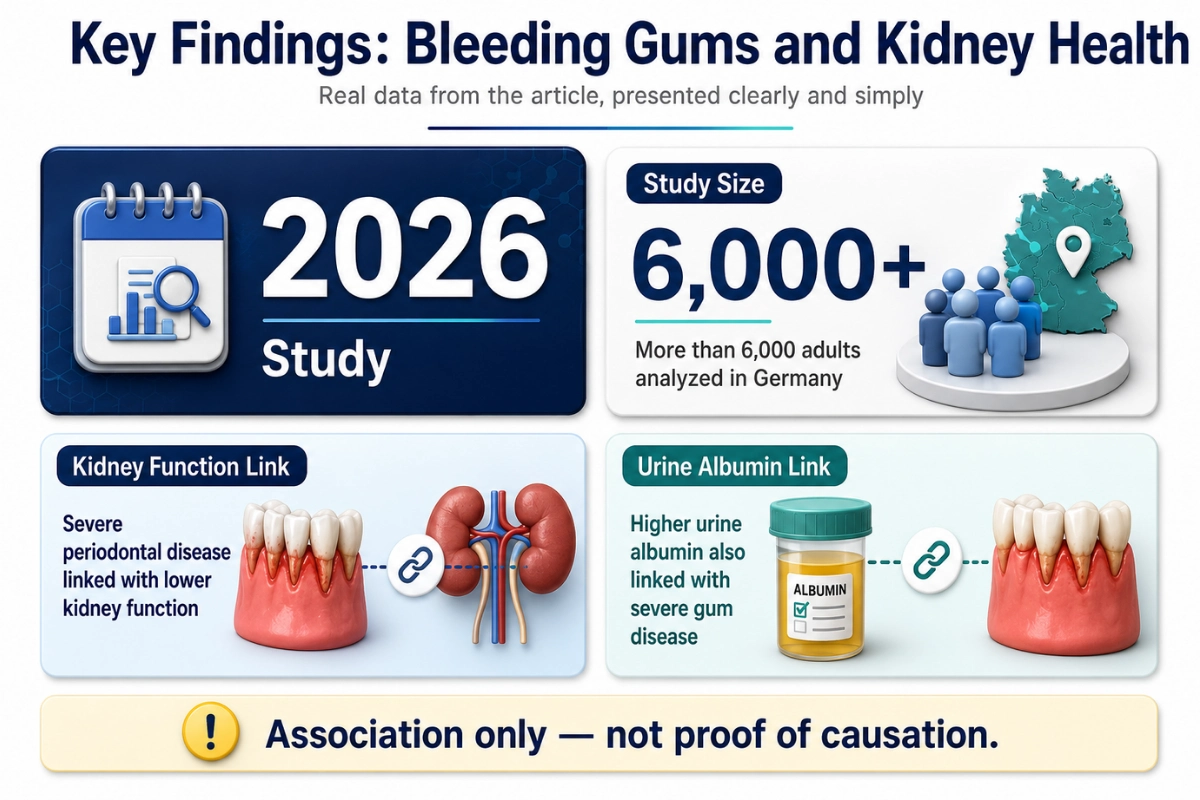
Bleeding gums and kidney health may be connected. A 2026 study of more than 6,000 German adults linked severe gum disease to lower kidney function. It shows an association, not proof that gum disease causes kidney decline. Bleeding gums are still worth raising with your dentist.
Key Takeaways
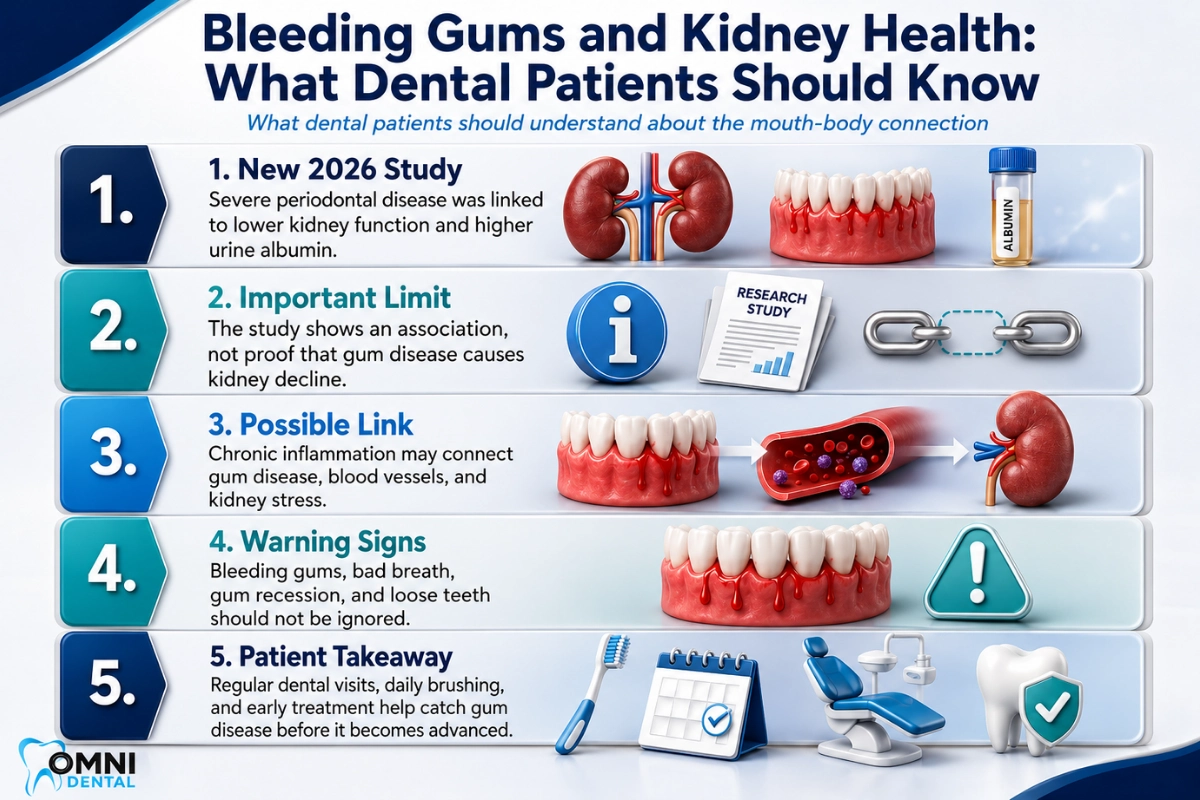
- A 2026 study linked severe periodontal disease to lower kidney function and higher urine albumin, even after adjusting for age, diabetes, and smoking.
- The study does not prove gum disease causes kidney decline. It shows an association worth watching.
- Chronic inflammation from gum disease may explain part of the link, though other pathways likely play a role too.
- Bleeding gums, loose teeth, and gum recession should not be ignored, since they may reflect broader health problems.
- Regular dental visits remain one of the simplest ways to catch gum disease early.
Estimated read: 4 min
The 2026 gum disease and kidney study raises questions about what oral health can reveal about the rest of the body.
What the new research found
The study, published in the International Journal of Oral Science, analyzed more than 6,000 adults in Germany. Researchers classified periodontal disease severity and measured kidney function using standard blood and urine tests.
The pattern held consistently across the data. As kidney function declined, severe gum disease became more common. People with the most advanced kidney stress were also more likely to have advanced gum disease. The link held up even after researchers adjusted for age, diabetes, and smoking.
Chronic inflammation appeared to explain part of the connection. Still, it accounted for only a fraction of the association. This suggests other biological pathways may also connect the mouth and kidneys.
Why gum disease and kidney health may be connected
Gum disease is not just a dental health issue. This chronic inflammatory condition can affect the immune system and circulation throughout the body. A similar pattern connects gum disease and heart health, where inflammation plays a comparable role.
Some researchers describe the relationship between the mouth and the kidneys as a two-way street. Gum disease may raise inflammation and stress on blood vessels. Meanwhile, chronic kidney disease (CKD) can weaken the body’s ability to fight infection and heal oral tissue. That combination may make gum problems harder to manage for people with kidney disease.
This research does not establish that gum disease directly causes kidney decline. The study design only shows that the two conditions tend to appear together, not which one comes first.
Common warning signs of gum disease are easy to miss day-to-day. Persistent bad breath, bleeding gums when brushing, and gum recession are often the first visible clues. Each one is worth mentioning at a checkup rather than waiting for pain.
What this means for dental patients
The takeaway is not that cleaning prevents kidney disease. The takeaway is that dental care deserves attention as part of overall health. This matters especially for people managing diabetes, high blood pressure, or known kidney concerns. The National Kidney Foundation’s dental care guidance covers this connection in more detail for patients already managing kidney disease.
Kidney disease often has no early symptoms, and many people with reduced kidney function do not yet know it. That makes regular dental visits important.
Any visible warning sign in the mouth, such as bleeding or receding gums, deserves attention. A dentist or doctor should hear about it promptly rather than have it go unmentioned.
Daily brushing and professional deep cleanings remain among the most practical steps for preventing gum disease. Some patients need closer coordination with a dentist. This group includes people living with chronic kidney disease (CKD) or a kidney transplant.
For them, a gum specialist’s treatment plan may involve extra check-ins with the patient’s medical team, especially before certain dental procedures. Untreated gum disease can add to other health problems over time.
| Topic | What Dental Patients Should Know |
|---|---|
| Main Research Finding | A 2026 study linked severe periodontal disease with lower kidney function and higher urine albumin levels. |
| Does It Prove Cause and Effect? | No. The study shows an association between gum disease and kidney health, but it does not prove gum disease causes kidney decline. |
| Possible Connection | Chronic inflammation from gum disease may contribute to stress on the body, blood vessels, and immune system. |
| Common Gum Disease Warning Signs | Bleeding gums, persistent bad breath, gum recession, loose teeth, and inflammation should not be ignored. |
| Higher-Risk Patients | People with diabetes, high blood pressure, chronic kidney disease, or a kidney transplant may need closer dental and medical coordination. |
| Why Dental Visits Matter | Regular checkups help detect gum disease early, often before pain or advanced symptoms appear. |
| Daily Prevention | Brushing twice daily, flossing, and professional cleanings remain practical steps for supporting gum health. |
| Patient Takeaway | Bleeding or receding gums should be discussed with a dentist, especially for patients with known kidney concerns. |

Frequently asked questions
What are the dental considerations for patients with kidney disease?
Patients with kidney disease often face a higher risk of gum problems, dry mouth, and slower healing. Dentists may coordinate with a patient’s care team before major dental procedures. This coordination matters most for anyone who has had or is awaiting a kidney transplant.
Does kidney disease make your gums bleed?
Kidney disease can contribute to bleeding gums. Reduced kidney function may weaken the body’s ability to fight infection, which can make gums more prone to bleeding and inflammation. This is part of why oral health deserves extra attention for people with kidney disease.
What is the 2 2 2 rule in dentistry?
The 2 2 2 rule is an informal reminder, not an official guideline: brush twice daily for two minutes and visit a dentist twice a year. This routine supports early detection of tooth decay and gum disease before either becomes advanced.
Which tooth relates to the kidneys?
No specific tooth ties directly to kidney health. That idea comes from older, unproven charts, not current science. The newer research instead points to the overall condition of the gums, not any one tooth.
Early research on the mouth-body connection still needs more studies before it can support firm conclusions. For now, patients should bring up bleeding gums and other signs of gum disease at their next visit.
Concerned About Bleeding Gums?
Our Arlington Heights team can check your gum health and talk through any concerns, including if you’re managing kidney disease. Contact us or call (847) 483-8833 to schedule a visit.

About the author
Dr. Bilus D PolesDDS,MAGD,DICOI, DIDIA
Founder and lead dentist of Omni Dental of Arlington Heights. Master of the Academy of General Dentistry and Board Certified Diplomate of the ICOI and IDIA. Illinois license #019.027365.