How to tell if a tooth needs a crown or filling comes down to how much healthy tooth structure remains. Small, contained cavities usually need a filling. Large decay, a crack, a failed old filling, or a root canal usually calls for a crown to protect the tooth.
Key Takeaways
- Fillings work best for small, contained cavities where most of the natural tooth is intact.
- Crowns are usually needed when a tooth is too decayed or damaged for a filling to hold up.
- With good oral hygiene, a crown often outlasts a large filling.
- Over-the-counter pain relievers can ease toothache pain short term, but they do not replace a dental visit.
Estimated read time: 5 minutes
If you’re unsure whether your tooth needs a crown or filling, the signs and factors below can help you prepare for that conversation with your dentist.
Fillings vs Crowns: What’s the Difference?
A filling replaces a small, tooth-colored section of a cavity while leaving the rest of the natural tooth intact. It’s a quick, targeted repair for early to moderate tooth decay.
A crown covers the entire visible portion of the tooth like a cap. Dentists use crowns when decay, a crack, or a previous filling has left too little structure to support a simple repair. A filling alone won’t hold up in that situation. Because a crown surrounds the whole tooth, it can withstand daily biting and chewing forces. A large filling simply can’t hold up as well over time.
Signs a Tooth Needs a Crown Instead of a Filling
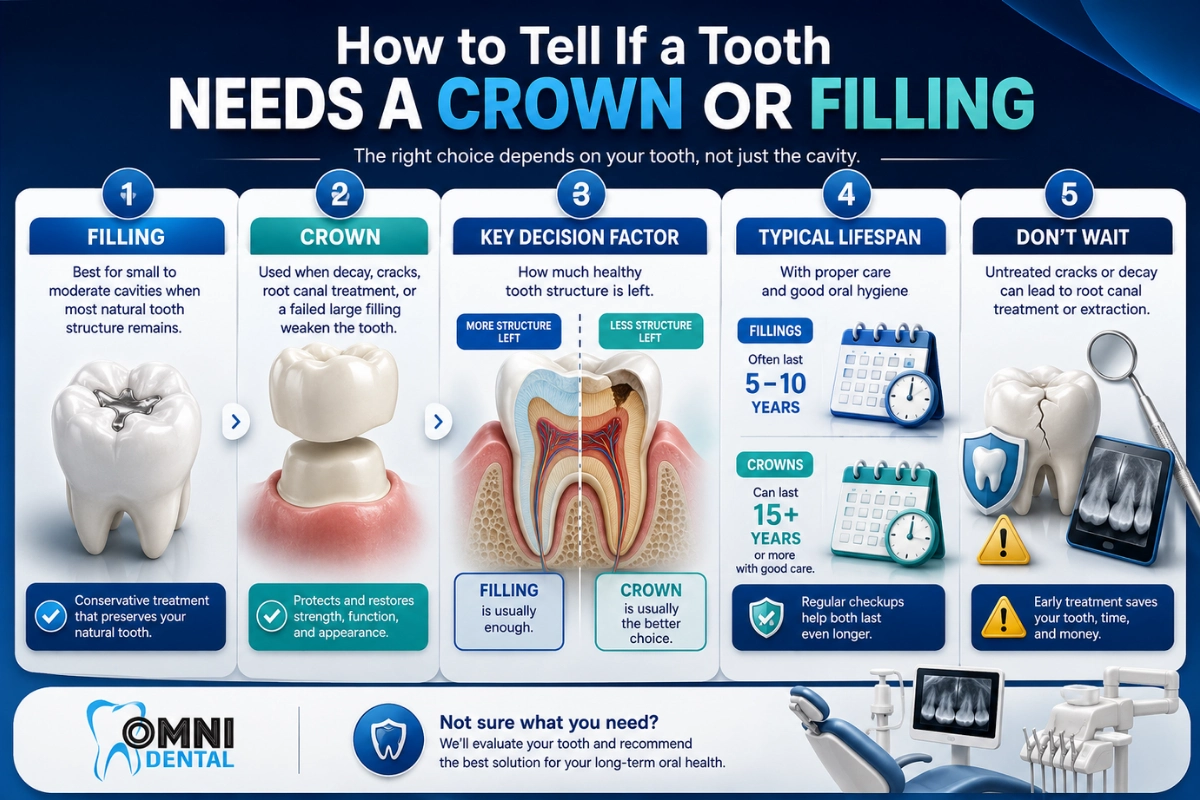
A tooth usually needs a crown instead of a filling when a large portion of the tooth is decayed or damaged, when a large old filling has failed, or when a cracked tooth needs support to avoid breaking further.
- The cavity covers most of the chewing surface
- A large crack extends toward the tooth’s root
- An old filling has cracked or come loose
- The tooth had a root canal and needs added strength
- Sharp tooth sensitivity to hot or cold suggests deeper damage
If your dentist mentions any of these during an exam, they’re likely recommending a crown for structural reasons, not convenience.
What Happens If You Ignore the Warning Signs?
Putting off treatment on a damaged or decayed tooth rarely makes the problem smaller. A crack can spread deeper into the tooth. A weakened area under an old filling can collapse under normal chewing. Once that happens, a simple filling often isn’t an option anymore, and the tooth may need a crown, a root canal, or in more serious cases, extraction.
Catching the problem early usually means simpler, less expensive treatment. Waiting rarely improves your options.
How to Tell If a Tooth Needs a Crown or Filling: Key Factors
| Factor | Filling | Crown |
|---|---|---|
| Size of decay | Small to moderate | Large, decayed or damaged |
| Remaining tooth structure | Mostly intact | Significantly reduced |
| Typical lifespan | Varies by size and material; large fillings wear sooner | Often longer than a large filling with good care |
| Best for | Early cavities | Cracks, large decay, post-root canal |

What About Toothache Pain? The 3-3-3 Rule
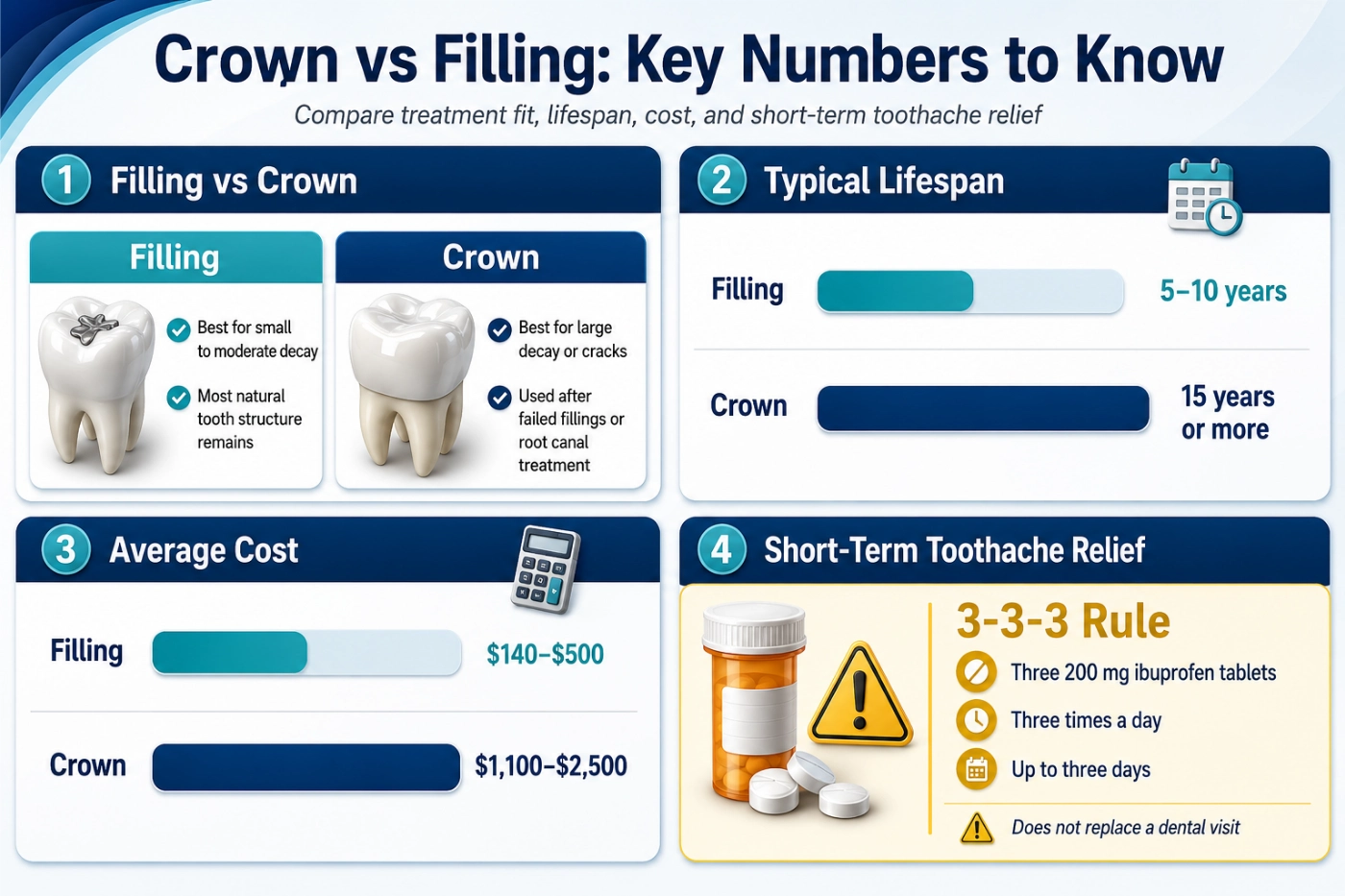
If a toothache hits before you can get to a dentist, you may see a “3-3-3 rule” online that involves taking ibuprofen several times a day for up to three days. It is not an official guideline, and some versions suggest more ibuprofen than the over-the-counter label allows. Follow the dosing on the package, and don’t take more unless a dentist or doctor tells you to.
Check with a pharmacist or doctor before taking pain relievers if you have ulcers, kidney issues, or take other medications. Pain relievers can ease discomfort while you wait for care, but they don’t treat the cause. If pain continues past a few days, don’t keep waiting. A root canal or other treatment may turn out to be necessary, and delaying it usually makes the fix more involved.
Average Cost of a Crown vs a Filling
A filling usually costs much less than a crown. Filling costs depend mainly on size and material. Crowns cost more because they involve lab work and a more complex fitting process, and the price varies with the material used.
The gap looks bigger upfront, but the long-term math often favors the crown when a tooth genuinely needs one. With good oral hygiene, a crown often lasts longer than a large filling. A large filling placed on a weak tooth may fail sooner and need replacement, sometimes with a crown anyway.
If you have dental insurance, plans typically cover a portion of both fillings and crowns, though crowns usually come with a lower coverage percentage due to their higher cost. Checking your plan’s annual maximum and asking your dentist for an estimate before major work can help you budget for the difference.

Preventing the Need for a Crown
Good oral hygiene is the simplest way to avoid needing a dental crown in the first place. Brushing twice daily, flossing, and keeping up with regular cleanings catch tooth decay while it’s still small enough for a tooth-colored filling to handle.
Dental fillings work best on a natural tooth that still has plenty of healthy structure left. Once decay spreads too far, or a tooth becomes damaged or decayed from years of untreated cavities, a filling stops being a realistic long-term fix. Regular checkups are what catch that shift early, while a filling is still on the table.
Why Do Dentists Recommend Crowns?
Crowns aren’t usually recommended to pad a bill. They’re recommended because a large filling in a badly damaged tooth is more likely to crack, leak, or fail. A crown protects what’s left of your natural tooth and spreads chewing force more evenly across it.
If you’re ever unsure why your dentist suggested a crown, ask them to explain what they saw and why a filling wouldn’t hold up. A good dentist will walk you through the reasoning, including X-rays, rather than just recommending the pricier option by default.
Not sure which option fits your tooth? Learn more about our crown options or reach out to discuss your specific case.
Frequently Asked Questions
At what point do you need a crown instead of a filling?
Generally once a large portion of the tooth is decayed or damaged, a crack threatens the tooth’s structure, or a large filling has already failed. At that point, a filling usually can’t hold up long term.
What is the 3-3-3 rule for toothaches?
It’s an informal approach to short-term toothache pain that involves taking ibuprofen for up to three days. It is not an official guideline, so follow the dosing on the package and ask a dentist or pharmacist before taking more. Pain relievers manage inflammation temporarily but don’t fix the underlying problem.
What is the average cost of having a crown put on a tooth?
Crown costs vary widely depending on the material used, any lab work involved, and your insurance coverage. Ask your dentist for an estimate before treatment so you know what to expect.
Why do dentists push for crowns?
Usually because the tooth’s remaining structure can’t safely support a filling. A crown protects a weakened tooth from cracking or breaking further under normal chewing pressure.
Not Sure What Your Tooth Needs?
Our Arlington Heights team can take a look and walk you through your options. Contact us or call (847) 483-8833 to schedule an exam.

About the author
Dr. Bilus D PolesDDS,MAGD,DICOI, DIDIA
Founder and lead dentist of Omni Dental of Arlington Heights. Master of the Academy of General Dentistry and Board Certified Diplomate of the ICOI and IDIA. Illinois license #019.027365.