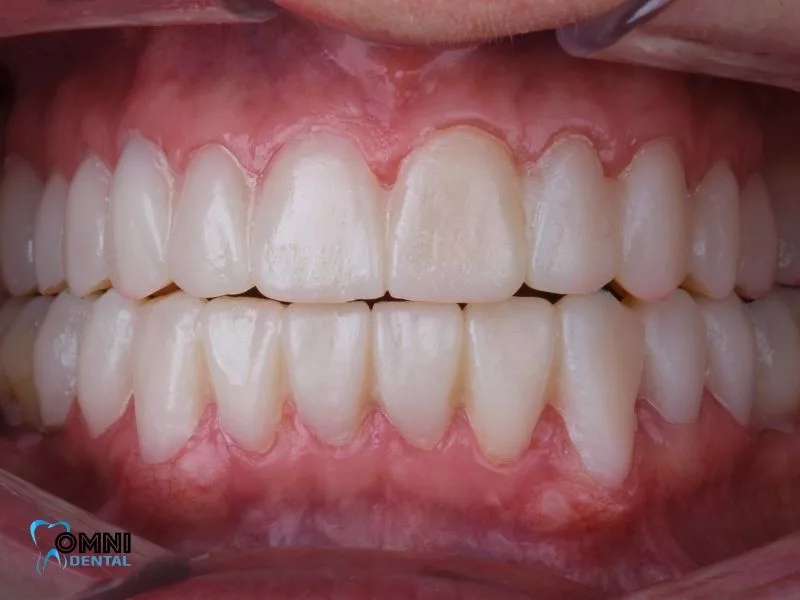

Common signs you need a new dental filling include pain when biting, lingering hot or cold sensitivity, and visible cracks. Dark edges around a filling or floss that keeps snagging can also point to decay or a gap. Replacing a failing filling early usually means a simple fix instead of a crown or root canal.
Key Takeaways
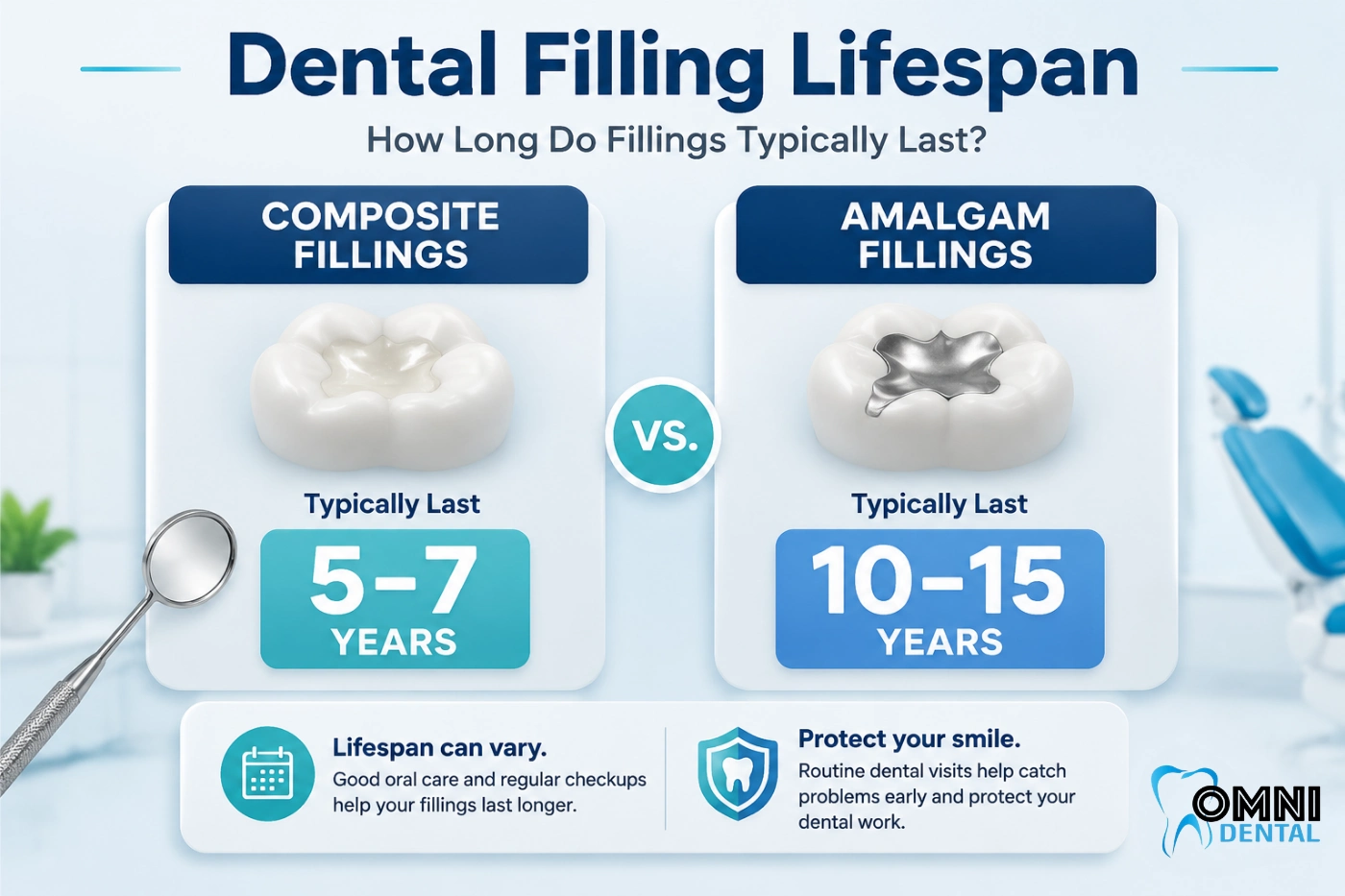
- Fillings don’t last forever. Composite fillings typically last 5 to 7 years, while amalgam fillings can last 10 to 15.
- Pain when biting, sensitivity to hot or cold, and visible cracks are the clearest signs you need a new dental filling.
- A failing filling rarely fixes itself, and waiting usually turns a small repair into a bigger one.
Estimated read time: 3 minutes
How Long Do Dental Fillings Actually Last?
Filling materials vary quite a bit in lifespan. Tooth-colored composite fillings typically last 5 to 7 years. Amalgam fillings often hold up 10 to 15 years. If your filling is older than that, it’s worth a closer look even without obvious symptoms.
Common Signs You Need a New Dental Filling
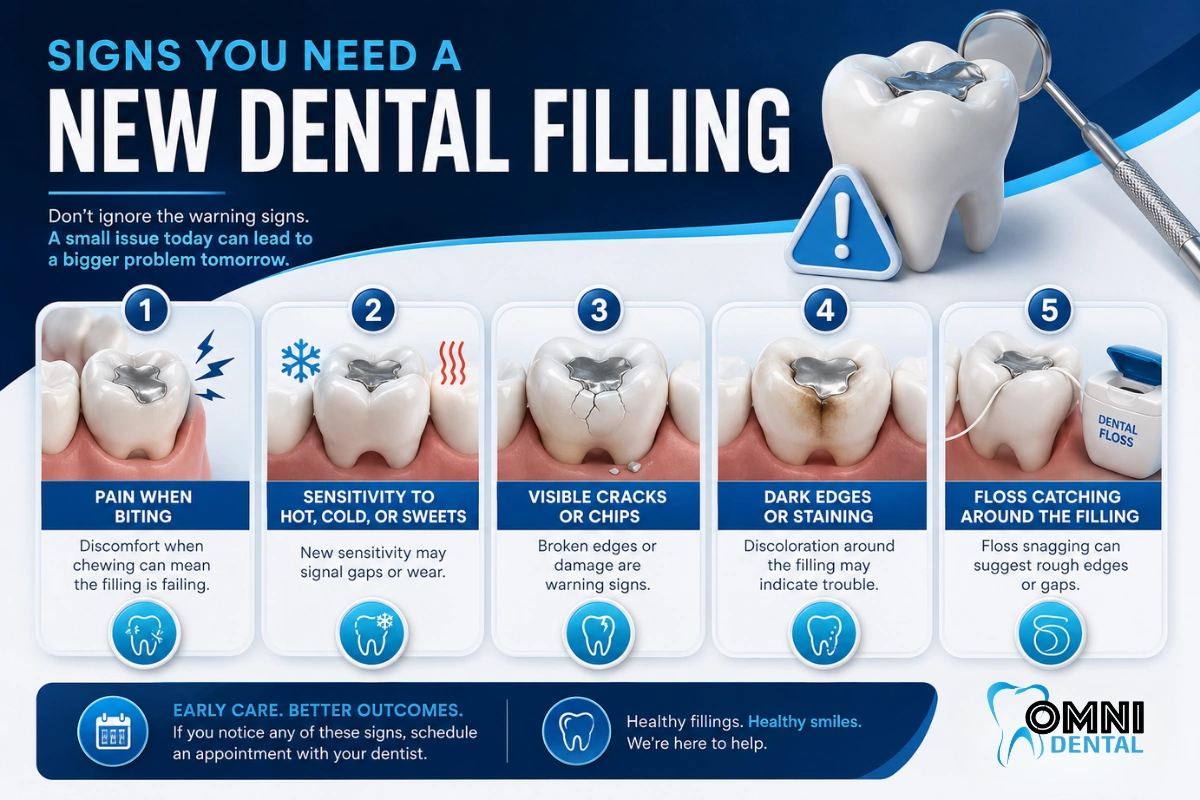
- Pain when you bite down: This often means the filling has cracked, shifted, or is pressing on a nerve.
- Sensitivity to hot, cold, or sweets: Sensitivity to hot foods or drinks that lingers can mean the seal around the filling has broken down.
- A visible crack or chip: Damage you can see is a sign the filling may no longer protect the tooth underneath.
- Dark edges or staining: A dark line around the filling can point to decay forming underneath it.
- Floss keeps snagging: A shifted or worn filling can leave a gap that traps food and shreds floss.
If your tooth feels different than it used to, whether that’s pain, roughness, or a strange edge, mention it to your dentist. That change is worth checking out.
| Sign | Possible Cause | Recommended Action |
|---|---|---|
| Pain when biting down | The filling may be cracked, shifted, or affecting the tooth nerve. | Schedule a dental exam to check whether the filling needs repair or replacement. |
| Sensitivity to hot, cold, or sweets | The seal around the filling may have weakened, allowing irritation near the tooth. | Have your dentist evaluate the filling before the problem worsens. |
| Visible cracks or chips | The filling material may be damaged and no longer fully protect the tooth. | A replacement may be needed to prevent further tooth damage. |
| Dark edges or staining | Decay may be developing around or underneath the filling. | An exam can determine whether decay is present and what treatment is needed. |
| Floss catching or shredding | A worn or shifted filling may have created a gap between teeth. | Ask your dentist to check the filling fit and surrounding tooth structure. |

Why Replacing a Failing Filling Sooner Is Better
A small dental issue rarely stays small. Bacteria can slip into any gap around a worn filling, and decay can spread underneath where you can’t see it. Catching a failing filling early usually means a simple replacement. Waiting can mean a bigger filling, a crown, or even a root canal. Regular checkups help your dentist catch these changes before you notice any pain at all.
Our guide to filling materials covers the different types of filling available if you’re due for a replacement and weighing your options.
What to Expect During a Filling Replacement
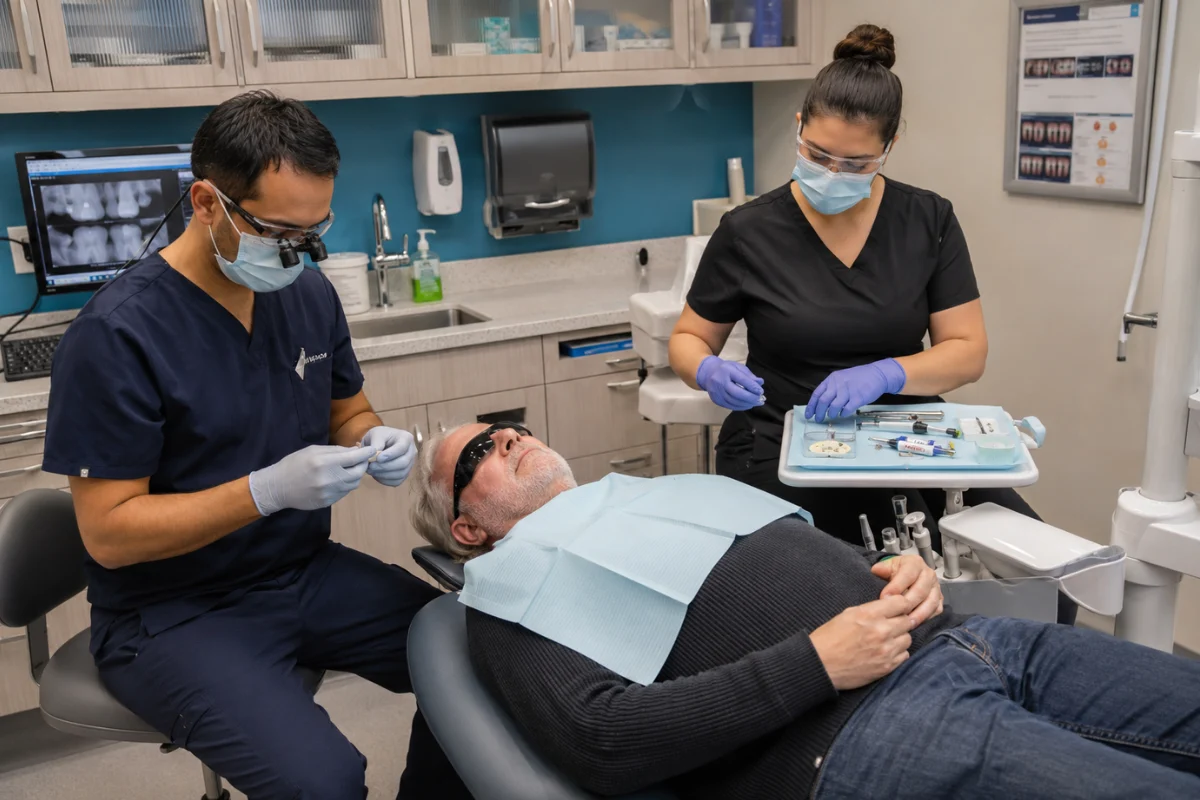
A filling replacement is usually a quick, straightforward visit. Your dentist removes the old material, checks the filled tooth for any decay underneath, and cleans the area before placing a new filling. Most patients are back to eating and drinking normally within a few hours.
If decay has spread further than expected, your dentist will let you know before moving forward, so there are no surprises mid-appointment.
Noticed one of these signs in your own mouth? Schedule an exam with our Arlington Heights team before it becomes a bigger issue.
Frequently Asked Questions
How do I know if my filling needs replacing?
Watch for pain when biting, lingering sensitivity, visible cracks, or dark staining around the edges. Any of these are reasons to get it checked at your next visit.
How many fillings are normal at 30?
There’s no single normal number. It depends on genetics, diet, and dental care history. Some adults reach 30 with none, while others have several, and both can be perfectly healthy outcomes.
Can I wait 2 years to fill a cavity?
It’s not recommended. Cavities tend to grow over time, and what starts as a simple filling can turn into a much larger repair if left untreated for that long.
Can fillings hurt years later?
Yes. A filling that was fine for years can start hurting if it cracks or wears down. Once the seal around it fails, bacteria can reach the tooth underneath.
Think Your Filling Needs a Look?
Our Arlington Heights team can check it out and let you know your options. Contact us or call (847) 483-8833 to schedule a visit.

About the author
Dr. Bilus D PolesDDS,MAGD,DICOI, DIDIA
Founder and lead dentist of Omni Dental of Arlington Heights. Master of the Academy of General Dentistry and Board Certified Diplomate of the ICOI and IDIA. Illinois license #019.027365.