Research from Johns Hopkins suggests oral bacteria linked to gum disease may travel to breast tissue and speed breast cancer growth. The bacterium, Fusobacterium nucleatum, caused inflammation and DNA damage in lab and animal studies. The findings are not yet confirmed in humans, but good oral hygiene still supports overall health.
Key Takeaways
- Johns Hopkins researchers found that Fusobacterium nucleatum, a bacterium tied to gum disease, can attach to and invade breast tissue.
- In lab and animal studies, the bacterium triggered inflammation, DNA damage, and faster tumor growth.
- Breast cells with BRCA1 mutations showed higher bacterial attachment.
- The study does not prove the bacterium causes breast cancer in humans.
- Brushing, flossing, and routine dental visits help limit harmful oral bacteria.
Estimated read: 6 min
New Research Connects Oral Bacterium to Breast Cancer
A new study links oral bacteria to breast cancer development and progression, raising important questions about how infections in the mouth may affect the rest of the body. Researchers at the Johns Hopkins Kimmel Cancer Center found that Fusobacterium nucleatum, a common oral bacterium, may interact with breast tissue in ways that promote breast cancer.
This bacterium is typically associated with gum disease. However, scientists now believe it may travel through the bloodstream and influence human breast cancer cells. While the findings are significant, experts stress that breast cancer is still driven by multiple risk factors, and this research is not yet conclusive in humans.
How Fusobacterium Nucleatum Affects Cancer Cells
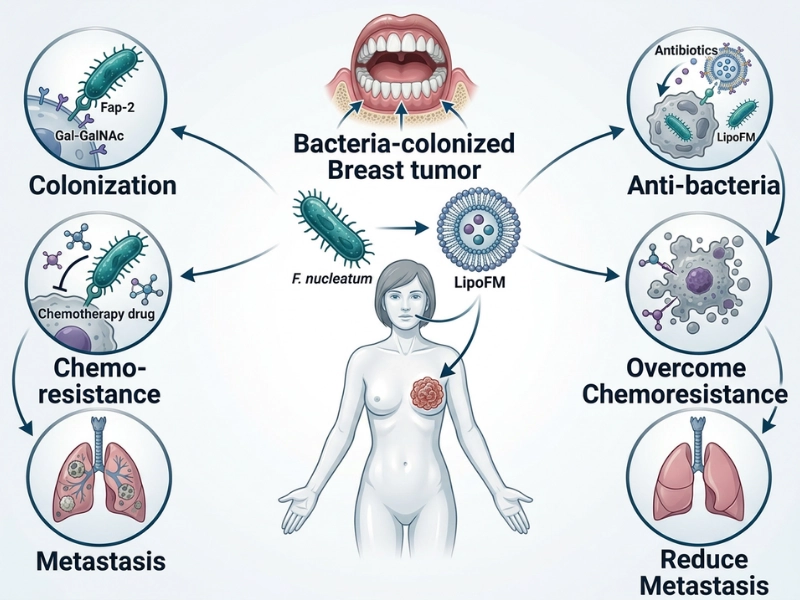
The study shows that Fusobacterium nucleatum can attach to and invade breast tissue. Once present, it may disrupt normal cell function and trigger harmful biological changes.
Researchers observed:
- Inflammation, DNA damage, and increased cell proliferation
- Formation of metaplastic and hyperplastic lesions
- Changes in cell communication and signaling
- Increased resistance in each cancer cell to treatment
These effects can lead to accelerated tumor growth, making cancer more aggressive. In simple terms, the bacteria may create an environment that helps tumors grow and spread faster.
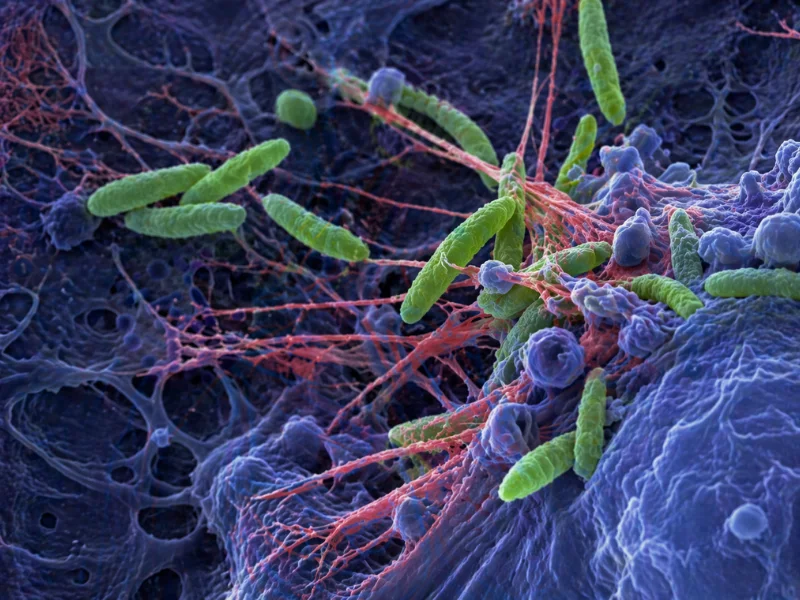
Microscopic imaging supported these findings. In lab samples, green stains the bacteria, while blue stain shows the actin filaments of the cell structure. At the same time, the red stain reveals the actin filaments of the cell structure, helping scientists visualize how the bacteria interact with cells.
| Section | Key Findings | Impact on Health |
|---|---|---|
| Main Bacterium | Fusobacterium nucleatum linked to gum disease | May travel through bloodstream to breast tissue |
| Cellular Effects | Inflammation, DNA damage, increased cell growth | Accelerates tumor development and progression |
| BRCA1 Connection | Mutated cells show higher bacterial attachment | Increased susceptibility to infection and cancer risk |
| Transmission Pathway | Bacteria enter bloodstream via gum disease | Spread to distant organs including breast tissue |
| Research Evidence | Preclinical models show faster tumor growth | Human confirmation still needed |
| Oral Health Role | Brushing, flossing, dental visits reduce bacteria | May help limit systemic inflammation |
The Role of BRCA1 Mutations in Increased Risk
The study also highlights how genetics may influence susceptibility. Researchers focused on epithelial cells with mutant BRCA1 harboring F nucleatum, which showed a higher likelihood of bacterial attachment.
A breast cell with mutant BRCA1 produces altered surface molecules. These changes allow the bacteria to bind more easily, increasing the chances of infection and damage.
This finding suggests that individuals with BRCA1 mutations may face a higher breast cancer risk when exposed to this oral bacterium. However, it is important to note that this is only one piece of a much larger puzzle.
From Gum Disease to Breast Tissue
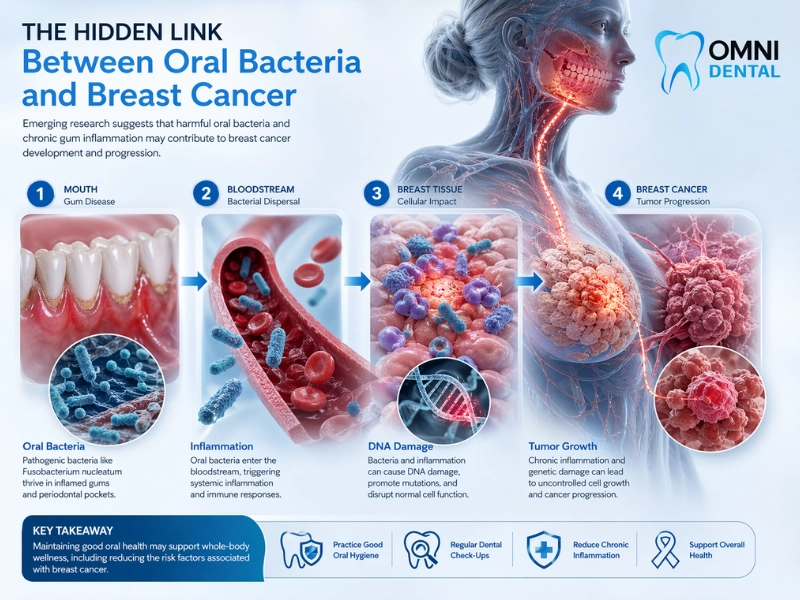
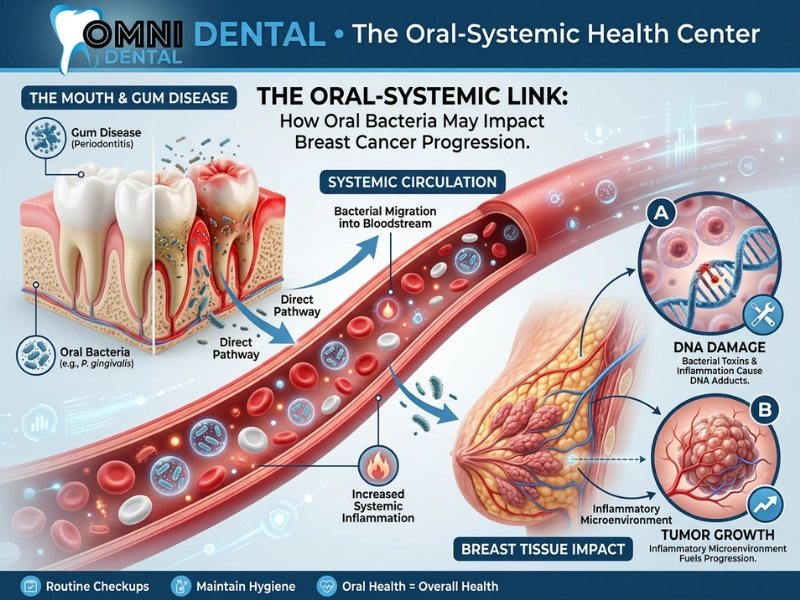
Scientists believe the pathway begins in the mouth. Gum disease allows bacteria like Fusobacterium nucleatum to enter the bloodstream. From there, it can travel to distant tissues, including the breast.
This process may connect oral health issues to disease to breast cancer pathways. Once the bacteria reach breast tissue, they may:
- Trigger inflammation
- Damage DNA
- Disrupt normal cell growth
These changes can contribute to tumor formation and progression. Still, researchers caution that this mechanism has mainly been observed in laboratory and animal models.
Evidence From Johns Hopkins Research
The work from Johns Hopkins Kimmel Cancer Center builds on earlier studies linking Fusobacterium nucleatum to other cancers. This newer research goes further by showing how the bacteria may act earlier in the disease process.
In preclinical models, scientists found that exposure to this bacterium led to:
- Faster tumor growth
- Increased spread to other organs
- Greater bacterial presence in breast tissue
These findings suggest that the bacteria may not only initiate changes but also promote breast cancer once it begins.
The research was supported by the Defense Breast Cancer Research Program grants BC191572 and BC210668, the John Fetting Fund for Breast Cancer Prevention, and the Bloomberg Kimmel Institute for Cancer Immunotherapy, highlighting the growing investment in understanding cancer biology.
What the Study Does Not Prove
Despite strong laboratory evidence, the study does not confirm that Fusobacterium nucleatum directly causes breast cancer in humans. Most of the data comes from controlled experiments rather than large-scale clinical trials.
Some population studies suggest a link between gum disease and cancer. Others show no clear connection. This mixed evidence means scientists must continue investigating before drawing firm conclusions.
Breast cancer remains a complex condition influenced by:
- Genetics
- Lifestyle factors
- Hormonal changes
- Environmental exposures
The presence of bacteria may be one contributing factor, but it is unlikely to act alone.
The Emerging Role of the Breast Microbiome
Researchers are now exploring the idea that breast tissue contains its own microbiome. This includes both harmful and potentially beneficial bacteria.
While Fusobacterium nucleatum appears to support tumor growth, other microbes may help the immune system fight cancer. This creates a more complex picture of how bacteria influence disease.
Understanding this balance could lead to new treatment strategies. For example, future therapies might target harmful bacteria while supporting beneficial ones.

Why Oral Health Still Matters
Even though the research is still developing, maintaining good oral hygiene remains essential. Gum disease is already linked to several serious health conditions, including heart disease and respiratory infections.
Reducing oral bacteria may lower inflammation throughout the body. While it is not yet proven to prevent cancer, it supports overall health.
Key habits include:
- Brushing teeth twice daily
- Flossing regularly
- Using antibacterial mouthwash
- Visiting a dentist for routine care
These steps can help limit the spread of harmful bacteria and improve long-term health outcomes.
What This Means Moving Forward
This study adds to growing evidence that the body’s systems are deeply connected. The idea that an oral bacterium could influence breast cancer highlights the importance of looking beyond traditional risk factors.
At the same time, experts urge caution. The findings are promising but still preliminary. More human studies are needed to confirm whether these mechanisms apply outside the laboratory.
For now, the research serves as a reminder that small factors, like oral health, may play a larger role than previously understood.
Stay Updated on Emerging Cancer Research
As scientists continue to study the link between bacteria and cancer, new discoveries are likely to follow. The connection between Fusobacterium nucleatum and breast cancer is still being explored, but it represents an important step forward.
Staying informed about developments in cancer research can help individuals make better health decisions. While this study does not change medical guidelines yet, it opens the door to future breakthroughs in prevention and treatment.

About the author
Dr. Bilus D PolesDDS,MAGD,DICOI, DIDIA
Founder and lead dentist of Omni Dental of Arlington Heights. Master of the Academy of General Dentistry and Board Certified Diplomate of the ICOI and IDIA. Illinois license #019.027365.