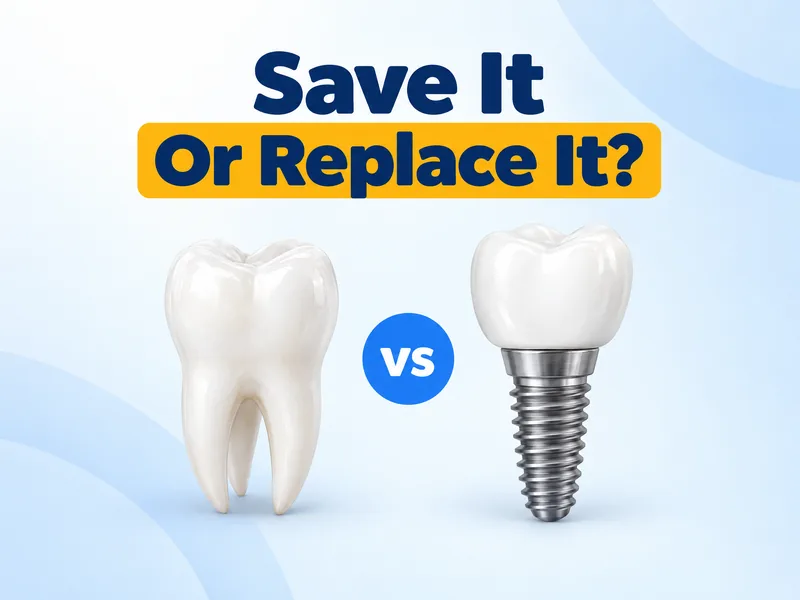
In the root canal vs extraction decision, a root canal cleans out infected pulp and keeps your natural tooth. An extraction removes the whole tooth, so you then choose how to fill the gap. Only a dental exam can show whether your dentist can save your tooth.
Key Takeaways
- The ADA lists deep cavities, repeated dental work, cracks, and injuries as causes of pulp damage.
- A tooth restored after a root canal can last a lifetime with proper care, the ADA says.
- Teeth next to a gap may shift, and bone loss can occur around a missing tooth.
- Saving a tooth depends on the source of the infection and how severe the decay is.
Estimated read: 4 min
Root Canal vs Extraction: What Is the Difference?
Both treatments deal with a tooth that has a damaged or infected pulp. The pulp is the soft tissue inside the tooth. According to the ADA’s MouthHealthy guide to root canals, it holds the tooth’s nerves and blood vessels.
So the real question is whether that tooth stays or goes. Your dentist starts with an exam and X-rays, which the ADA lists as the first step before a root canal. Those images show how far the damage reaches.
A root canal removes the infected pulp but keeps the tooth. At Omni Dental, the canals are then cleaned, disinfected, and sealed with a rubber-like material called gutta-percha. An extraction, by contrast, takes the whole tooth out.
The table below compares root canal vs extraction side by side.
| Factor | Root canal | Extraction |
|---|---|---|
| Your natural tooth | Stays in place | Removed completely |
| Restoration after | Final filling or crown | Bridge, implant, or denture for the gap |
| Nearby teeth | Keep their neighbor | May shift into the empty space |
| Early healing focus | Sensitivity for a few days | Protecting the blood clot in the socket |

When Can a Root Canal Save Your Tooth?
A root canal makes sense when infection reaches the pulp but your dentist can still repair the tooth. The ADA lists these common causes of pulp damage:
- A deep cavity
- Repeated dental procedures on the same tooth
- A cracked or fractured tooth
- An injury, even without a visible crack or chip
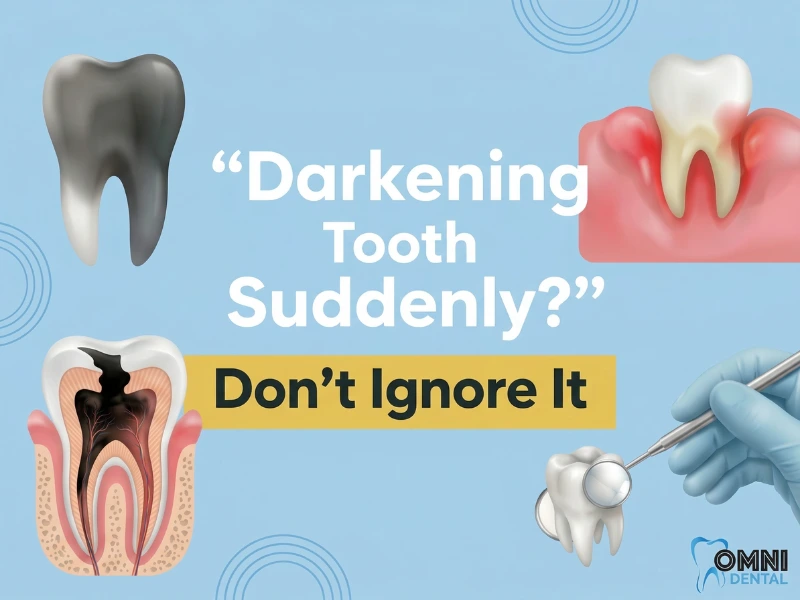
Omni Dental lists warning signs such as a severe toothache and lasting sensitivity to hot or cold. The ADA also notes that an untreated infection can form an abscess and put the tooth at risk. That is why early care matters.
During the treatment, your dentist follows a set of steps that MedlinePlus describes:
- Numb the area with a gel and an anesthetic injection.
- Open the top of the tooth to reach the pulp.
- Remove the infected pulp with small tools called files.
- Clean and rinse the canals with a disinfecting solution.
- Fill and seal the canals, then cover the top, often with a temporary filling.
Saving the tooth has a clear benefit. With proper care, the ADA says a tooth restored after a root canal can last a lifetime. That care includes daily brushing and flossing plus regular dental visits.
When Is Extraction the Better Choice?
Dentists cannot save every tooth. MedlinePlus explains that saving a tooth depends on the source of the infection and how severe the decay is. Without treatment, the tooth may become so damaged that it has to come out.
In that case, your dentist will explain why they cannot restore the tooth. Omni Dental describes tooth extraction as often a last resort. It is for a badly damaged, decayed, or infected tooth that other treatments cannot save.
Plan for the gap before the extraction day. The ADA notes that remaining teeth may shift into the space, and bone loss can occur around a missing tooth. A large gap may also affect how you speak or eat.
An extraction also needs time to heal. The MedlinePlus dry socket guide says a blood clot forms in the empty socket. That clot protects the bone underneath while it heals.

What Happens After Each Treatment?
After a root canal, the tooth may feel sensitive for a few days, according to the ADA. At a follow-up visit, your dentist replaces the temporary filling with a final filling or a crown.
Until then, Omni Dental advises avoiding hard foods that could damage the tooth while it heals. Later, a follow-up visit with an X-ray confirms that the infection has cleared, as MedlinePlus explains.
After an extraction, the next step is choosing how to fill the space. The ADA describes three main ways to replace a lost tooth.
| Option | How the ADA describes it |
|---|---|
| Dental bridge | Anchored to the teeth next to the gap |
| Denture | For people missing all or most of their teeth |
| Dental implant | The option most similar to a natural tooth |
Each option fits a different mouth, so ask about all of them at your consultation. Our guide to the pros and cons of dental implants vs bridges compares two of them in more detail.
What Should You Ask Your Dentist Before You Decide?
A short list of questions makes the visit easier. Bring it to your exam, and write down the answers so you can compare them at home.
- Can this tooth hold a filling or crown after treatment?
- Will I need a crown, and when would you place it?
- Which replacement fits my mouth if the tooth comes out?
- What will each option cost with my insurance, including any replacement tooth?
- Should I see an endodontist for this tooth?
- What should I watch for while the area heals?
Your answers depend on your own X-rays and exam. Because of that, a friend’s experience may not match your case, even with the same tooth.
Have a painful tooth? Learn more about root canal therapy in Arlington Heights at Omni Dental.
Frequently Asked Questions
Does a root canal hurt?
The ADA says there is little to no pain during a root canal, because the dentist numbs the area with local anesthesia. After treatment, the pain you felt before should be gone, though the tooth may feel sensitive for a few days. Talk with your dentist about how to ease any discomfort.
How many visits does a root canal take?
A root canal usually takes one or two office visits, according to the ADA. Then a follow-up visit places the final filling or crown. In some cases, your dentist may refer you to an endodontist, a dentist who specializes in the pulp and the tissues around the tooth roots.
Can I go back to work after a root canal?
Most people return to their normal activities the same day, according to MedlinePlus. However, avoid chewing hard on the treated tooth until it has its final filling or crown. If you feel some discomfort, MedlinePlus notes that an over-the-counter anti-inflammatory medicine can help, but follow your dentist’s advice.
What is dry socket after a tooth extraction?
Dry socket happens when the blood clot in the socket is lost or does not form well, which exposes the bone. MedlinePlus says severe pain often starts one to three days after the tooth is pulled. Using a straw, smoking, and heavy rinsing can raise the risk.
Ready to Find Out if Your Tooth Can Be Saved?
The right answer to root canal vs extraction depends on your tooth, so the first step is an exam. Call Omni Dental at (847) 483-8833 to book a visit at our Rand Road office.

About the author
Dr. Bilus D PolesDDS,MAGD,DICOI, DIDIA
Founder and lead dentist of Omni Dental of Arlington Heights. Master of the Academy of General Dentistry and Board Certified Diplomate of the ICOI and IDIA. Illinois license #019.027365.