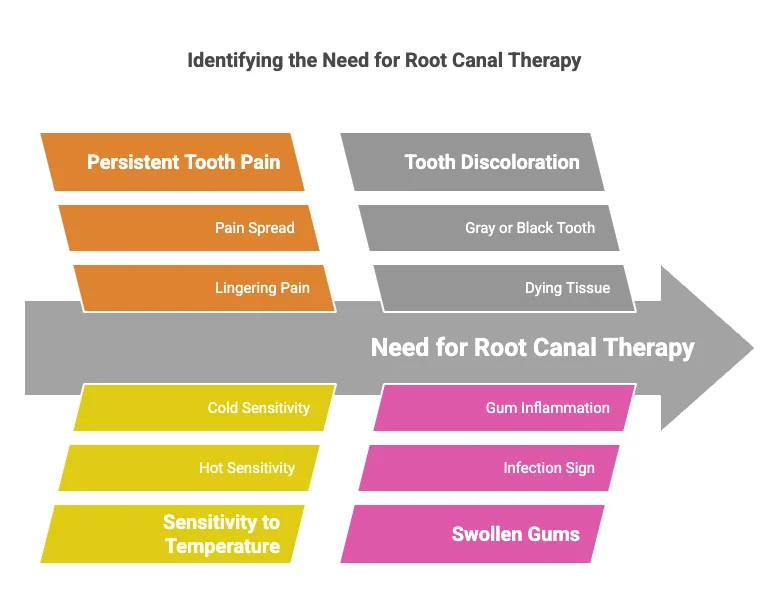
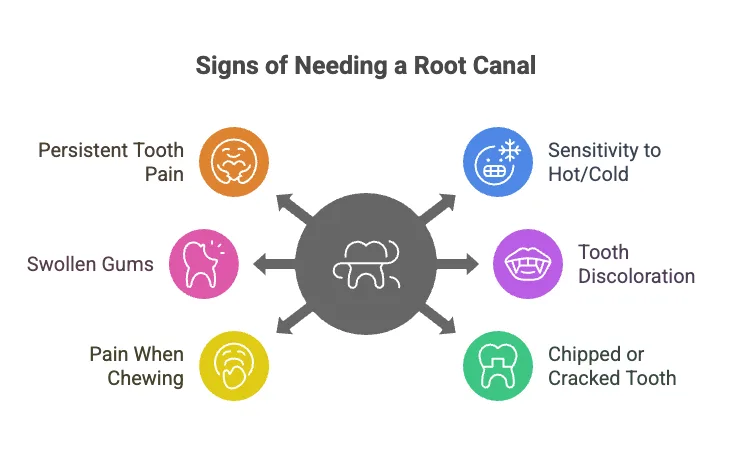
Consider a root canal when you have lingering tooth pain, sensitivity to hot or cold that lasts, swollen gums, or a darkening tooth. Pain when chewing and a chipped or cracked tooth can also signal infected pulp. Early treatment can save the tooth, while waiting too long may mean extraction.
Key Takeaways
Root canals treat infected or damaged dental pulp, the nerves and blood vessels inside a tooth.
Pain that lingers after hot or cold food or drinks often points to pulp infection.
A pimple-like bump on the gum near a tooth usually means infection.
The tooth is numbed, the pulp removed, the inside cleaned and sealed, and a crown may be added.
Root canals are often completed in one or two visits.
Estimated read: 4 min
When to Know You Need a Root Canal
If you’re experiencing severe tooth pain, you may be asking yourself When to Consider a Root Canal: Signs You May Need This Important Treatment. Recognizing the common signs early can help save the tooth and avoid more serious problems later. A root canal treatment may sound intimidating, but modern dental procedures are typically painless and highly effective at restoring your smile.
Let’s explore how these treatments do more than just brighten your smile.
Common Signs You May Need a Root Canal
Several common symptoms point to problems with the dental pulp—the soft tissue in the center of your tooth that contains nerves and blood vessels. When to Consider a Root Canal: Signs You May Need This Important Treatment can help you understand when to act. If the tooth is infected, you may need a root canal to protect your oral health.
Sign
Details
Persistent Tooth Pain
First, persistent pain that doesn’t go away stands out as one of the most common signs of pulp damage. When the affected tooth hurts during the day or keeps you up at night, you should schedule a dental exam.
Sensitivity to Hot or Cold
Next, if you feel sharp, dull, or deep pain when eating or drinking hot or cold items—and the pain lingers even after removing the trigger—it often indicates infection. This happens because the damaged nerves and blood vessels inside the dental pulp react to temperature changes.
Swollen Gums
Also, swollen gums near the affected tooth, especially with tenderness or a small pimple-like bump, usually mean the tooth is infected. This swelling shows that your body fights off bacteria inside the root.
Tooth Discoloration
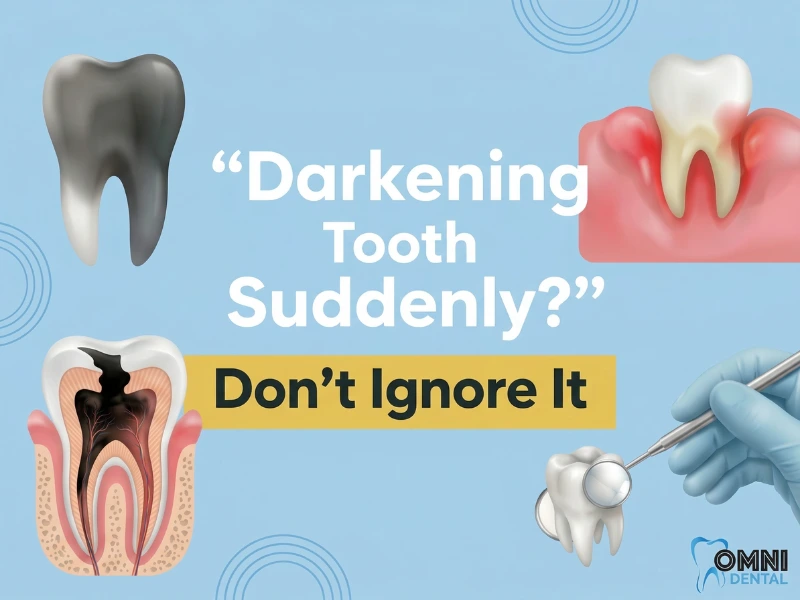
In addition, a tooth that turns dark gray or black often signals trauma or infection. This discoloration strongly suggests the dental pulp is dying, and you may need root canal treatment.
Pain When Chewing or Touching
Furthermore, if chewing, biting down, or lightly touching the affected tooth causes pain, infection likely affects the root. This discomfort clearly signals that a root canal procedure might be necessary.
Chipped or Cracked Tooth
Finally, a chipped or cracked tooth exposes the dental pulp to bacteria, which can lead to infection. Whether caused by an accident or normal wear, you should get even small cracks examined promptly.
What the Root Canal Procedure Involves
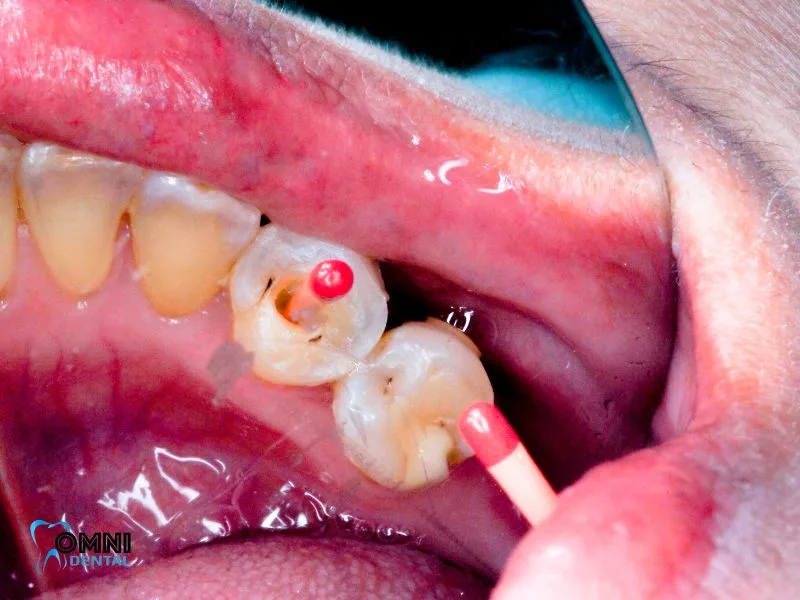
Understanding the root canal procedure helps ease anxiety. The goal is to remove the infected dental pulp, clean the inner space, and seal the tooth to prevent future infection.
Here’s what typically happens during a root canal treatment:
Step
Description
1. Numbing
The affected tooth is numbed to ensure comfort.
2. Pulp Removal
The dentist removes the damaged nerves and blood vessels.
3. Cleaning & Shaping
The inside of the tooth is thoroughly cleaned and shaped.
4. Filling
The tooth is filled and sealed to prevent reinfection.
5. Crown Placement
A crown may be added for full protection and strength.
Root canals are often completed in one or two visits and are designed to save the tooth without the need for extraction.
Why It’s Important to See Your Dentist Early
It’s always important to see your dentist if you experience any of the root canal symptoms listed above. Delaying treatment could lead to tooth loss, abscess formation, or the spread of infection.
Remember:
Early treatment can save the tooth
Waiting too long may require extraction
Most dental procedures, including root canals, are easier when done early
FAQs About Root Canal Treatment
What are the signs of needing a root canal?
Look for common symptoms like persistent pain, sensitivity to hot or cold, swollen gums, and tooth discoloration. A chipped or cracked tooth may also signal infection.
How does a dentist decide if I need a root canal?
Dentists examine the dental pulp with X-rays and clinical tests. If the tooth is infected or the pulp is damaged, they will likely recommend a root canal procedure to save the tooth.
Can a root canal fail or need to be repeated?
Yes, if a previously treated affected tooth develops new symptoms like pain or swelling, it might need another root canal treatment.
When is it too late for a root canal?
If the damage is severe or infection has spread to the jawbone, the dental procedure may no longer be possible. In such cases, extraction is the only option.
Contact Us Today!
Schedule your appointment at Omni Dental and ensure your family receives the best dental care in the NW Chicago suburbs. Together, let’s keep those young smiles bright and healthy!
Founder and lead dentist of Omni Dental of Arlington Heights. Master of the Academy of General Dentistry and Board Certified Diplomate of the ICOI and IDIA. Illinois license #019.027365.