In a yearlong trial, omega-3 plus low-dose aspirin worked about as well as antibiotics for severe gum disease. The result doesn’t mean supplements replace antibiotics in every case, since every patient also received professional scaling. Supplements may suit patients who can’t take antibiotics, but your dentist should guide dosing and treatment choices.
Key Takeaways
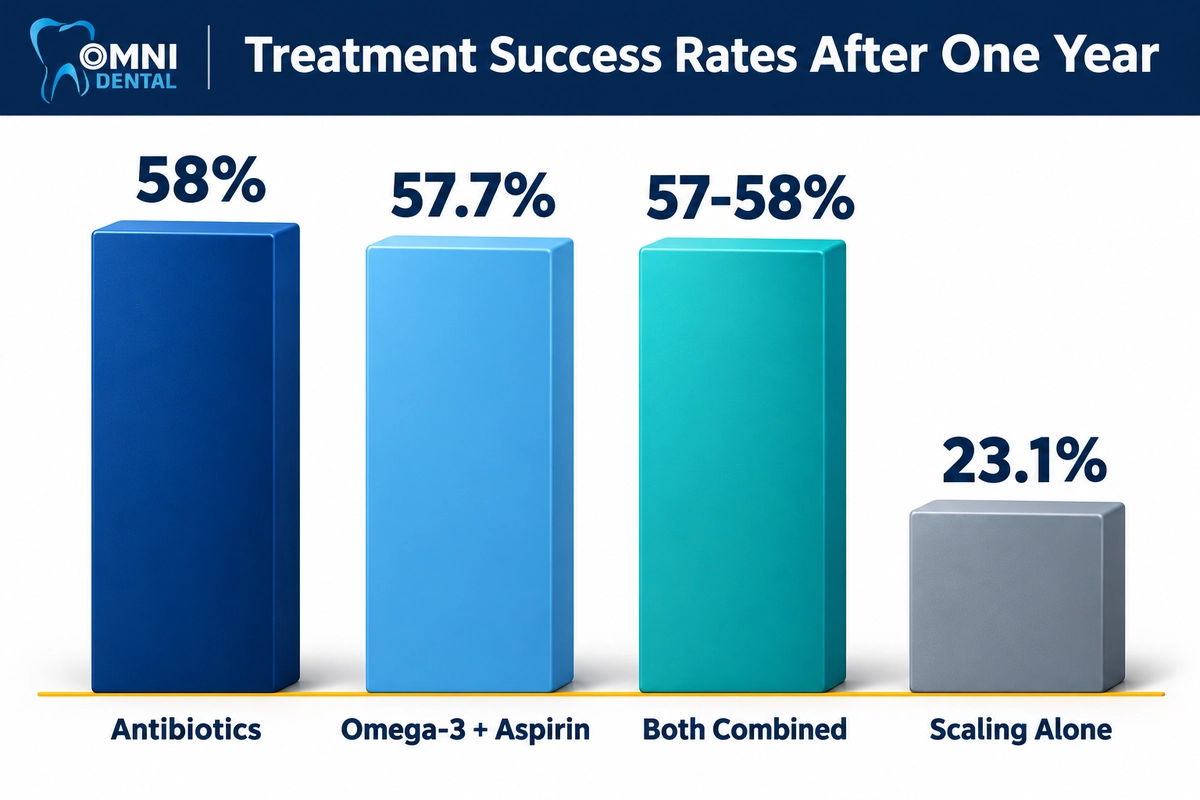
- A new study in the Journal of Periodontology found omega-3 and low-dose aspirin matched antibiotics for severe gum disease (57.7% vs 58% success rate).
- Supplements work by helping your body naturally resolve inflammation and repair tissue, a different mechanism than antibiotic killing bacteria.
- Supplements are not a complete replacement; all patients still received professional scaling, and scaling alone only helped 23%.
- Complementary therapies like laser gum treatment may work alongside either supplements or antibiotics for comprehensive care.
Read time: 7 min
If you’ve been diagnosed with severe gum disease, your dentist has likely mentioned antibiotics as part of treatment. A new yearlong clinical trial published in the Journal of Periodontology tested supplements against antibiotics, and here’s what it means for your gum disease treatment.
The Study: Supplements vs. Antibiotics Head-to-Head
Researchers at the Albert Einstein Israelite Hospital in São Paulo, Brazil, followed 109 patients with severe periodontitis over one year. All participants received professional scaling to remove bacterial deposits beneath the gums. Then they were randomly assigned to different treatment groups.
The treatment protocols:
| Treatment Group | What They Received | Duration | Success Rate |
|---|---|---|---|
| Antibiotics | Metronidazole + Amoxicillin | 14 days | 58% |
| Supplements | 3g omega-3 daily + low-dose aspirin | 6 months | 57.7% |
| Both Together | Antibiotics + Omega-3 + Aspirin | Mixed | ~57-58% |
| Scaling Alone | Placebo (no supplements/antibiotics) | Ongoing | 23.1% |
The treatment goal: reducing deep periodontal pockets to no more than four per patient. Both the antibiotic and supplement groups achieved this goal in roughly 58% of cases, with nearly identical results.
Surprisingly, combining antibiotics with supplements didn’t improve outcomes. Both approaches worked equally well on their own.

How Supplements Work Differently Than Antibiotics
This doesn’t mean supplements and antibiotics do the same thing. They work through completely different mechanisms.
Antibiotics:
- Kill bacteria directly by attacking their cell walls or interfering with reproduction
- Work quickly (14 days in this study)
- Effective but contribute to antibiotic resistance when overused
- Can cause side effects and allergic reactions in some patients
Omega-3 + Low-Dose Aspirin:
- Don’t kill bacteria; instead, help your body naturally resolve chronic inflammation
- Omega-3 promotes production of molecules that repair damaged gum tissue
- Low-dose aspirin enhances this tissue-repair process
- Work more slowly (6 months in this study) but have fewer side effects
- Help preserve natural inflammatory response (needed for fighting infections)
The key difference:
Antibiotics attack the disease. Supplements help your body heal.
What the Results Actually Mean (And Don’t Mean)
A 58% success rate sounds good, but what about the other 42% of patients? This is where the study gets important.
What the study shows:
- Supplements can be effective for some patients with severe gum disease
- They’re a reasonable option for patients who are allergic to antibiotics or have antibiotic intolerance
- Professional scaling is essential; supplements alone don’t work (only 23% improvement without scaling)
- Results persisted 6 months after supplements ended, suggesting lasting benefits
What the study does NOT show:
- Supplements are a complete replacement for antibiotics in all cases
- Patients can skip professional treatment and just take supplements
- Supplements work for mild or moderate gum disease (study only covered severe periodontitis)
- Combining treatment approaches works better (combination showed no advantage over either alone)
The lead researcher, Dr. Nidia Castro dos Santos, emphasized this point: “We imagined that the combination of antibiotics and omega-3 would be most effective in controlling periodontitis in these patients.” It wasn’t; either approach worked equally well.
A Complementary Approach to Gum Disease
While supplements may rival antibiotics for some patients, comprehensive gum disease treatment typically involves more than medication alone. This is where laser gum treatment in arlington heights and other complementary therapies become important.
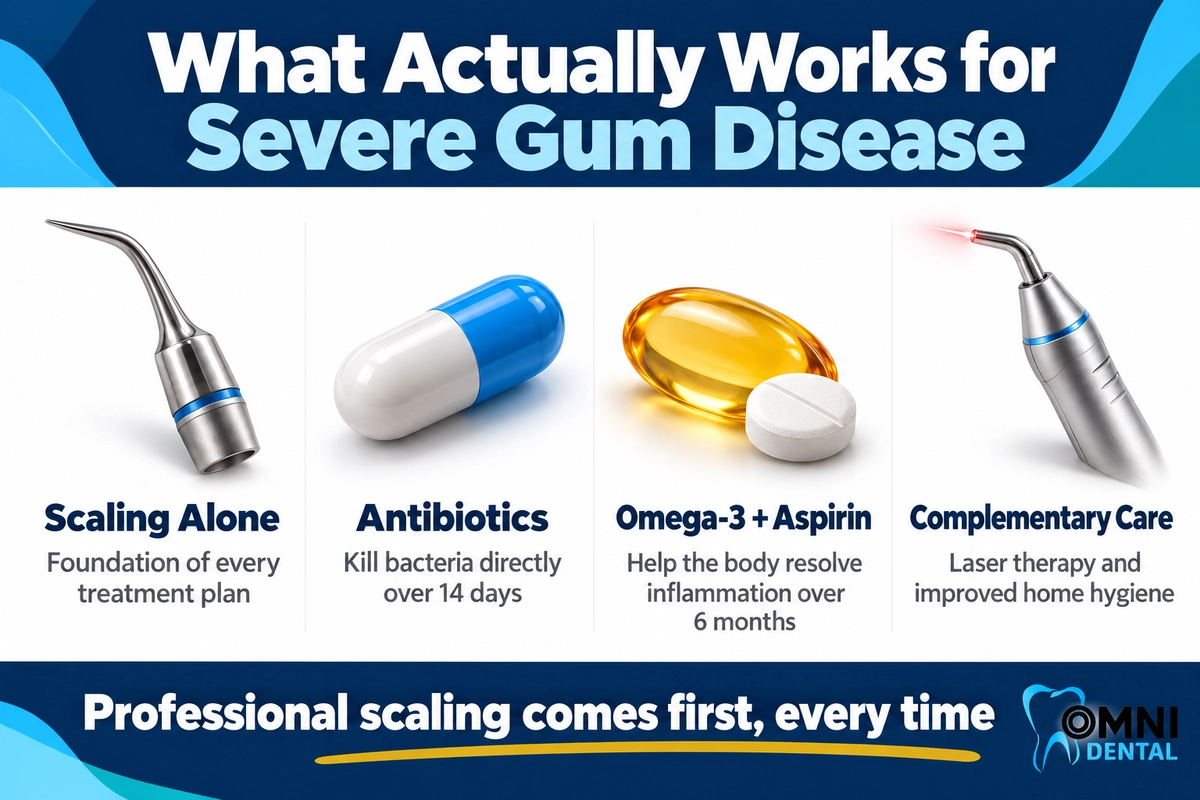
A comprehensive gum disease strategy includes:
- Professional scaling and root planing to remove bacterial deposits
- Adjunctive therapy: antibiotics, supplements, or laser treatment, depending on severity and patient needs
- Improved home oral hygiene (brushing, flossing, antimicrobial rinses)
- Regular follow-up appointments to monitor healing
- Lifestyle factors: managing stress, avoiding tobacco, maintaining adequate nutrition
The key insight from this research is that your body’s ability to heal matters. Supplements that support natural inflammation resolution and tissue repair may work just as well as bacterial-killing antibiotics, when used alongside professional cleaning and your commitment to better oral hygiene.
Not sure which treatment approach is right for you?
Contact us today to discuss your gum disease options and find a treatment plan that works for your situation.
Why This Research Matters Now
The timing of this research is important. Global health organizations are increasingly concerned about antibiotic resistance, when bacteria evolve to survive antibiotics, making infections harder to treat. By finding effective alternatives, especially for patients who can’t take antibiotics, this research helps preserve antibiotics for cases where they’re truly essential.
As Dr. Magda Feres, chair of oral medicine, infection and immunity at Harvard School of Dental Medicine, noted: “The combination of omega-3 and low-dose aspirin achieved clinical benefits comparable to those of the metronidazole and amoxicillin protocol, opening up a real alternative for those who can’t take antibiotics, especially patients with allergies or intolerance to these medications.”

Frequently Asked Questions
Can I treat my gum disease with just supplements?
No. This study shows that supplements worked well, but only when combined with professional scaling, the procedure where your dentist removes bacterial deposits from beneath your gums. Scaling alone helped only 23% of patients. Supplements are an adjunct to professional care, not a replacement for it. You need professional cleaning as the foundation.
How much omega-3 and aspirin should I take?
This study used 3 grams of omega-3 daily plus low-dose aspirin for 6 months. However, dosing should be individualized based on your health history, other medications, and any allergies or intolerances. Do not start a supplement regimen without consulting your dentist or physician. Some patients cannot safely take aspirin due to bleeding disorders, other medications, or medical conditions.
How long does it take to see results from supplements?
In this study, patients took supplements for 6 months before reaching their treatment goal, much longer than the 2 weeks of antibiotics. If you choose a supplement-based approach, you’ll need patience and commitment to the full timeline. Professional scaling results combined with supplements shows gradual improvement, but the process takes time.
Should I choose supplements or antibiotics for my gum disease?
That depends on your individual situation. Factors to consider include: severity of your gum disease, whether you have antibiotic allergies or intolerances, your medical history, and whether you’re willing to commit to a longer treatment timeline. Your dentist can help you weigh the benefits and drawbacks of each approach for your specific case.
Ready to discuss your gum disease treatment options?
Book an appointment today to develop a treatment plan tailored to your needs.

The Bottom Line
This study offers hope for patients who want to avoid antibiotics or cannot tolerate them. Omega-3 and low-dose aspirin, combined with professional scaling, can achieve results comparable to antibiotics for severe gum disease. But they’re not a magic solution. You still need professional treatment, consistent oral hygiene, and a commitment to the full healing process.
The research also underscores an important truth: treating gum disease isn’t about choosing one single approach. It’s about combining professional care with the right adjunctive therapy, whether that’s supplements, antibiotics, laser treatment, or a combination, tailored to your individual needs.
Your dentist can help you navigate these options and choose the approach most likely to succeed for your situation.

About the author
Dr. Bilus D PolesDDS,MAGD,DICOI, DIDIA
Founder and lead dentist of Omni Dental of Arlington Heights. Master of the Academy of General Dentistry and Board Certified Diplomate of the ICOI and IDIA. Illinois license #019.027365.