Thumb sucking and dental development are linked: prolonged sucking can cause an open bite, crowding, or jaw growth problems. The habit is normal in toddlers but needs attention if it continues as permanent teeth come in, around age 6. Positive reinforcement works better than punishment, and a pediatric dentist can assess your child’s risk.
Key Takeaways
- Thumb sucking and dental development are directly connected, with prolonged habits affecting tooth alignment and jaw growth.
- Most children naturally stop thumb sucking by age 5-6; intervention becomes necessary if the habit continues into permanent teeth eruption.
- Early intervention through positive reinforcement and professional guidance prevents costly orthodontic problems later.
- A pediatric dentist can assess individual risk and provide age-appropriate strategies for breaking the habit.
Read time: 8 min
While thumb sucking is a common habit in young children, knowing when and how to address it protects your child’s oral health development.
How Thumb Sucking Affects Dental Development
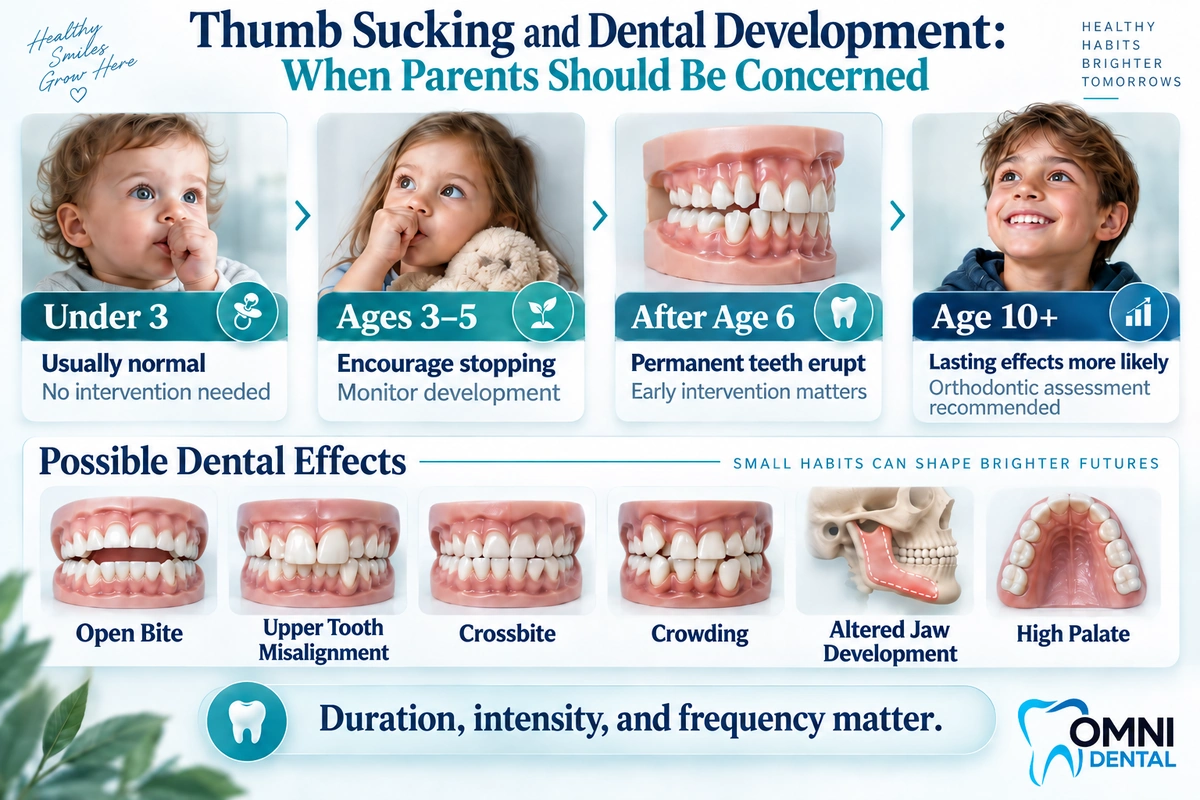
Thumb sucking creates continuous pressure on developing teeth and jaws. This pressure directly impacts both dental development and jaw growth.
Common dental issues from thumb sucking:
- Open bite: Front teeth don’t overlap, creating gaps when biting
- Upper teeth misalignment: Teeth slant outward or backward
- Crossbite: Upper and lower teeth don’t align properly side-to-side
- Jaw development problems: Abnormal jaw shape and growth patterns
- Crowding: Insufficient space for permanent teeth to erupt properly
- High palate: Arched roof of mouth from constant sucking pressure
The severity depends on intensity, duration, and frequency of the habit. Sucking their thumb multiple times daily causes more damage than occasional comfort sucking.
When Thumb Sucking Becomes a Concern
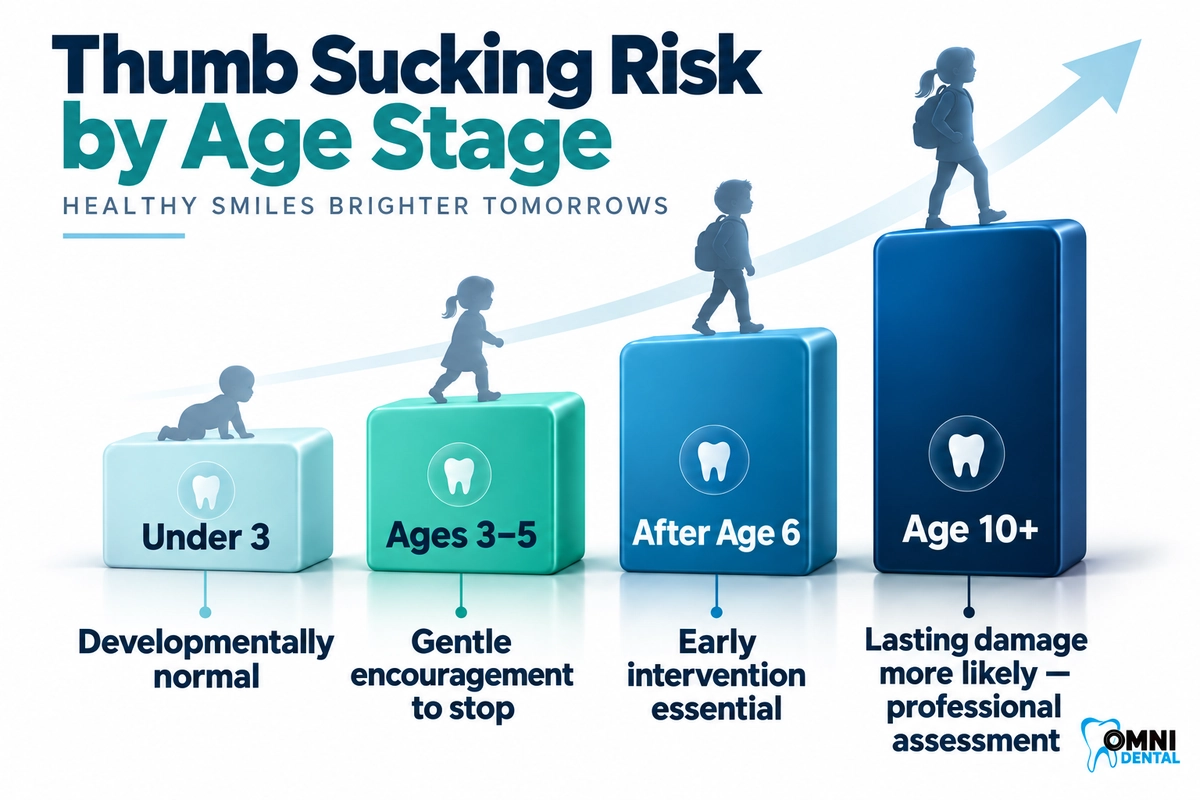
Thumb sucking is completely normal in infants and toddlers. However, timing matters significantly for permanent teeth development.
| Age/Stage | Status | Recommendation |
|---|---|---|
| Under 3 years | Baby teeth still forming; habit is developmentally normal | No intervention needed; typically self-resolves |
| 3-5 years | Baby teeth established; permanent teeth developing | Gentle encouragement to stop; consult pediatric dentist |
| After age 6 | Permanent teeth erupting; habit impacts alignment directly | Early intervention essential through behavioral strategies |
| Age 10+ | Significant permanent tooth exposure; lasting damage likely | Urgent intervention + professional orthodontic assessment |
A pediatric dentist can monitor child’s thumb sucking progress and provide professional guidance at each stage.

Thumb Sucking vs. Pacifier Use
Parents often wonder if pacifiers are better than thumb sucking. Both create similar dental risks, but pacifiers offer one key advantage.
| Factor | Thumb Sucking | Pacifier Use |
|---|---|---|
| Dental issues risk | Open bite, misalignment common | Similar open bite and misalignment risks |
| Easing the transition | Difficult to stop; always available | Easier control; parents can remove/limit |
| Breaking the habit | Requires behavioral modification | Can gradual wean over time |
| Intensity variation | Often more vigorous sucking | Can use gentler pacifiers |
Can a pacifier cause dental issues? Yes, but pacifiers offer better parental control for weaning off the habit earlier, potentially reducing long-term dental damage.
Is your child still thumb sucking after age 4?
Our pediatric dentist can assess dental impact and recommend personalized strategies. Call (847) 483-8833 to schedule a consultation today.

Breaking the Thumb Sucking Habit
Breaking the habit requires patience and the right approach. Positive reinforcement works better than punishment or shame.
Evidence-based strategies for breaking thumb sucking:
- Identify triggers: When does child suck their thumb? (Stress, boredom, tiredness, TV time?)
- Provide alternatives: Offer fidget toys, stress balls, or other comfort items during trigger times
- Use positive reinforcement: Reward thumb-sucking-free days with praise or small rewards
- Create awareness: Help child notice the habit without shame (“I see you’re feeling stressed—want to use your squeeze toy?”)
- Involve the child: Let them participate in choosing the strategy (feels ownership)
- Establish thumb-free zones: Designate specific times/places where thumb sucking isn’t allowed
- Use visual reminders: Stickers, bracelets, or charts tracking progress (not punishments)
- Celebrate progress: Acknowledge even small improvements enthusiastically
- Avoid negative pressure: Never mock, shame, or use harsh consequences
- Be patient: Breaking habits takes weeks to months; consistency matters more than speed
Avoid these common mistakes:
- Shaming or punishing the behavior
- Putting bitter-tasting substances on thumbs (causes anxiety)
- Using restrictive gloves or mittens (increases stress)
- Forced stopping without alternatives (creates worse anxiety)

Role of Professional Support
Early intervention by pediatric dentistry specialists prevents expensive orthodontic problems.
What your pediatric dentist can do:
- Assess current damage: Evaluate your child’s oral health and jaw alignment impact
- Predict future issues: Identify likely problems if habit continues
- Provide motivation: Help child understand dental consequences in age-appropriate ways
- Recommend devices: Dental habit-breaking appliances when behavioral methods aren’t sufficient
- Monitor progress: Track habit cessation and dental development at checkups
- Coordinate with orthodontist: If damage already occurred, plan corrective treatment
Professional guidance combined with parental support creates the best outcomes for breaking the habit successfully.
Thumb Sucking and Dental Development: Common Questions
Are There Any Benefits to Thumb Sucking?
Thumb sucking does provide comfort and self-soothing benefits for young children. However, these benefits must be weighed against dental risks.
Developmental perspective:
- Before age 3: Normal self-soothing; helps child develop self-regulation
- Ages 3-5: Still normal but should naturally decline; monitor for excessive use
- After age 6: Primarily for stress/anxiety comfort; dental risks outweigh developmental benefits
The key is duration and intensity. Occasional comfort sucking rarely causes problems. Prolonged thumb sucking (daily, multiple hours) creates serious dental issues regardless of benefits.
What Causes Persistent Thumb Sucking Beyond Age 4?
Most children naturally stop by age 5-6. Persistent thumb sucking after this age often indicates stress, anxiety, or environmental factors.
Common underlying causes:
- Stress or anxiety (family changes, school stress, social problems)
- Sleep issues or nighttime anxiety
- Boredom or lack of stimulation
- Copying behavior from peers or siblings
- Sensory seeking behavior
- Underlying anxiety disorder (rare but possible)
Addressing root causes helps break the habit more effectively than focusing only on the thumb sucking itself.
When Should I Seek Professional Help?
Consult a pediatric dentist if:
- Thumb sucking continues after age 4-5
- Child sucks their thumb intensely or multiple hours daily
- You notice dental problems (open bite, teeth pushing out)
- Home strategies aren’t working after 2-3 months
- Your child experiences anxiety or stress related to the habit
A pediatric dentist can distinguish between normal habit and problematic thumb sucking requiring intervention.
Will My Child Need Braces Later?
Not necessarily, but thumb sucking increases orthodontic treatment likelihood significantly.
Factors determining future orthodontic needs:
- Habit severity: Gentle vs. vigorous sucking
- Duration: How many years did thumb sucking continue?
- Frequency: Occasional vs. constant throughout day
- Genetic factors: Family history of misalignment
- Jaw growth patterns: Individual variation in jaw development
Good news: Many children who stop thumb sucking by age 6-7 experience natural correction as permanent teeth erupt. Early intervention dramatically reduces future orthodontic needs.
Concerned about your child’s thumb sucking and dental development?
Our pediatric dentist provides personalized assessment and guidance. Schedule a consultation to protect your child’s smile. Call (847) 483-8833.

Supporting Your Child Through the Process
Breaking any habit requires parental support and understanding.
Positive parenting strategies:
- Stay calm and patient: Habits don’t disappear overnight
- Use positive reinforcement: Reward success rather than punishing failures
- Keep perspective: This is a common habit that resolves with proper support
- Validate feelings: Acknowledge the comfort the habit provides while building new coping skills
- Create a plan together: Involve child in selecting strategies (increases compliance)
- Celebrate small wins: Notice and praise thumb-sucking-free moments
- Model healthy coping: Show child how you handle stress without destructive habits
Professional support from pediatric dentistry specialists combined with parental patience creates lasting success.
Long-Term Outlook
The good news: Most children who stop thumb sucking by age 6-7 experience natural dental correction.
Natural correction process:
- As permanent teeth erupt, they gradually realign to normal position
- Jaw continues developing and adjusting without sucking pressure
- Most open bites close naturally within 2-3 years after habit stops
- Upper teeth resume normal position and alignment
Why early intervention matters:
- Less damage to correct naturally
- Fewer permanent teeth affected
- Higher chance of avoiding expensive orthodontic treatment later
- Better overall oral health outcomes
Understanding how thumb sucking and dental development connect empowers parents to make informed decisions. Combined with professional guidance and positive strategies, children can break this habit and maintain healthy smiles throughout their lives.

About the author
Dr. Bilus D PolesDDS,MAGD,DICOI, DIDIA
Founder and lead dentist of Omni Dental of Arlington Heights. Master of the Academy of General Dentistry and Board Certified Diplomate of the ICOI and IDIA. Illinois license #019.027365.