Sugar is the main dietary threat to children’s teeth because it feeds cavity-causing bacteria. Knowing how diet impacts kids’ oral health also means limiting acidic drinks like soda and juice, which erode enamel. Water between meals, structured mealtimes, and calcium-rich foods like cheese and milk help protect teeth.
Key Takeaways
- How diet impacts kids’ oral health is one of the most significant factors parents can control for cavity prevention and tooth development.
- Sugary foods and acidic beverages directly damage children’s tooth enamel and promote cavity-causing bacteria growth.
- Calcium, phosphorus, and vitamin D are essential nutrients that support healthy teeth development and strong jawbone structure.
- Establishing healthy eating habits in childhood creates a foundation for lifelong oral health and prevents costly dental problems.
Read time: 9 min
The foods and beverages your children consume directly affect their teeth, gums, and overall oral health.
The Connection Between Diet and Children’s Teeth
Children’s developing teeth require specific nutrients to form properly and resist decay. The foods your child eats become building blocks for tooth enamel strength and bone density.
When children consume foods that prevent tooth decay, they’re actively building dental resilience. Conversely, a diet high in sugars and acids creates an environment where cavity-causing bacteria thrive.
Tooth development begins before birth and continues through childhood. Poor nutrition during these critical years compromises enamel formation and tooth structure. Therefore, ensuring your children dentist monitors nutritional impacts matters significantly.
The oral microbiome (the bacteria living in your child’s mouth) responds directly to dietary choices. Sugary foods feed harmful bacteria and promote plaque buildup. Additionally, acidic foods and drinks soften enamel, making teeth more vulnerable to decay.
How Sugar Damages Children’s Teeth
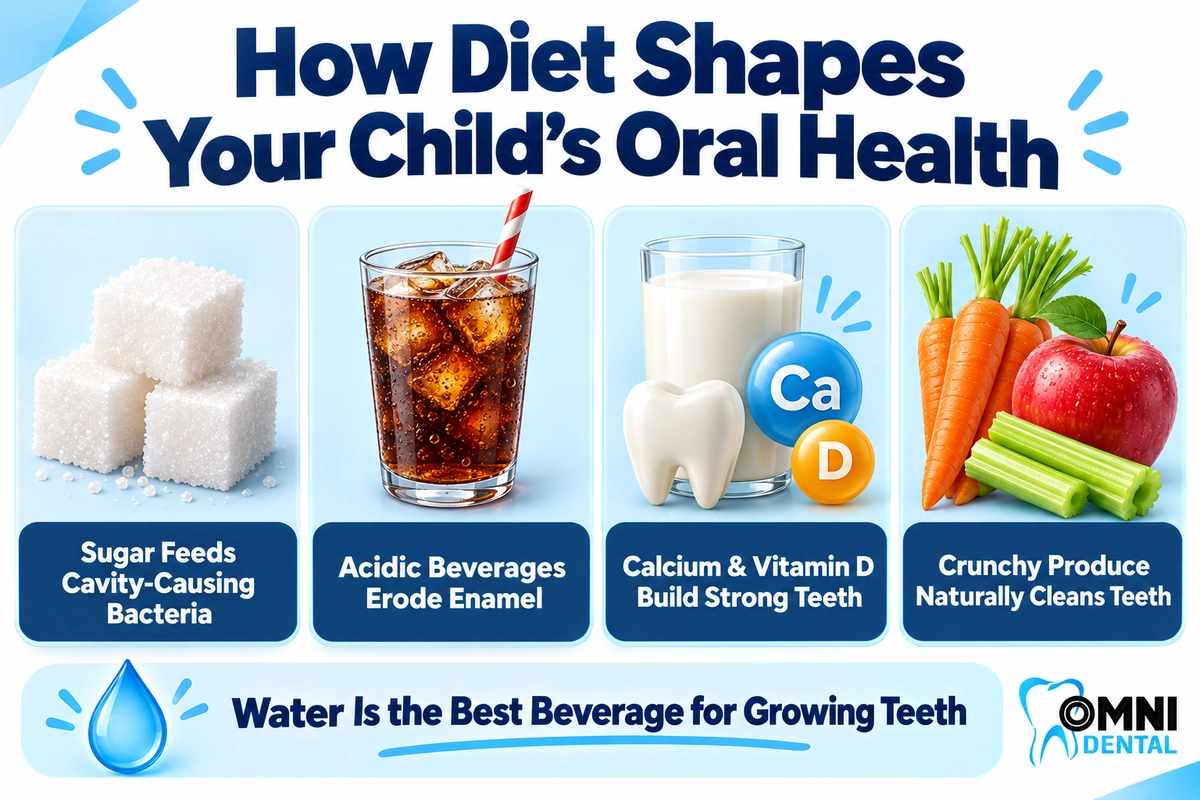
Sugar represents the primary dietary enemy of children’s oral health.
When your child consumes sugary foods, cavity-causing bacteria convert sugar into acid. This acid attacks tooth enamel for up to 20 minutes after consumption.
Key facts about sugar damage:
- Bacteria + sugar = acid damage to teeth
- Both refined and natural sugars feed cavity-causing bacteria equally
- Frequency of consumption matters more than quantity
- Children’s enamel is thinner and more vulnerable than adult enamel
- Baby teeth have larger pulp chambers, allowing decay to reach nerves faster
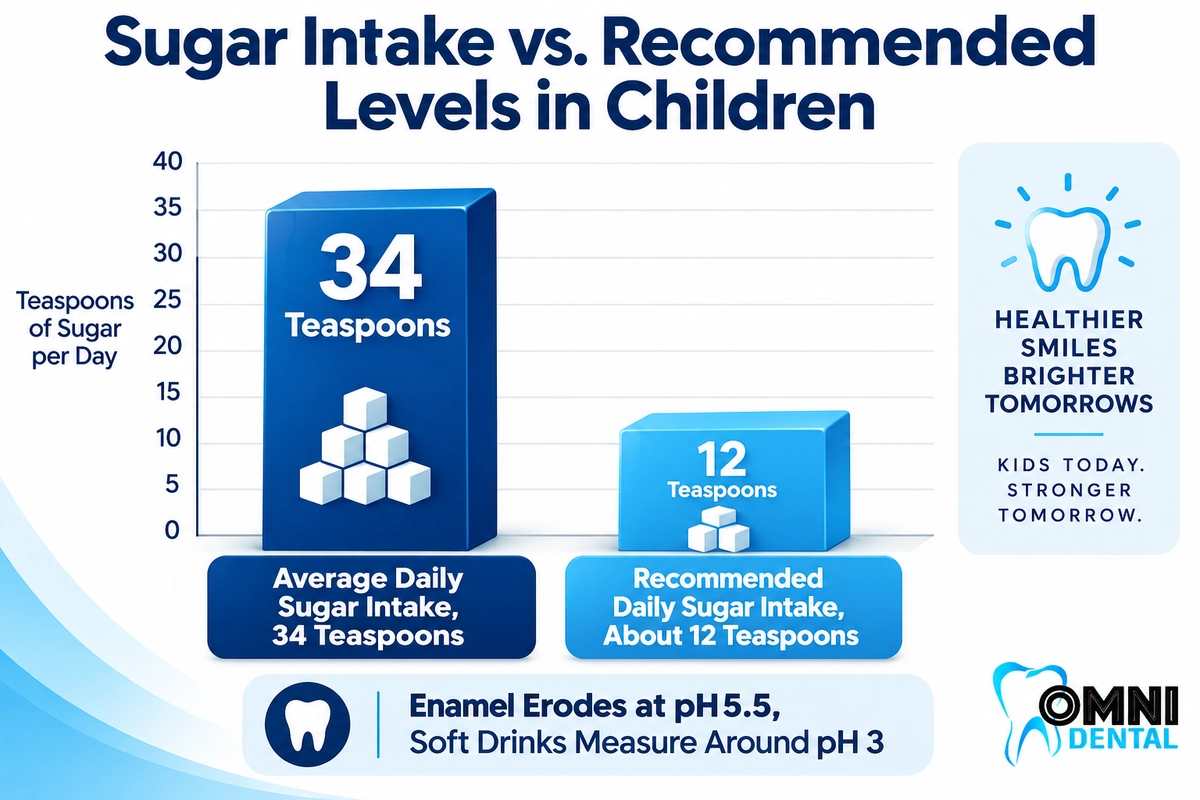
The typical American child consumes 34 teaspoons of added sugar daily, nearly triple the recommended amount. This constant exposure means cavity-causing bacteria have unlimited fuel, leading to alarmingly high cavity rates in children.
Acidic Beverages and Enamel Erosion
Acidic drinks create permanent enamel erosion, damage that cannot repair itself.
Understanding pH levels and tooth damage:
- Tooth enamel dissolves at pH 5.5
- Soft drinks measure around pH 3 (highly erosive)
- Sports drinks often contain acids nearly as strong as soda
- Even diluted fruit juice maintains erosive acidity
- Sipping throughout the day prolongs acid exposure
Once enamel erodes, expensive dental restoration becomes necessary. Preventing acidic beverage damage through smart choices saves thousands in future dental costs and protects teeth for life.
Essential Nutrients for Developing Teeth
Children’s teeth require specific nutrients to form properly and resist decay. Here’s what your child needs:
| Nutrient | Food Sources | Benefit for Teeth |
|---|---|---|
| Calcium | Milk, cheese, yogurt, leafy greens, almonds | Forms tooth structure and jawbone foundation |
| Phosphorus | Cheese, eggs, fish, nuts, poultry | Builds enamel strength and bone support |
| Vitamin D | Sun exposure, fortified milk, supplements, salmon | Regulates calcium absorption and mineralization |
| Vitamin C | Citrus (at meals only), berries, vegetables | Supports gum health and collagen formation |
| Protein | Fish, poultry, beans, legumes, eggs | Supports tooth structure and repair |
Pair calcium with vitamin D to enhance absorption and utilization throughout childhood.

Preventing Cavities Through Better Diet Choices
Not all foods affect teeth equally. Understanding which foods help or harm is key to cavity prevention.
Foods to LIMIT or AVOID:
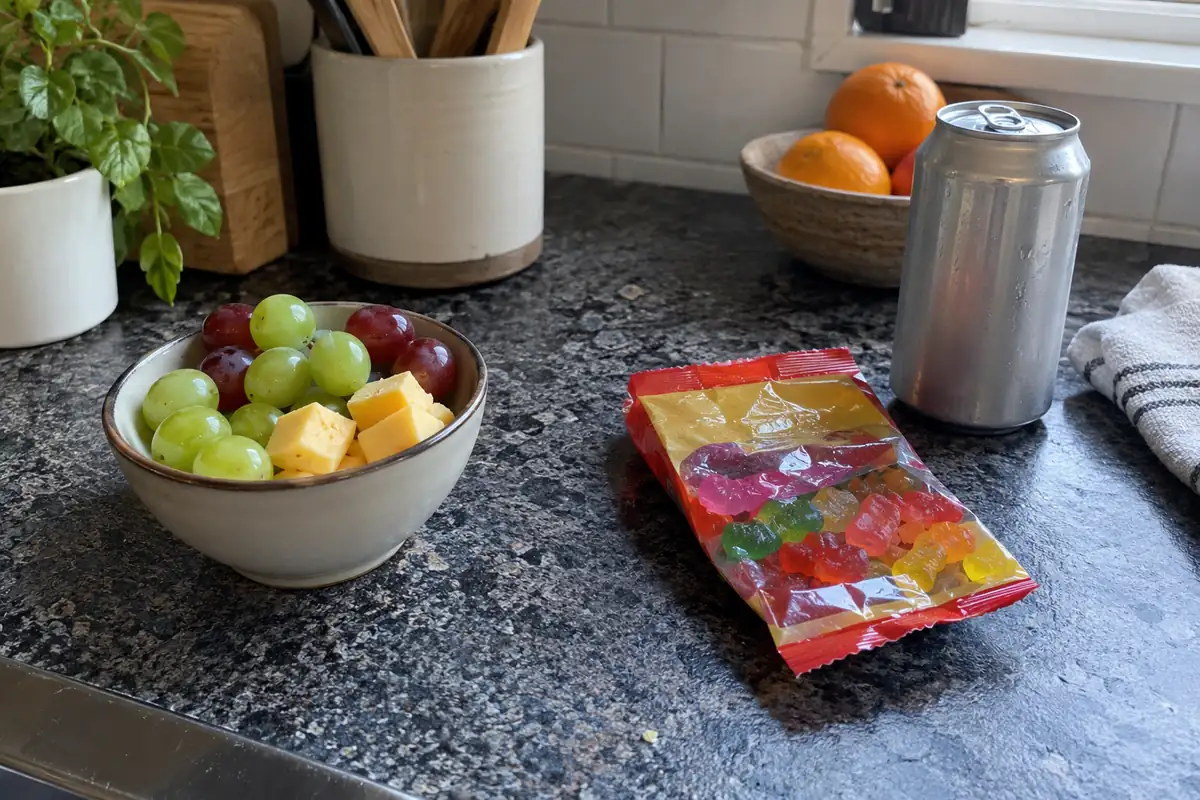
- Sticky sugary foods (raisins, dried fruit, gummy snacks)
- Hard candies that extend sugar exposure
- Soft drinks and sugary beverages
- Sports drinks and fruit juice (even diluted)
- Frequent snacking throughout the day
Foods that PROTECT teeth:
- Crunchy vegetables (apples, carrots, celery) – mechanically clean teeth
- Cheese – increases saliva production, provides calcium
- Nuts and seeds – contain minerals supporting dental health
- Water – no sugars or acids, supports saliva production
The ideal beverage for children: Water contains no sugars or acids, provides hydration, and establishes lifelong healthy preferences.
Meal timing strategy:
- Limit eating to structured mealtimes (breakfast, lunch, dinner, one snack)
- Follow meals with water rinses to neutralize acids
- Concentrate sugary foods into single meals rather than spreading throughout the day
Concerned about your child’s diet and cavity risk?
Our children dentist can evaluate your child’s oral health and provide personalized nutrition guidance. Call (847) 483-8833 to schedule your child’s consultation today.

Establishing Healthy Eating Habits for Life
The dietary patterns children establish become lifelong habits. Teaching healthy choices early creates adults who naturally prioritize oral-health-supporting nutrition.
Proven strategies for building healthy habits:
- Parental modeling: Children adopt eating behaviors they observe in caregivers
- Family-wide changes: Making healthy choices together (not singling out children) increases adoption rates
- Involvement in food selection: Kids who help choose foods are more likely to eat nutritiously
- Clear beverage rules: Guidelines like “water during activities, juice only at meals” eliminate daily negotiations
- Celebrate healthy choices: Praising water selection over soda builds intrinsic motivation
When to Introduce Foods and Beverages Safely
Age-based nutrition guidelines for developing teeth:
| Age | Milestones & Recommendations |
|---|---|
| Birth – 6 months | Breast milk or formula provide balanced nutrition for tooth foundation development |
| 6 months | Introduce solids and water; avoid sugary foods to establish preferences |
| 12-18 months | Transition from bottle to cup to prevent bottle rot (severe decay) |
| 2 years | Water becomes primary beverage; milk at meals only, limited juice |
| 3-4 years | Permanent teeth forming beneath baby teeth; nutritional support becomes critical |
| School age | Teach connection between food choices and tooth health; empower independent decisions |
Ready to improve your child’s oral health through better nutrition?
Schedule a nutrition and dental health consultation with our team. We provide personalized guidance for your family’s unique situation. Call (847) 483-8833 now.
Diet and Tooth Development Timing
Permanent teeth develop beneath the baby teeth for years before they erupt. Nutrition during these critical development years directly impacts eruption health and enamel strength.
Critical development windows:
- Ages 0-12: Most critical period for lifelong tooth health; early intervention prevents expensive problems later
- Baby teeth stage: Protect baby teeth for proper space maintenance, eruption guidance, and jaw development
- Ages 6-12 transition: Continued nutritional support ensures healthy permanent tooth emergence
- By age 12: Nearly all permanent teeth are developing; habits established now predict teen and adult dental health
Poor dietary habits by age 12 often predict teen and adult dental problems. Maintaining consistent nutritional practices through age 12 and beyond protects long-term oral health while reducing future dental costs.
How Diet Impacts Kids’ Oral Health: Common Questions
Is Fruit Juice Safe for Children’s Teeth?
No. Fruit juice contains natural sugars and acids that damage teeth almost identically to soda. While juice provides vitamin C and nutrients, the dental costs often outweigh nutritional benefits.
Key facts about fruit juice:
- Even with fluoride protection, frequent juice consumption increases cavity risk significantly
- American Academy of Pediatric Dentistry recommends limiting juice to 4 ounces daily at mealtimes only
- Whole fruit provides equivalent nutrition without liquid sugar and acid exposure
- Whole fruit is always the healthier choice for children’s teeth
What About Milk and Dental Health?
Milk provides exceptional nutritional support through calcium, phosphorus, and vitamin D, all critical for dental development.
Best practices for milk consumption:
- Whole milk in infants, transitioning to low-fat milk in toddlers
- Consume at meals only, never sipped throughout the day
- Extended bottle use with milk or sweet liquids causes cavities
- For children over 2 years old, water between meals supports hydration without cavity risk
- Milk at structured mealtimes provides dental benefits without endangering teeth
Can Dried Fruit Damage Children’s Teeth?
Yes. Dried fruit concentrates natural sugars while maintaining sticky texture that adheres to teeth.
Dried fruit cavity risks and solutions:
- Raisins, dried cranberries, and dried mango pose significant cavity risk
- Sugar concentration + prolonged tooth contact = high decay risk
- Whole fresh fruit delivers similar nutrition with less dental risk
- When children eat dried fruit, immediate water rinsing and tooth brushing reduces decay risk
- Fresh fruit is generally better; dried fruit reserved for special occasions with brushing after
Are Sugar-Free Snacks Always Better?
Generally yes, but whole foods are best. Sugar-free snacks eliminate cavity-feeding fuel, making them superior to sugary alternatives.
Sugar-free snack considerations:
- Some products contain acidic ingredients or sugar alcohols that affect teeth differently
- Sugar-free snacks often cost more while delivering less nutritional value than whole foods
- Ideal snacks: water, crunchy vegetables, cheese, and nuts
- Sugar-free processed foods work occasionally but shouldn’t displace whole-food nutrition
- Whole foods should comprise the foundation of children’s snacking habits
Professional Support for Dietary Oral Health
Your child’s children dentist provides personalized guidance about diet’s impact on your child’s oral health.
Professional care options supporting nutrition-based dental health:
- Regular checkups: Assess dietary damage and recommend adjustments
- Fluoride treatments for children: Provide extra protection when dietary challenges exist
- Professional teeth cleaning: Removes buildup from dietary choices that home care cannot address
- Regular cleanings every 6 months: Remove plaque and tartar, preventing decay progression
- Dental sealants: Protect vulnerable teeth and reduce cavity risk for children with occasional sugary treats
Understanding how diet impacts kids’ oral health empowers you to make choices protecting your child’s smile. Combined with professional dental care and strong home habits, dietary awareness creates the foundation for lifelong oral health success.

About the author
Dr. Bilus D PolesDDS,MAGD,DICOI, DIDIA
Founder and lead dentist of Omni Dental of Arlington Heights. Master of the Academy of General Dentistry and Board Certified Diplomate of the ICOI and IDIA. Illinois license #019.027365.