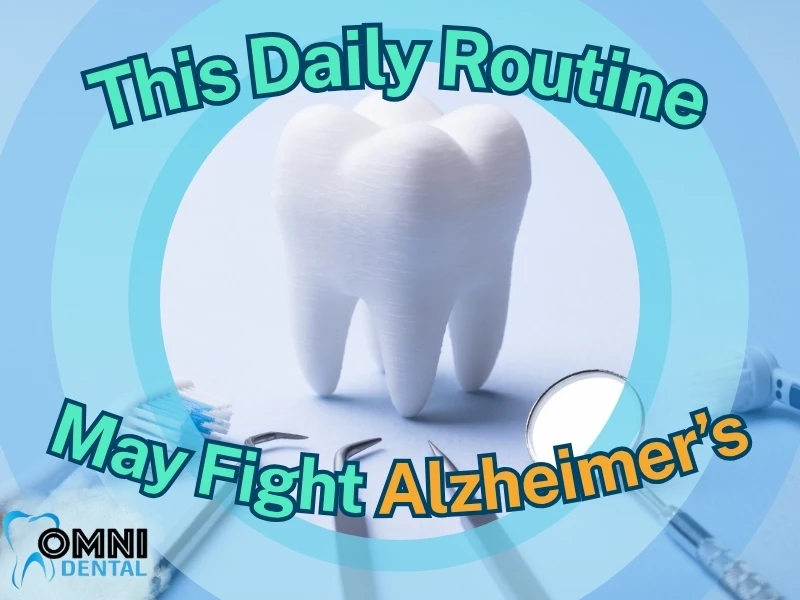
Flossing and regular dental visits are linked to lower Alzheimer’s risk in adults 65 and older, based on predicted risk scores. In a 2025 study of 3,356 seniors, flossers had 32% lower odds of a high-risk score, and recent dental visitors had 28% lower odds. The study shows an association, not proof that dental care prevents Alzheimer’s.
Key Takeaways
- The 2025 Zou study analyzed 3,356 U.S. adults aged 65 and older using NHANES data.
- Flossing was linked to 32% lower odds of a high predicted Alzheimer’s risk score.
- A recent dental visit was linked to 28% lower odds, and both habits together showed the lowest scores.
- Gum disease bacteria such as Porphyromonas gingivalis may drive inflammation that affects the brain.
- The study was cross-sectional, so it shows an association, not cause and effect.
Estimated read: 5 min
Poor Oral Health and Cognitive Decline: An Emerging Link
The idea that poor oral health could be a risk factor for dementia isn’t entirely new, but recent findings are strengthening that case. A growing body of evidence now connects poor oral hygiene, gum disease, and tooth loss with a higher risk of developing Alzheimer’s disease. While causality has been difficult to establish, the link between poor oral conditions and compromised cognitive functions continues to draw attention.
According to research led by Zou et al. in the Journal of Alzheimer’s Disease (Oct 2025), seniors who floss daily and visit the dentist annually have significantly lower predicted five-year Alzheimer’s risk scores. These results align with the broader theory that inflammation and bacterial infection originating in the oral cavity may influence neurodegeneration.
The Numbers Behind the Claim
The study by Zou and colleagues analyzed data from 3,356 U.S. adults aged 65 and older, using information from the NHANES survey (2013–2018). Researchers calculated each participant’s predicted risk of developing Alzheimer’s disease over five years using a validated scoring system. This system factored in sociodemographic, behavioral, medical, and psychological attributes.
Participants who reported regular dental floss use were found to have a 32% lower likelihood of being in the high-risk category for Alzheimer’s. Similarly, those who had seen a dentist within the past year had a 28% reduced risk. Most notably, those who both flossed and had routine dental visits had the lowest risk scores, suggesting an additive benefit from combining these habits.
Exploring the Biological Mechanism
How could oral hygiene habits influence brain health? The mechanism centers around inflammation and the bloodstream. Poor oral hygiene leads to gum disease, or periodontal inflammation, which creates chronic bacterial infections in the mouth. These infections can cause harmful bacteria like Porphyromonas gingivalis to enter the bloodstream and potentially cross the blood-brain barrier.
These oral bacteria and their toxic by-products, such as gingipains, have been detected in the brain tissue of Alzheimer’s patients. Their presence can trigger inflammation, damage nerve cells, and accelerate the build-up of beta-amyloid plaques, hallmarks of Alzheimer’s pathology.
In this way, regular flossing and professional dental care can reduce bacterial load in the oral cavity, potentially lowering systemic inflammation and the chance of brain exposure to harmful pathogens.
New Insights from Causal Inference Research
Complementing the observational data, another recent review by Aida et al. (2025) explored whether poor oral health could be considered a modifiable risk factor for dementia. Their analysis highlighted the complexities of determining causation, given confounding factors like early-life cognitive function and reverse causality.
However, the authors emphasized that eating and speaking, essential oral functions, play important social roles. Difficulty with these functions due to oral health issues can lead to social isolation, itself a known modifiable risk factor for dementia. Thus, the pathway from poor oral health to cognitive decline may be indirect but impactful, involving both physiological and psychosocial mechanisms.
Why Dental Health Matters in Dementia Prevention
The implications of these findings are vast. With no cure for Alzheimer’s and the disease placing a growing burden on healthcare systems, preventive strategies are urgently needed. Promoting dental care emerges as a simple, low-cost intervention that may offer cognitive benefits along with oral health advantages.
Older adults often struggle with oral hygiene due to physical limitations or financial barriers. Yet, maintaining good oral health through flossing and dental visits may be more crucial than previously recognized. Good oral health isn’t just about saving teeth; it might help save memory.
Putting It into Practice: Simple Steps, Big Impact
| Step | Action | Purpose / Benefit |
|---|---|---|
| 1 | Floss Daily | Removing plaque and food particles between teeth helps reduce gum disease and inflammation. |
| 2 | Schedule Routine Dental Exams | Seeing a dentist at least once a year allows for early detection and treatment of periodontal issues. |
| 3 | Brush Twice a Day | Toothbrushing remains a critical aspect of preventing oral infections. |
| 4 | Watch for Early Signs | Red, swollen gums or bleeding during brushing may signal early periodontal disease. |
| 5 | Educate and Advocate | Encourage loved ones, especially seniors, to prioritize oral care and understand its connection to brain health. |
Caution: Correlation Does Not Equal Causation
While the research shows strong associations, it’s important to acknowledge limitations. The Zou study was cross-sectional and used predictive models, not actual longitudinal dementia diagnoses. There’s always a chance that healthier individuals are more likely to maintain good dental habits, which could confound the results.
Still, even when accounting for variables like diet, education, and access to healthcare, the associations remain significant. These findings, while not definitive proof, suggest a promising direction for future research and public health policy.
A Mouthful of Prevention
The link between oral hygiene and dementia risk is a reminder that our health systems are interconnected. What happens in the mouth doesn’t stay in the mouth. Chronic oral inflammation and bacterial infection may silently influence faraway organs, including the brain.
As researchers continue to explore this link, the message for the public is already clear: preventive dental care could be one of the simplest tools we have for promoting cognitive resilience in aging populations.
Also you can read more about The Link Between Oral and Overall Health here
Prioritize Your Oral Health with Omni Dental in Arlington Heights
If you’re ready to take proactive steps toward protecting both your smile and your mind, Dr. Bilus Poles and the team at Omni Dental in Arlington Heights are here to help. With compassionate care and personalized preventive strategies, Omni Dental empowers patients to maintain optimal oral health, an essential part of overall wellness, especially as we age.
Schedule your appointment today and take a small but meaningful step toward reducing your Alzheimer’s risk through better dental care.

About the author
Dr. Bilus D PolesDDS,MAGD,DICOI, DIDIA
Founder and lead dentist of Omni Dental of Arlington Heights. Master of the Academy of General Dentistry and Board Certified Diplomate of the ICOI and IDIA. Illinois license #019.027365.