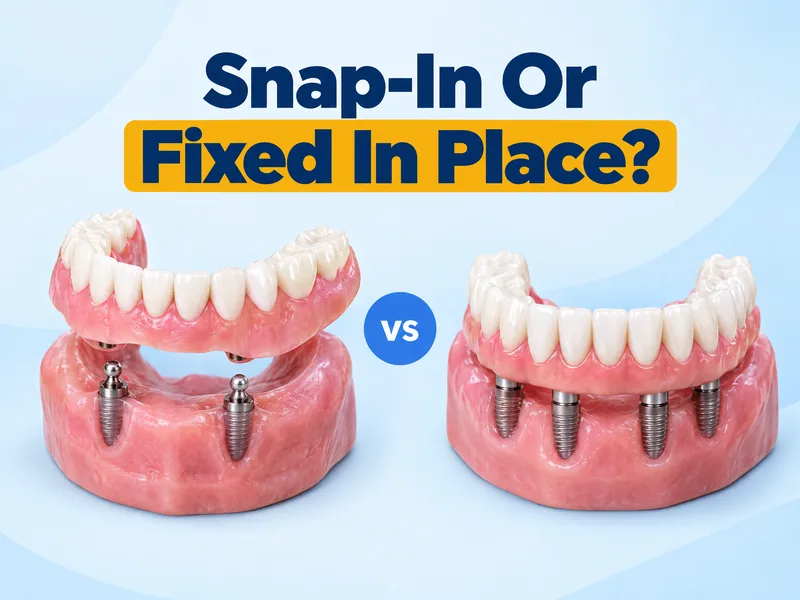
Implant supported vs implant retained dentures differ in how much work the implants do. An implant-retained denture snaps onto implants and comes out every day for cleaning. By contrast, an implant-supported denture often stays fixed in your mouth until a dentist removes it. Your jawbone and goals guide the choice.
Key Takeaways
- Removable implant dentures usually sit on 2 to 6 implants, with fewer in the lower jaw.
- A 2002 consensus statement named a two-implant overdenture the first choice for a toothless lower jaw.
- Fixed implant teeth cost more up front but need less routine upkeep.
- Implants need about three to six months to fuse with the jawbone before final teeth go on.
Estimated read: 5 min
Implant Supported vs Implant Retained Dentures at a Glance
Both options replace a full arch of teeth with a denture that connects to dental implants. Implants are small posts placed in the jaw that act like tooth roots. The difference is whether the denture clips on and off, or stays put.
These words can be confusing, because offices do not all use them the same way. For example, the implant overdenture guidelines from the Foundation for Oral Rehabilitation (FOR) use both terms for removable overdentures. Omni Dental’s own implant-supported dentures page also describes an arch that snaps into place.
So ask one plain question at your visit: will this denture come out or stay in? The table below compares the two designs as most patient guides describe them.
| Factor | Implant-retained denture | Implant-supported denture |
|---|---|---|
| Removable at home | Yes, snaps out daily | Usually no, a dentist removes it |
| Typical implants per arch | 2 to 6 | Varies; All-on-4 uses 4 |
| Bone needed | Can work with more bone loss | Suits low to moderate bone loss |
| Upfront cost | Lower | Higher |
| Daily cleaning | Take it out and clean | Clean around it in place |

How Do Implant-Retained Dentures Work?
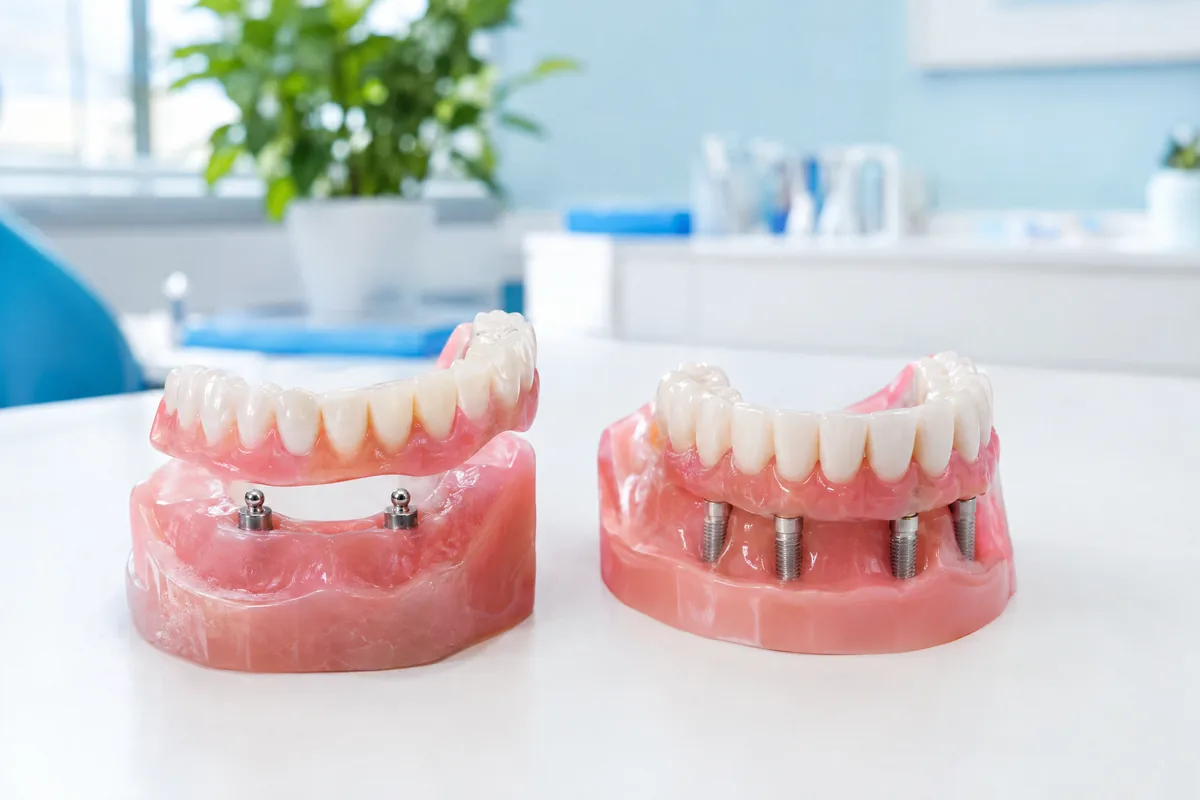
An implant-retained denture is a removable denture that clips onto implants in the jaw. FOR lists the attachments that hold it, such as ball or locator fittings or a bar. Then you unclip it each day for cleaning, so you need no adhesive.
The American Academy of Implant Dentistry says these dentures typically use 2 to 6 implants. In most cases, the lower jaw needs fewer implants than the upper jaw. The same article notes that traditional dentures give about 20% of natural biting force, while implant-retained dentures add chewing power.
Expert consensus backs this design for the lower jaw. In 2002, the McGill consensus statement made a key call. It named a two-implant overdenture the first-choice standard of care for a toothless lower jaw.
How Do Fixed Implant-Supported Dentures Work?
A fixed implant-supported denture attaches to the implants and stays in your mouth. According to Cleveland Clinic, this fixed type is also called a hybrid denture. Only a dentist can take it out, usually for maintenance.
The AAID calls fixed implant teeth the closest replacement to natural teeth. Omni Dental’s All-on-4 dental implants page describes one common version, with four implants holding a full fixed arch.
Fixed teeth do need more from your jaw, though. The FOR guidelines say fixed options suit low to moderate bone loss. They also note that patients generally prefer fixed teeth.
Which Option Fits Your Jaw and Budget?
Your bone is often the deciding factor. The FOR guidelines say considerable bone loss usually favors a removable overdenture. In addition, the AAID says removable implant dentures give better support for people who have lost a lot of bone.
Cost matters too. The AAID notes that implant-retained dentures cost less than permanent implant teeth. FOR adds that fixed teeth cost more up front but need less routine maintenance.
Either way, you need enough healthy jawbone to hold the implants. Cleveland Clinic explains that bone grafting may help when bone has been lost.
It also says implants fuse with the jawbone over about three to six months. Your dentist will check your bone, gums, and health before suggesting a plan.
How Do You Care for Each Type?
Daily care looks different for each design. With a removable denture, you take it out, clean it, and brush around the implant posts. FOR points out that the attachments also need ongoing maintenance.
With a fixed denture, you clean it while it stays in place. Cleveland Clinic suggests a soft brush, floss threaders, and small brushes that reach between and under the teeth. It also advises cleaning implant dentures at least twice a day.
Both types need regular dental exams and cleanings. Omni Dental also has a denture lab on site. Its team works closely with the lab’s denture technicians.
Tired of loose dentures? See the denture options in Arlington Heights at Omni Dental.
Frequently Asked Questions
Should I sleep with my implant-retained denture in?
Plan to take a removable implant denture out at night for cleaning. Cleveland Clinic advises soaking removable implant dentures overnight in a denture cleaning solution. Ask your dentist for the nightly routine that fits your own denture, gums, and attachment type.
Can I get implant dentures if I have bone loss?
Many people with bone loss still have options. The AAID notes that thinner mini implants need less bone and can help patients who cannot grow new bone. In other cases, bone grafting comes first, and a scan of your jaw shows which path fits.
How long do implant dentures last?
The implants themselves can last a lifetime with good care, according to Cleveland Clinic. However, the denture part wears, and Cleveland Clinic says it needs replacing every 15 to 20 years. Regular checkups help your dentist spot worn parts early.
What are the risks of implant denture surgery?
Cleveland Clinic lists infection, nerve damage, mouth injury, and a hole in the sinus lining as possible risks. It calls these risks usually minimal, and most people feel normal within about a week. Your dentist will review your health before surgery.
Choosing Between Implant Supported vs Implant Retained Dentures in Arlington Heights
The best way to settle implant supported vs implant retained dentures is an exam and a scan of your jaw. Call Omni Dental at (847) 483-8833 or book an appointment at our Rand Road office.

About the author
Dr. Bilus D PolesDDS,MAGD,DICOI, DIDIA
Founder and lead dentist of Omni Dental of Arlington Heights. Master of the Academy of General Dentistry and Board Certified Diplomate of the ICOI and IDIA. Illinois license #019.027365.