Dental implants restore bite force better than any other tooth replacement option. The secret behind dental implants bite strength is osseointegration, where implants fuse with your jawbone and act like natural tooth roots. You can then eat hard foods, tough meats and crunchy vegetables without worry.
Key Takeaways
- Dental implants restore up to 95% of your natural bite force, compared to 25% with dentures.
- Osseointegration bonds the titanium implant directly to jawbone, creating a foundation as strong as natural tooth roots.
- Implants distribute bite force evenly, protecting remaining natural teeth from additional stress.
- Unlike dentures or bridges, implants provide stable, powerful chewing without shifting or slipping.
- Restored bite strength improves nutrition, digestion, and long-term oral health.
Read time: 6 min
What Causes Bite Force Loss
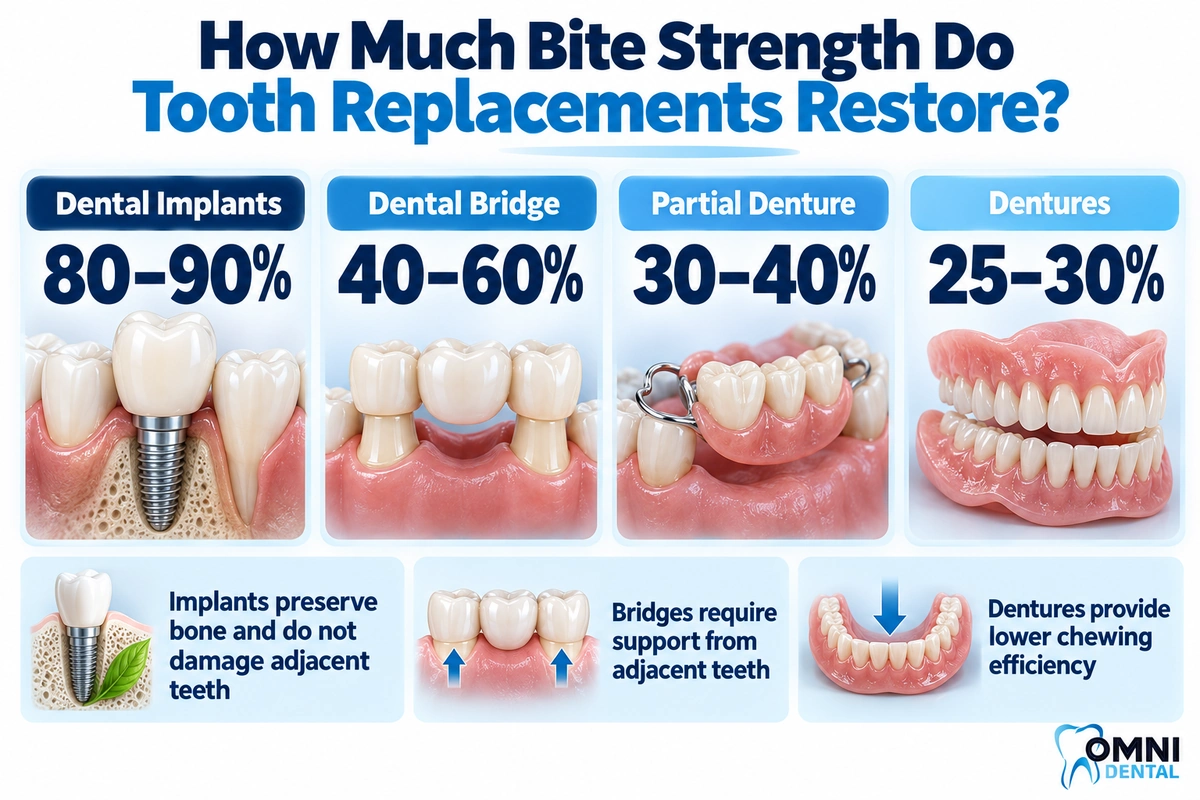
When you lose a natural tooth, bite force declines immediately. The missing tooth no longer transfers chewing force to the jawbone. Furthermore, the jawbone beneath the missing tooth begins to deteriorate because it no longer receives stimulation. Consequently, your remaining teeth compensate by bearing more load. Over months and years, bone loss accelerates, weakening your foundation for any replacement. Dentures rest on top of remaining bone, providing minimal force transfer. Bridges anchor to neighboring teeth, forcing them to support extra weight. Both options leave you with less than half your natural bite force.
How Implants Restore Bite Force
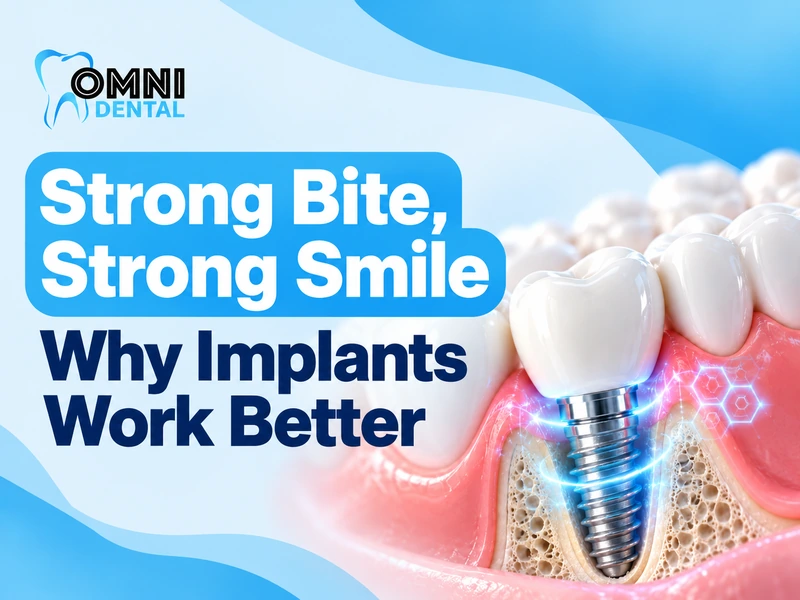
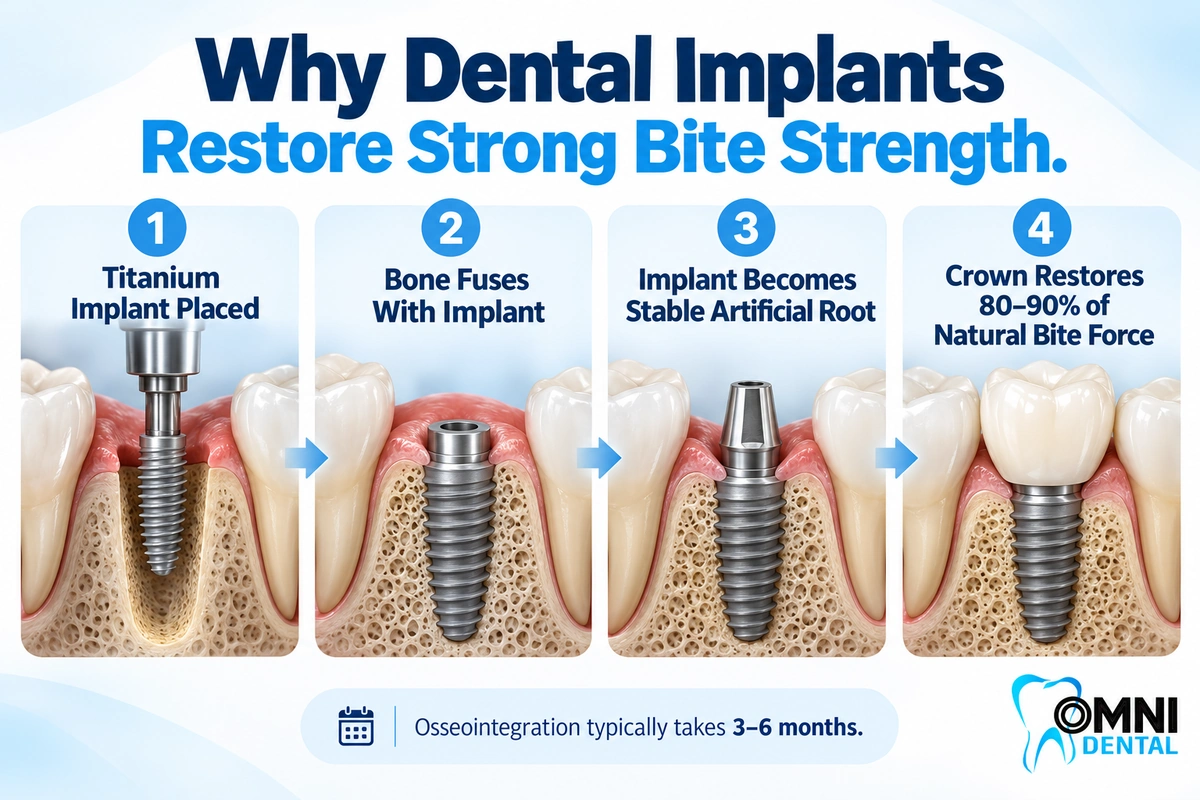
Dental implants restore bite force by recreating a natural tooth root. The titanium implant screw is surgically placed directly into your jawbone where your natural tooth root once was. Over 3-6 months, bone cells fuse with the implant through osseointegration. This biological integration creates a connection as strong as natural tooth roots. Once osseointegration completes, your dentist attaches a crown to the implant. When you bite down, force transfers directly through the implant to the jawbone. Consequently, your bite force approaches your natural tooth’s original strength. Studies show implants restore 95% or more of natural bite force.
Implants vs. Dentures and Bridges
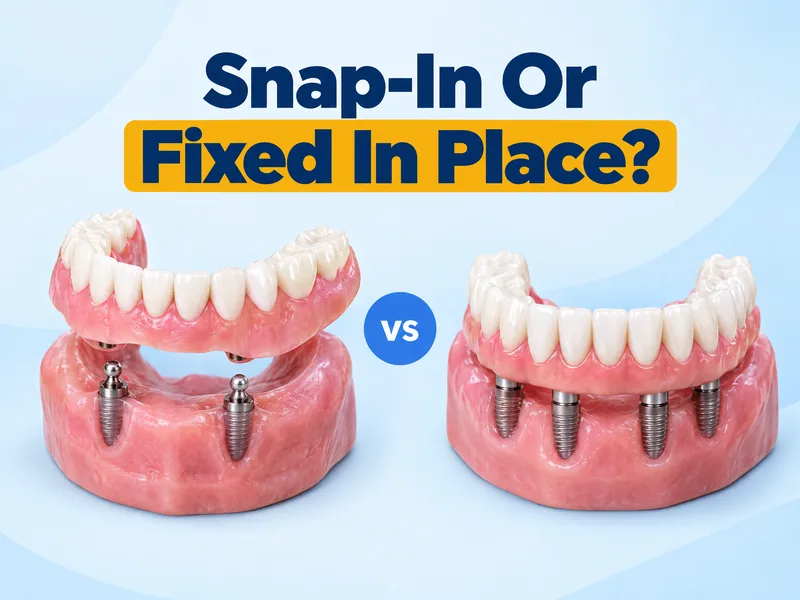
Dentures provide only 25% of bite force because they rest on gums, not bone. Denture-wearers avoid hard foods and experience progressive bone loss and loosening. Implants anchor directly to bone and prevent bone loss. Bridges anchor to neighboring teeth, concentrating all chewing force on two teeth. Over years, anchor teeth wear down or develop cavities. Implants solve both problems: they anchor to bone independently and preserve your remaining teeth. Implants provide 75% more bite force than dentures and eliminate the stress bridges place on anchor teeth.
Bite Force and Food Choices
Restored bite force dramatically improves your diet. You can eat nuts, seeds, raw vegetables, and tough meats. Denture-wearers avoid these foods and consume softer, processed foods instead. Implants restore your ability to eat whole, nutrient-dense foods. Better nutrition supports immune function and healing.
Chewing Efficiency and Digestion
Strong bite force improves digestion. You break food into smaller pieces, making it easier for your stomach to process. Thorough chewing triggers saliva production, which aids digestion. Implants restore natural chewing efficiency, supporting digestive health.
Jawbone Preservation Through Bite Force
Bite force stimulates jawbone preservation. Every time you chew with an implant, pressure transmits to bone, signaling cells to maintain density. Dentures and bridges provide no stimulation, causing bone loss at 1mm per year. Implants preserve bone indefinitely.
Recovery Timeline for Bite Force
You cannot bite on the implant for 3-6 months during osseointegration. Once your final crown is placed, you can resume normal chewing within 4-6 weeks. Most patients bite with full force by 3 months.

Frequently Asked Questions
How much bite force do dental implants provide?
Dental implants restore 95% or more of natural bite force. Osseointegration bonds the implant directly to jawbone, creating a foundation as strong as natural tooth roots. When you bite down on an implant crown, force transfers to your jawbone exactly as it does with natural teeth. Most patients cannot distinguish between biting on a natural tooth and biting on an implant. Implants provide approximately 200 pounds of biting pressure, comparable to natural posterior teeth. This power allows you to eat any food confidently. Dentures provide only 50 pounds of pressure, making them unsuitable for hard foods. Bridges also provide reduced force because anchor teeth cannot handle the load.
When can I start chewing hard foods after implant placement?
You can resume normal chewing hard foods approximately 4-6 weeks after your dentist places the final crown. However, the timeline depends on your osseointegration progress and your dentist’s approval. During the first 3-6 months of osseointegration, the implant is still integrating with bone. Your oral surgeon may recommend limiting force during this time. Once osseointegration is complete and your final crown is placed, you can bite with full force. Your dentist will provide specific instructions based on your implant location and bone quality. Most patients report feeling confident eating hard foods within a month of crown placement. Your dentist may suggest limiting very hard foods for a few weeks as your tissues adapt.
Do implants feel different when chewing compared to natural teeth?
No, implants feel virtually identical to natural teeth when chewing. Once osseointegration completes, the implant anchors as firmly as a natural tooth root. You feel the same resistance and pressure feedback when biting. Your jaw closes with the same strength and stability. The only slight difference is that implants lack the periodontal ligament of natural teeth, which some people perceive as a very subtle difference in sensation. Most patients report that they forget their implant is artificial within weeks because chewing feels so natural. Implants provide superior stability compared to dentures or bridges, which shift and move during chewing. The experience is indistinguishable from your original teeth.
Ready to restore your full bite strength?
Contact our Arlington Heights dental team to schedule a consultation and discover how implants can restore your bite force and quality of life.

About the author
Dr. Bilus D PolesDDS,MAGD,DICOI, DIDIA
Founder and lead dentist of Omni Dental of Arlington Heights. Master of the Academy of General Dentistry and Board Certified Diplomate of the ICOI and IDIA. Illinois license #019.027365.