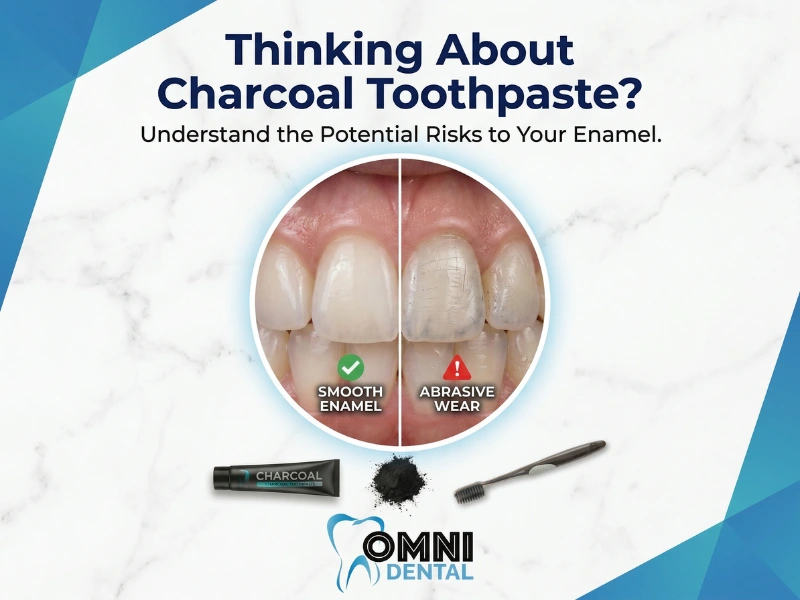
Charcoal toothpaste is safe only for occasional use, because its abrasive texture can wear down enamel with daily brushing. So, is charcoal toothpaste safe for whitening? It can lift surface stains but won’t change your teeth’s natural color like professional whitening. Use it occasionally and keep fluoride toothpaste for daily brushing.
Key Takeaways
- Activated charcoal absorbs surface stains for a temporary brightening effect.
- Its abrasive texture can wear down enamel and increase sensitivity with daily use.
- Charcoal toothpaste doesn’t change the natural color of teeth the way professional whitening does.
- Use it occasionally, brush gently, and keep fluoride toothpaste for daily protection.
- Whitening toothpastes with hydrogen peroxide or silica are less abrasive alternatives.
Estimated read: 3 min
What you need to know before trying activated charcoal
When patients ask, Is Charcoal Toothpaste Safe?, they want to know whether using black powder toothpaste can whiten teeth without harming enamel.
Charcoal toothpaste contains activated charcoal, which can help remove surface stains. However, overuse may damage tooth enamel and affect long term oral health. Teeth whitening should always follow American Dental recommendations to ensure safety and effectiveness.
How Charcoal Toothpaste Works
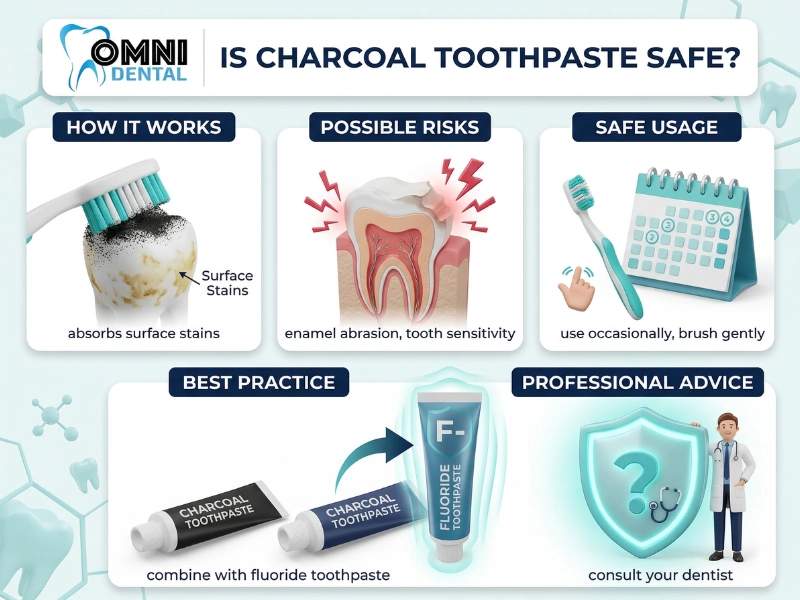
Activated charcoal in toothpaste works by absorbing surface stains on teeth. This black powder binds to plaque and debris, creating a temporary whitening effect. While many people notice brighter teeth after use, charcoal toothpaste does not whiten teeth the same way professional teeth whitening treatments do.
Potential Risks of Charcoal Toothpaste
Using charcoal toothpaste every day can harm tooth enamel due to its abrasive nature. Excessive use may lead to sensitivity and increased risk of decay. It also may not reach deep stains between teeth. Always follow guidance from dental professionals and alternate with regular fluoride toothpaste to maintain healthy teeth.
Safe Usage Tips
- Use charcoal toothpaste occasionally, not daily
- Brush gently to protect enamel
- Avoid swallowing black powder
- Combine with fluoride toothpaste for better protection
- Consult your dentist before starting any new teeth whitening routine
Activated Charcoal vs Other Whitening Toothpastes
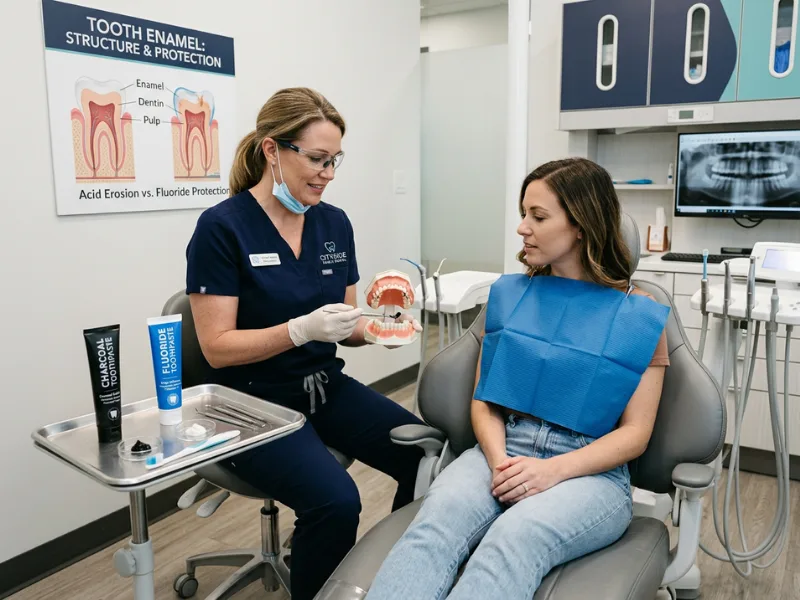
Many whitening toothpastes now use ingredients like baking soda, hydrogen peroxide, or silica instead of charcoal. These alternatives provide stain removal while being less abrasive to tooth enamel. Choosing the right product depends on your teeth’s sensitivity, your whitening goals, and professional dental guidance. Using safer alternatives occasionally can help you maintain a bright smile without risking enamel damage.
Does Charcoal Toothpaste Really Whiten Teeth?
While black powder toothpastes may remove surface stains, they do not change the natural color of teeth like professional whitening treatments. Users may notice temporary brightening, but deep discoloration requires dentist-approved teeth whitening methods. For best results, combine gentle stain removal with fluoride toothpaste to protect enamel.
Local Guidance for Safe Teeth Whitening
If you live in Arlington Heights or nearby areas, schedule a consultation to determine the safest approach for whitening teeth. Our dental office provides comprehensive care to protect enamel and maintain long term oral health. Following professional advice ensures teeth whitening products, including charcoal toothpaste alternatives, are safe for your smile.
FAQ
What are the side effects of charcoal toothpaste?
Charcoal toothpaste can cause enamel abrasion, tooth sensitivity, and may increase the risk of decay if used too frequently.
Which is the safest toothpaste to use?
Fluoride-based toothpaste recommended by American Dental guidelines is safest for daily use, supporting enamel and oral health.
Why shouldn’t you use charcoal toothpaste every day?
Daily use can wear down enamel, weaken teeth, and increase sensitivity. Use occasionally and alternate with regular toothpaste.
What is the healthiest way to whiten your teeth?
Professional teeth whitening or dentist-approved whitening toothpaste is safest, protecting enamel while effectively brightening teeth.

About the author
Dr. Bilus D PolesDDS,MAGD,DICOI, DIDIA
Founder and lead dentist of Omni Dental of Arlington Heights. Master of the Academy of General Dentistry and Board Certified Diplomate of the ICOI and IDIA. Illinois license #019.027365.