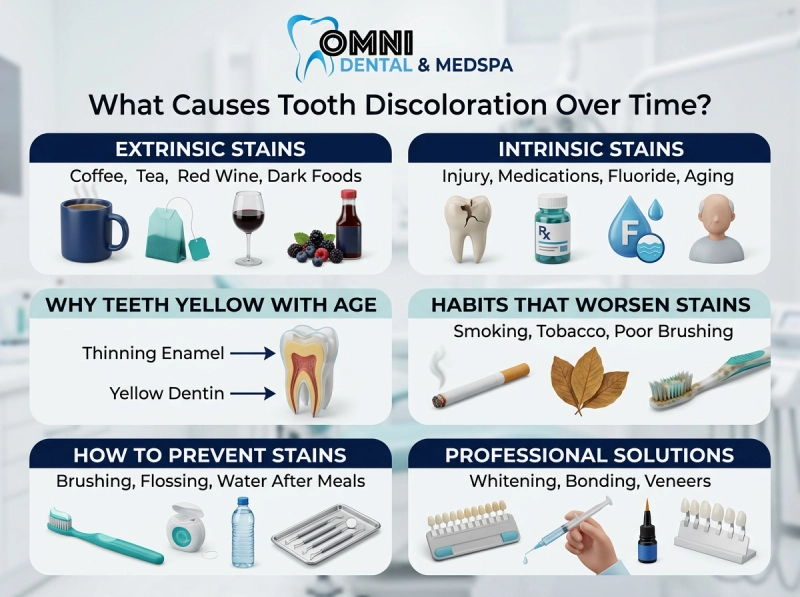
What causes tooth discoloration over time is usually surface staining from coffee, tea, red wine, and tobacco, plus enamel thinning with age. Thinner enamel lets the yellow dentin underneath show through. Stains inside the tooth can also come from injury, certain medications, or too much fluoride.
Key Takeaways
- Extrinsic stains from coffee, tea, red wine, and tobacco sit on the tooth’s outer layer.
- Intrinsic stains form inside the tooth from injury, certain medications, or too much fluoride.
- As enamel thins with age, the yellow dentin underneath shows through.
- Brushing twice a day, flossing, and rinsing after meals help slow new staining.
- Surface stains often respond to cleaning and whitening, while deeper stains may need bonding or veneers.
Estimated read: 5 min
Why Teeth Can Change Color
Many people wonder what causes tooth discoloration over time? Teeth can slowly lose their natural white color as we get older. Discolored teeth happen because of food, drinks, habits, or even small health issues. Good oral health and daily care can help slow down staining.
Types of Tooth Discoloration
Extrinsic Discoloration
Extrinsically discolored teeth affect the outer layer of the tooth. Common causes include coffee, tea, red wine, and dark foods. Using chewing tobacco or not brushing well also makes teeth yellow or brown over time. These stains usually respond well to cleaning or professional teeth whitening.
Intrinsic Discoloration
Intrinsic stains occur inside the tooth. They can happen from injury, medicines, or too much fluoride. Intrinsic discoloration often needs stronger treatments like hydrogen peroxide whitening or cosmetic dental care.
Main Causes of Stained Teeth
Foods and drinks like coffee, tea, and soda stick to teeth and cause staining. Smoking or chewing tobacco makes stains worse. Poor daily habits like not brushing or flossing let food debris and plaque build up, making yellow or brown teeth more noticeable. Even small white spots on enamel can stand out more as teeth discolor.
| Category | Cause | Description |
|---|---|---|
| Extrinsic Discoloration | Food and Drinks | Coffee, tea, red wine, and dark foods stain the outer enamel |
| Extrinsic Discoloration | Tobacco Use | Smoking and chewing tobacco cause yellow or brown stains |
| Extrinsic Discoloration | Poor Oral Hygiene | Plaque and food buildup lead to visible staining |
| Intrinsic Discoloration | Injury | Damage to the tooth can darken it from the inside |
| Intrinsic Discoloration | Medications | Certain drugs affect tooth color during development |
| Intrinsic Discoloration | Excess Fluoride | Fluorosis can cause white or brown spots on teeth |
| Age-Related Changes | Enamel Thinning | Thinner enamel reveals yellow dentin underneath |
| Lifestyle Factors | Diet and Habits | Frequent consumption of staining foods and drinks increases discoloration over time |

How Getting Older Affects Teeth
As people age, the white enamel thins, showing the yellow dentin beneath. Over time, long-term exposure to staining foods and beverages adds to tooth color changes. Older adults may notice intrinsic discoloration more than younger people.
Tips to Keep Teeth White
Brushing at least twice a day with fluoride toothpaste, flossing daily, and avoiding staining foods and drinks helps protect teeth. Regular dental cleaning removes extrinsic discoloration, while professional teeth whitening can fix deeper intrinsic stains safely. Drinking water after meals or using a straw for coffee or tea can also reduce stains.
Habits That Cause Stains
Some habits speed up tooth discoloration. Smoking, chewing tobacco, or drinking dark drinks often leads to yellow or brown teeth. Skipping regular brushing lets plaque and food debris build up, causing tooth stains. Cutting down these habits can help teeth stay brighter for longer.

Professional Help for Stains
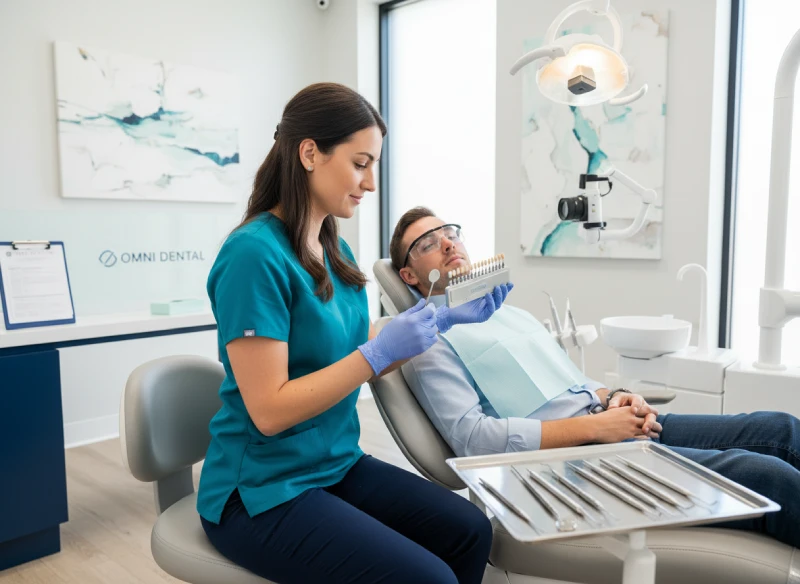
If stains do not go away, dentists offer options like professional whitening, veneers, or bonding. Whitening uses hydrogen peroxide to safely lighten teeth. Cosmetic dental treatments can also fix stubborn intrinsic discoloration and restore a natural look.
FAQ
What causes permanent discoloration of teeth?
Permanent stains can happen because of injuries to the teeth, certain medications, genetics, or worn enamel over time. These factors cause intrinsic stains deep inside the tooth that cannot be removed by regular brushing alone. Usually, professional dental treatments like whitening, bonding, or veneers are needed to restore the natural color of these teeth.
Can tooth discoloration be reversed?
Yes, many surface stains caused by coffee, tea, red wine, or tobacco can improve with consistent oral hygiene, including brushing, flossing, and regular dental cleanings. However, deeper intrinsic stains inside the tooth usually require professional teeth whitening or cosmetic treatments to fully reverse the discoloration and bring back a bright, natural look.
Can a tooth be discolored but not dead?
Absolutely. Teeth can change color due to aging, staining foods, or minor enamel damage, but this does not mean the tooth is dead or unhealthy. Maintaining good daily oral care, regular dental checkups, and avoiding staining habits help keep teeth healthy even if the color has changed.
Can food and drinks really affect tooth color?
Yes, eating certain foods and drinking beverages like coffee, tea, soda, red wine, and other dark liquids can gradually stain teeth over time. Sticky or sugary foods can also trap particles on the tooth surface, increasing discoloration risk. Following a good oral hygiene routine, rinsing after meals, and visiting a dentist regularly can help prevent stains from worsening.

About the author
Dr. Bilus D PolesDDS,MAGD,DICOI, DIDIA
Founder and lead dentist of Omni Dental of Arlington Heights. Master of the Academy of General Dentistry and Board Certified Diplomate of the ICOI and IDIA. Illinois license #019.027365.