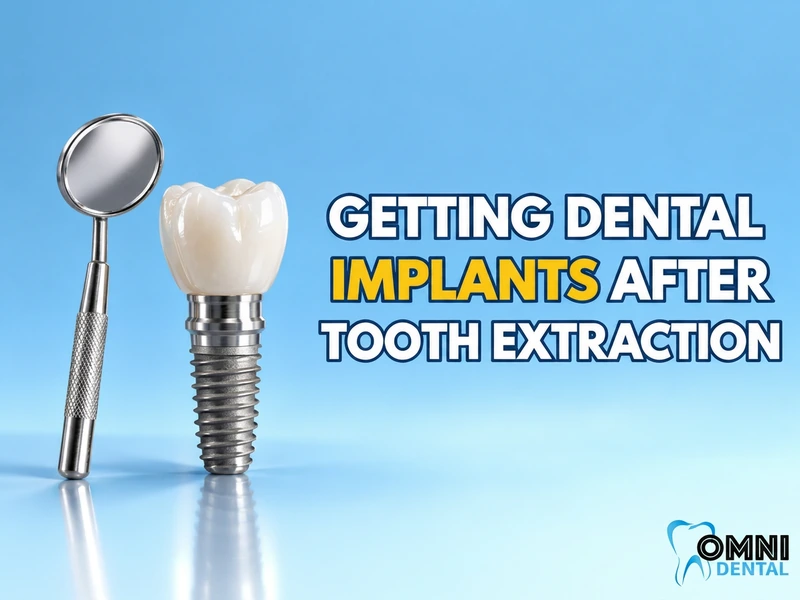
Getting dental implants after tooth extraction can happen during the extraction visit in select cases, or after 8-12 weeks of healing. Immediate placement requires healthy gums, enough bone, and no active infection at the site. If bone has resorbed, a bone graft may be needed first. The full process from extraction to final crown typically takes 6-12 months.
Key Takeaways
- Getting dental implants after tooth extraction restores your smile with a natural-looking, permanent solution.
- The dental implant placement process involves the implant post being anchored into your jawbone after extraction.
- Jawbone density and bone resorption determine whether a bone graft is necessary for successful implant integration.
- Immediate dental implants can be placed after tooth extraction, though healing timelines vary by patient and health conditions.
Read time: 8 min
Understanding Dental Implants After Tooth Extraction
Tooth replacement options vary significantly, but a dental implant after a tooth extraction stands apart as the most natural and durable choice. When a dentist removes a natural tooth, the extraction site becomes the focal point for future restoration. Consequently, bone naturally resorbs immediately after extraction, affecting your treatment plan timing.
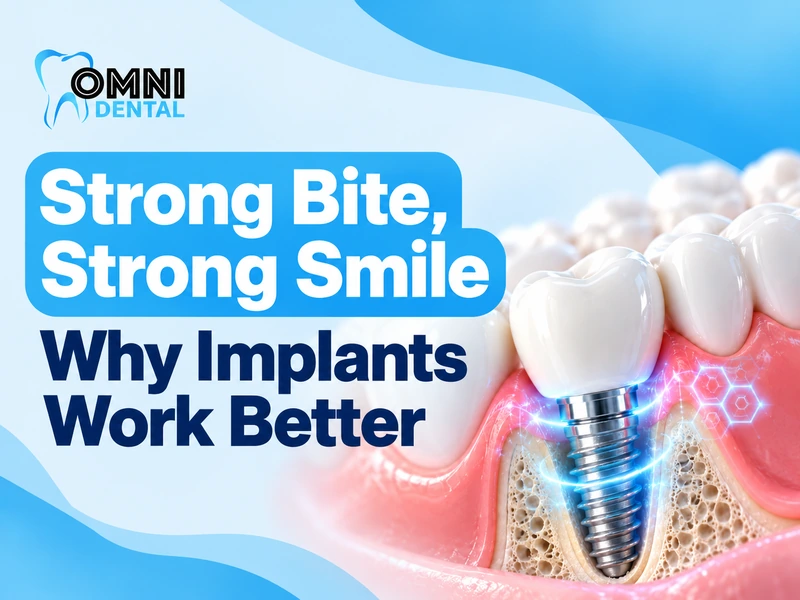
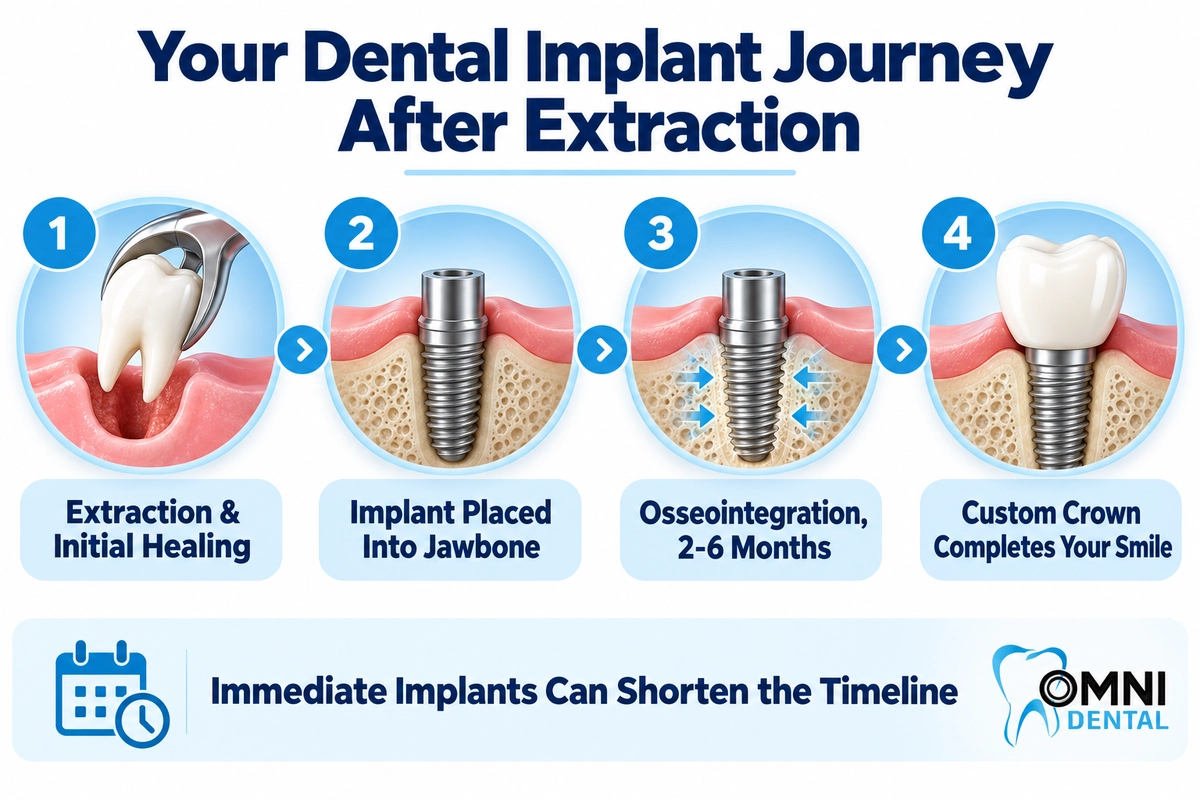
Dental implant placement involves anchoring an implant post directly into your jawbone. This surgical approach mimics the natural tooth root structure that nature originally provided. Therefore, the implant integrates with bone tissue through a process called osseointegration. Additionally, dental implant surgery offers superior long-term results compared to other tooth replacement options available.
The extraction site must meet specific requirements before implant placement can occur. Your jawbone density plays a critical role in supporting the implant post successfully. Moreover, if bone resorption has compromised density, a bone graft may be necessary to ensure adequate support for your new implant.
The Dental Implant Process After Extraction
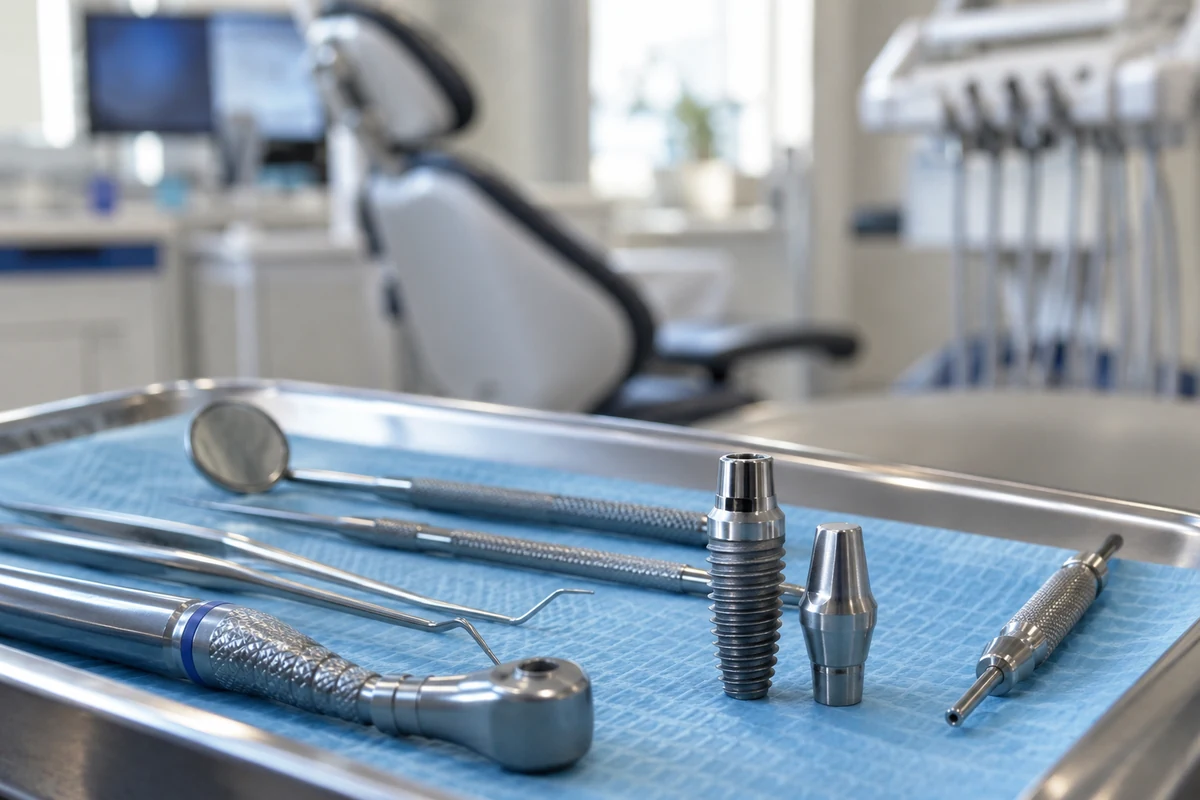
Understanding the implant process helps you prepare for what lies ahead. The journey from tooth removal to a fully functional implant typically spans several months. However, some modern approaches allow for immediate dental implants in specific situations.
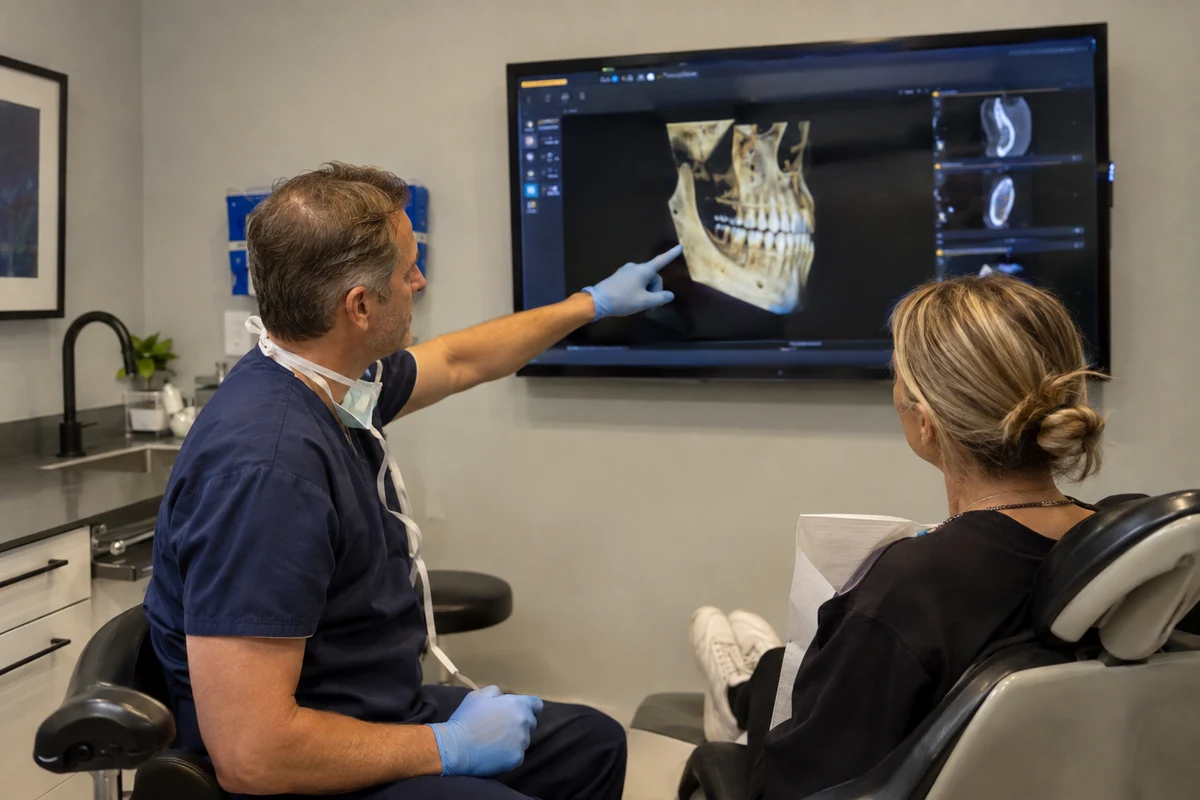
Initial assessment determines your candidacy and treatment plan complexity. Your dentist evaluates the extraction site, jawbone density, and overall oral health. Furthermore, your dentist must address any existing gum disease before implant placement. Additionally, medical conditions may influence the timeline and approach your dentist recommends.
The surgery you’ll experience typically occurs in stages. First, the surgical team places your implant post into the jawbone at the extraction site. Subsequently, a healing period of 3-6 months allows bone to integrate with the implant. Finally, once osseointegration completes successfully, your dentist attaches the restoration (crown) to complete your smile.
Immediate Dental Implants After Extraction
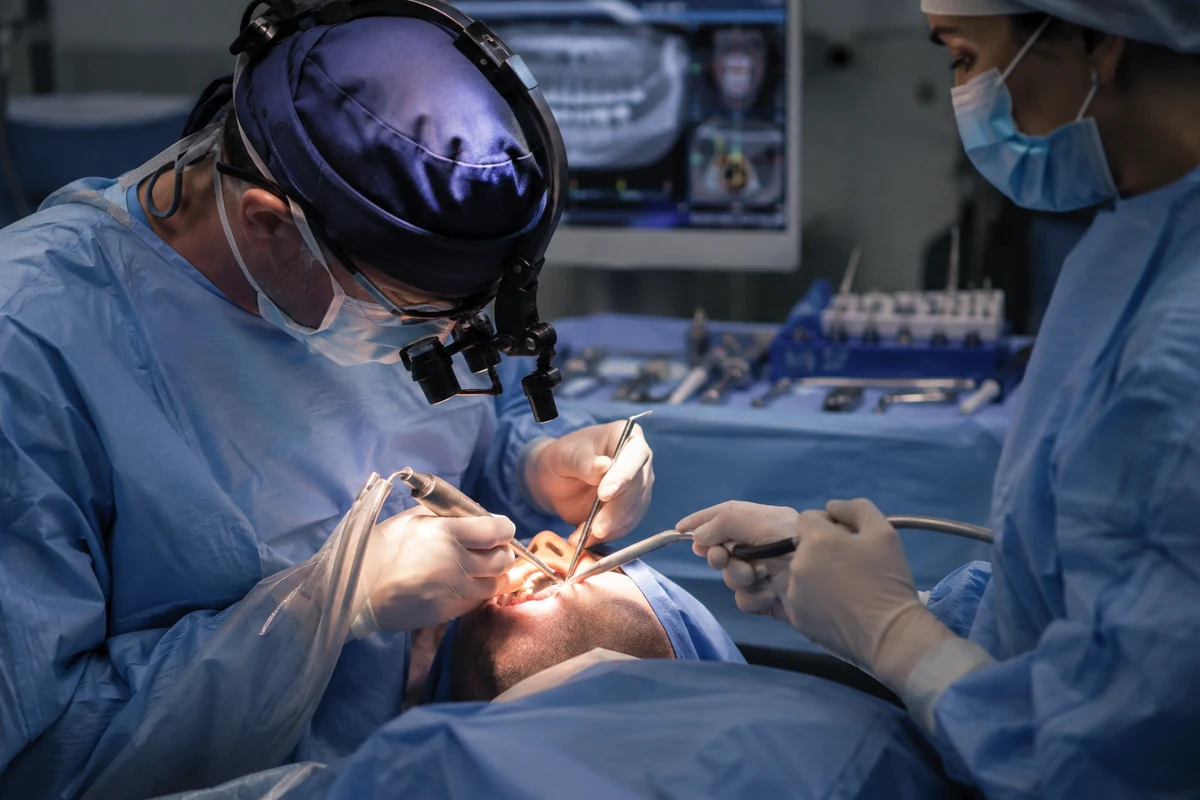
One advancement in modern implant dentistry is the concept of immediate dental implants. This process involves placing your implant post during the same appointment when the dentist removes the natural tooth. Consequently, you avoid a prolonged healing period and expedite your smile restoration.
Immediate placement requires specific conditions: adequate bone volume, healthy gums, and no active infection at the extraction site. Not every patient qualifies for immediate dental implants after tooth extraction. Therefore, your periodontist or implant specialist must carefully assess whether you meet the criteria.
The advantages include reduced treatment time and less psychological disruption. Additionally, immediate placement often provides superior esthetic outcomes since the bone structure remains intact. However, this approach requires exceptional surgical skill and precise planning.
Bone Resorption and Bone Grafting
After tooth extraction, bone resorption begins naturally as the body reabsorbs bone in the extraction site. This gradual bone loss occurs because the tooth root no longer stimulates bone maintenance. Consequently, jawbone density decreases over time without a tooth or implant present.
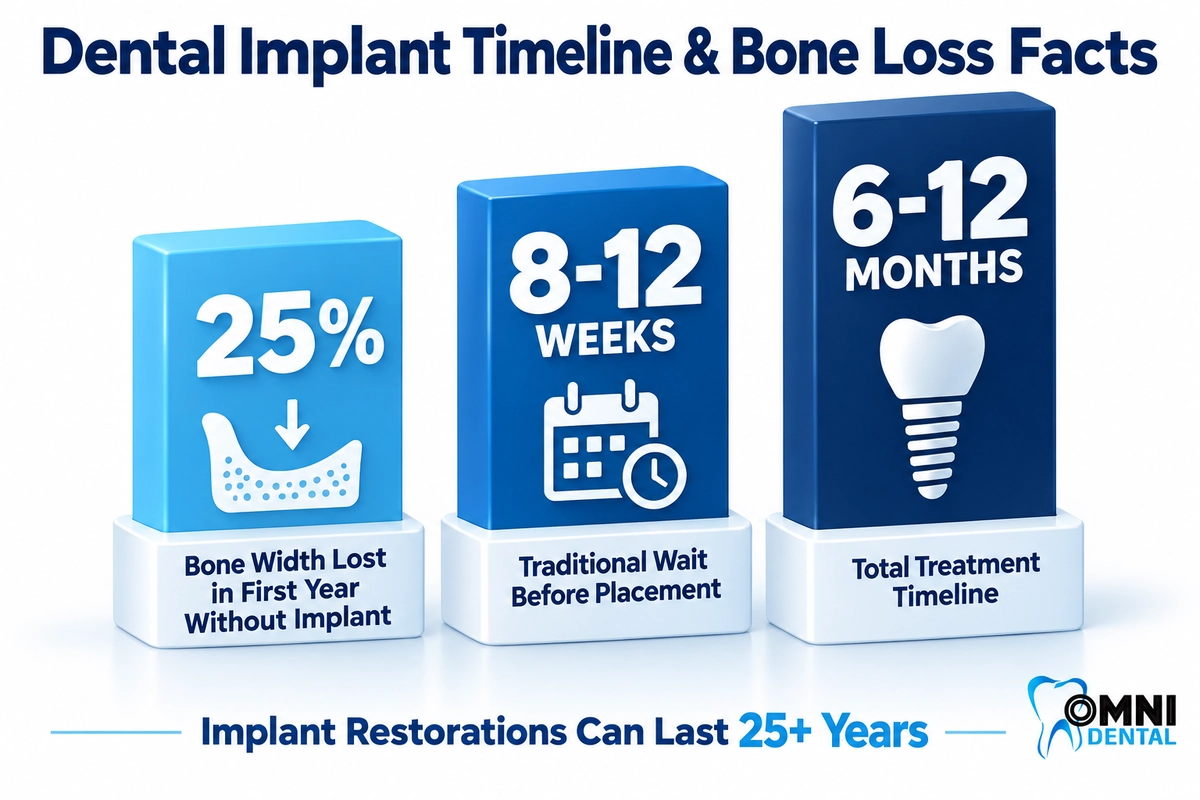
The first year following extraction sees the most dramatic bone resorption. Furthermore, this process continues at a slower rate in subsequent years. Therefore, timely implant placement helps minimize bone loss and simplifies your treatment plan.
When bone resorption has been extensive, a bone graft becomes necessary. This surgical procedure adds bone material to restore adequate jawbone density for implant support. Your dentist may use bone from your own body, donate bone from a bone bank, or choose synthetic bone substitute materials.
Bone grafting adds several months to your overall treatment timeline. However, it ensures your implant post receives proper support for long-term success. Additionally, grafted bone integrates with your natural jawbone, creating a solid foundation for your restoration.

Managing Oral Health During Recovery
Proper oral health maintenance during the implant recovery process is critical to success. After tooth extraction and implant placement, your gums and jawbone require special care. Therefore, following your dentist’s post-operative instructions prevents complications and promotes healing.
Initial healing focuses on allowing the extraction site to close properly. Avoid disturbing the surgical site and follow dietary restrictions your dentist provides. Furthermore, rinse gently with prescribed antimicrobial rinses to prevent infection. Additionally, avoid smoking and alcohol, as both impair bone healing and osseointegration.
Pain management typically requires minimal intervention with modern implant techniques. Most patients manage discomfort with over-the-counter pain relief medication. However, your dentist may prescribe stronger medication if needed. Subsequently, most patients report being surprised by how comfortable the recovery process was.
You should expect some swelling and minor bleeding in the first few days. Apply ice during the first 24-48 hours to minimize swelling. Moreover, keeping your head elevated reduces inflammation naturally. Additionally, maintaining excellent oral hygiene throughout recovery prevents gum disease and infection complications.
Health Conditions Affecting Implant Success
Certain health conditions influence your dental implant surgery outcomes and treatment plan timing. Uncontrolled diabetes, for example, can impair bone healing and osseointegration. Therefore, managing your health conditions optimally before implant placement improves success rates significantly.
You must completely resolve gum disease before implant placement. Active periodontal infection compromises bone quality and increases implant failure risk. Consequently, your dentist will address thorough gum disease treatment before your implant surgery begins. Additionally, maintaining excellent oral hygiene after implant placement prevents future complications.
Bone density issues extend beyond simple resorption. Medical conditions, medications, and age all influence how your jawbone responds to implant placement. Your dentist evaluates these factors comprehensively when developing your individualized treatment plan.
Smoking significantly reduces implant success rates by impairing bone healing. If you smoke, your dentist will strongly recommend cessation before and during implant integration. Furthermore, continuing to smoke after implant placement compromises long-term outcomes substantially.
Need tooth replacement after extraction? Dental implants might be your best option.
Our implant specialists can evaluate your extraction site and develop your personalized treatment plan. Call (847) 483-8833 to schedule a consultation today.

The Complete Treatment Timeline
Typical implant treatment spans 6-12 months from extraction to final restoration. However, immediate dental implants can reduce this timeline to 3-6 months. Understanding this timeline helps set realistic expectations for your smile transformation.
Month 1-2: Extraction and initial healing occur. If immediate implant placement is performed, the implant post is secured during extraction. Otherwise, you wait 2-3 months before implant placement to allow bone resorption stabilization. Your treatment plan specifies your exact timeline based on your circumstances.
Month 2-6: Osseointegration happens as jawbone integrates with the implant post. This biological process determines long-term implant success. During this period, bone cells gradually attach to and stabilize your implant. Your dentist monitors progress through periodic check-ups.
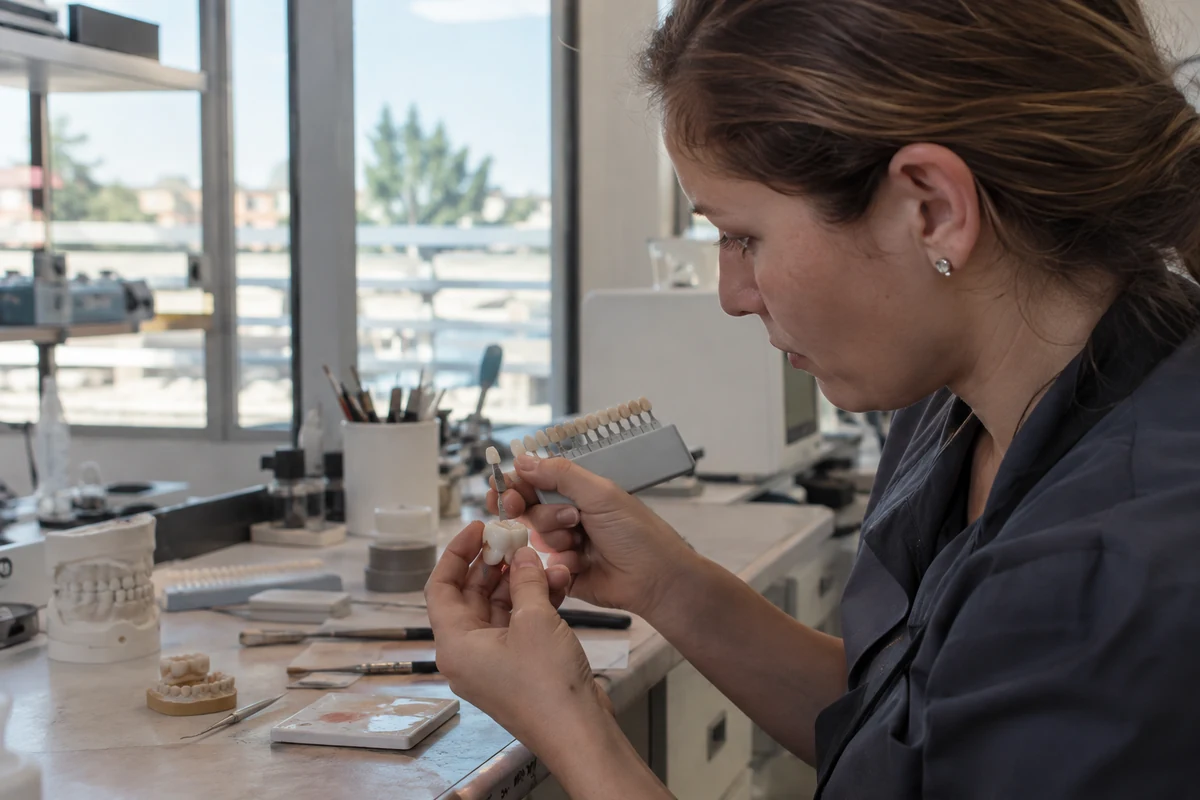
Month 6-8: Restoration design begins once osseointegration is confirmed. Your dentist creates a custom crown that matches your natural teeth perfectly. This restoration achieves both esthetic excellence and functional restoration.
Month 8+: The final crown is attached to your implant post, completing your smile restoration. You now have a fully functional tooth that feels and performs like a natural tooth. With proper care, your implant restoration can last for decades.
Natural Teeth Aesthetics and Function
One major advantage of dental implant restoration is achieving natural teeth appearance and function. Unlike other tooth replacement options, implants replicate the complete tooth structure from root to crown. Therefore, the final restoration looks, feels, and functions like a natural tooth.
The implant post provides structural support that maintains jawbone health and facial contours. Unlike other solutions, implants prevent the bone loss and facial collapse that occurs with missing teeth. Consequently, your smile maintains its full, youthful appearance long-term.
Functionally, implants restore your ability to eat all foods with confidence. Natural tooth restoration means no dietary restrictions or difficulty chewing. Furthermore, implants don’t slip or cause embarrassment like removable alternatives might.
Esthetically, your restoration is customized to match your existing natural teeth perfectly. Shade, shape, and size are all designed to blend seamlessly. Additionally, the restoration is fixed permanently, creating a smile that’s indistinguishable from natural teeth.
Ready to explore dental implants as your tooth replacement option?
Omni Dental’s implant specialists offer comprehensive treatment plans tailored to your needs. Call (847) 483-8833 to learn more.
Getting Dental Implants After Tooth Extraction: Questions Answered
Can You Get Implants After Having Teeth Pulled?
Yes, dental implants are an excellent tooth replacement option after tooth extraction. In fact, dental implant surgery is specifically designed to replace teeth that have been removed. Your jawbone must have adequate density, and any gum disease must be resolved first. However, most patients who have had teeth extracted qualify for implant restoration. The extraction site can support an implant post once proper healing has occurred. Therefore, getting dental implants after tooth extraction is not only possible but highly recommended for optimal oral health restoration.
How Long After Extraction Can You Do a Dental Implant?
Traditional timing recommends waiting 8-12 weeks after tooth extraction before implant placement. This allows initial bone resorption to stabilize and the extraction site to heal completely. However, immediate dental implants can be placed during the extraction appointment itself in select cases. Your dentist evaluates your specific situation to recommend the optimal timing. Factors like bone quality, gum disease status, and infection presence influence this decision. Generally, the sooner an implant is placed after extraction, the less total bone loss occurs. Therefore, your dentist will recommend the fastest safe timeline for your treatment plan.
Can I Get Dental Implants Years After My Dental Extraction?
Yes, you can receive dental implants years after tooth extraction. However, significant bone resorption may have occurred, potentially requiring a bone graft. The longer the time between extraction and implant placement, the greater the bone loss. Years of missing teeth allows substantial jawbone density reduction. This complicates your treatment plan and extends the overall timeline. Nevertheless, modern implant techniques can restore even severely compromised jawbone structure through bone grafting and other regenerative procedures. Therefore, years of waiting doesn’t eliminate your implant options, though earlier treatment would have been simpler.
Is It Very Painful to Get Dental Implants?
Most patients find dental implant surgery more comfortable than expected, thanks to modern anesthesia and surgical techniques. During the procedure, your extraction site and surrounding tissue are completely numbed. Most patients report feeling pressure and vibration but no actual pain. Post-operative discomfort is typically mild and manageable with over-the-counter pain relief. Many patients are amazed at how comfortable the experience was compared to their expectations. Swelling and minor bruising are normal but temporary. Most patients return to normal activities within a few days. Therefore, fear of pain should not deter you from pursuing dental implant restoration.

Choosing Implants as Your Tooth Replacement
When facing tooth extraction, your treatment plan should prioritize long-term oral health and quality of life. Dental implant surgery offers the most comprehensive solution for replacing extracted teeth permanently. Getting dental implants after tooth extraction preserves jawbone density, maintains facial structure, and restores full smile confidence. Whether the tooth removed was due to decay, trauma, or disease, implants provide superior restoration compared to all other options.
The process involves planning, surgical placement, healing, and restoration, but the investment yields decades of benefit. Unlike other tooth replacement options that require ongoing adjustments or replacement, implants provide lasting stability. Your natural teeth remain intact, and the implant integrates permanently with your jawbone.
The decision to proceed with dental implant placement is ultimately yours. However, understanding the benefits and process makes the choice clear for most patients. Your dentist can evaluate whether you’re a candidate and develop your personalized treatment plan today.

About the author
Dr. Bilus D PolesDDS,MAGD,DICOI, DIDIA
Founder and lead dentist of Omni Dental of Arlington Heights. Master of the Academy of General Dentistry and Board Certified Diplomate of the ICOI and IDIA. Illinois license #019.027365.