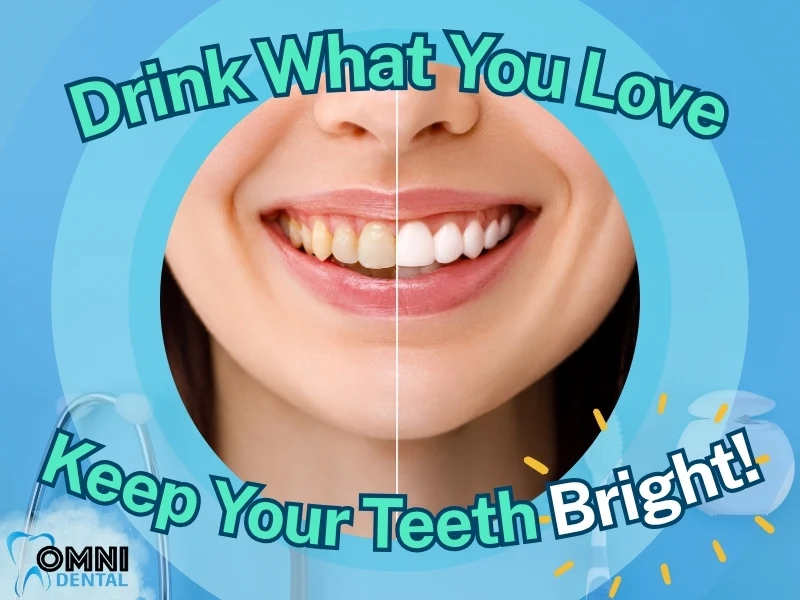
Teeth whitening for coffee and wine drinkers works best as a mix of daily habits and periodic whitening treatments. Rinsing with water, using a straw, and brushing with whitening toothpaste limit new stains from tannins and pigments. Professional whitening lifts stubborn stains, and skipping dark drinks for 48 hours afterward protects results.
Key Takeaways
- Tannins and dark pigments in coffee and red wine cling to enamel and cause stains.
- Rinse with water or sip through a straw to limit contact with your teeth.
- Whitening toothpaste, strips, and gels help with mild surface stains.
- Professional whitening uses stronger hydrogen peroxide gels for stubborn discoloration.
- Avoid coffee and red wine for at least 48 hours after whitening.
Estimated read: 5 min
Simple tips and treatments to protect your white smile while enjoying your favorite drinks
If you’re a coffee lover or enjoy a glass of red wine, you’ve probably noticed how easily these beverages can stain your teeth. Both drinks contain pigments and tannins that cling to enamel, causing yellow or brown discoloration over time. The good news is that with the right habits and treatments, teeth whitening for coffee and wine drinkers is very possible.
This guide covers why stains happen, how to remove surface stains, and the best ways to maintain a bright smile while still enjoying your daily coffee or wine.

Why Coffee and Wine Stain Your Teeth
- Coffee contains tannins that penetrate enamel and cause discoloration.
- Red wine combines tannins, natural acids, and deep pigments, making it even more likely to stain your teeth.
- Frequent drinking coffee or wine without proper cleaning can lead to yellow or brown stains that are hard to reverse without professional care.
Stains can be either:
- Surface (extrinsic) stains – caused by pigments sticking to the enamel.
- Intrinsic stains – deeper discoloration inside the tooth, which are harder to treat.
Everyday Habits to Reduce Stains
You don’t have to give up your favorite drinks to keep a white smile. These tips can help:
| Tip | Description |
|---|---|
| Use a Straw | Sip through a straw to minimize contact with your teeth, reducing stain risk. |
| Rinse After Drinks | Rinse with water after drinking coffee or wine to wash away pigments. |
| Brush Regularly | Brush regularly with whitening toothpaste that helps gently polish teeth. |
| Schedule Cleanings | Maintain regular dental cleanings to remove plaque that holds onto stains. |
| Pair Wine with Cheese | Pair wine with cheese or crunchy foods to neutralize acids and protect enamel. |
At-Home Whitening Options
Several at-home solutions can help brighten your smile:
- Whitening toothpaste – effective for maintaining results and reducing minor stains.
- Whitening gels and strips – often contain hydrogen peroxide to lift deeper stains.
- Home whitening kits – designed to remove surface stains gradually.
While these can improve brightness, they work best for mild stains and should be paired with regular dental care.
Professional Whitening Treatments
For coffee and wine lovers dealing with stubborn discoloration, professional whitening kits and in-office treatments deliver stronger results. Dentists use concentrated whitening gels with hydrogen peroxide to break down stains and brighten enamel quickly.
Benefits of professional whitening:
- Stronger, longer-lasting results than home whitening kits. Read here How Long Do Teeth Whitening Results Last?
- Custom trays that target stains more evenly
- Safe application monitored by dental professionals
These treatments are especially effective if you want a brighter smile for a special occasion.
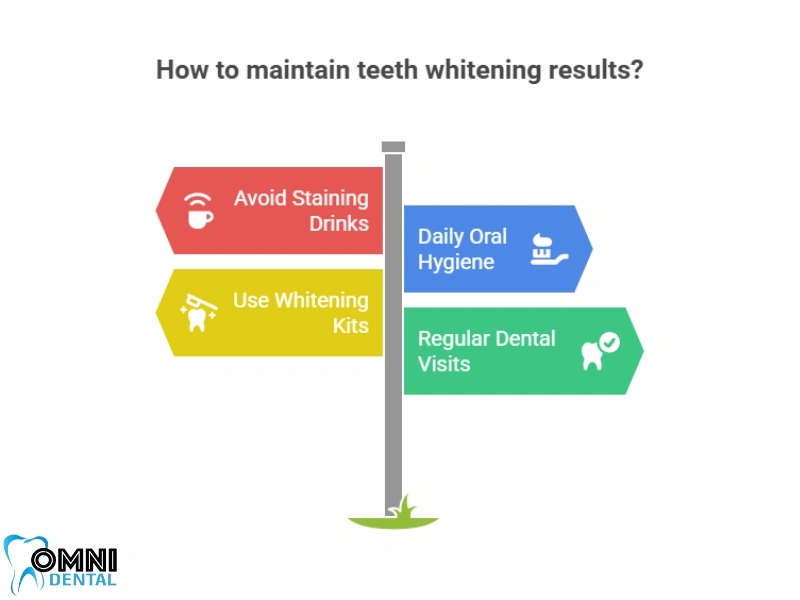
How to Maintain Whitening Results
After a whitening treatment, it’s important to protect your results:
- Avoid drinking coffee or red wine for at least 48 hours after whitening.
- Brush and floss daily to reduce plaque buildup.
- Use touch-up whitening kits professional provided by your dentist to maintain brightness.
- Keep up with regular dental cleanings and checkups.
With the right routine, you can keep your smile radiant while still enjoying your love for coffee or wine.
Frequently Asked Questions
How do coffee drinkers keep their teeth white?
Coffee lovers can protect their white smile by brushing daily with whitening toothpaste, rinsing with water after drinking coffee, and scheduling regular dental cleanings to remove buildup before it turns into stains. Many also use home whitening kits or seek professional whitening treatments to fight coffee staining caused by tannins. Pairing good oral hygiene with whitening gels or strips helps keep discoloration under control, even with a daily love for coffee.
How to keep teeth white while drinking red wine?
To minimize red wine stains, sip slowly, rinse with water after drinking, and avoid brushing right away since wine acids can weaken enamel. Using a straw can also minimize contact with your teeth, reducing discoloration risk. For longer-lasting brightness, try whitening gels, whitening toothpaste, or professional whitening treatments. Pairing wine with cheese or crunchy snacks helps neutralize acids and protect enamel, making it easier to maintain a brighter smile while enjoying wine.
How to remove coffee and red wine stains from teeth?
Mild stains from coffee and wine may fade with whitening toothpaste or home whitening kits that gently polish and lift discoloration. For tougher stains, dentists often recommend professional whitening using stronger hydrogen peroxide gels, which can deeply remove surface stains and improve brightness. If discoloration has penetrated deeper layers, a dentist may evaluate for intrinsic stains and suggest tailored whitening solutions or alternative treatments for restoring a white smile.
What happens if I drink wine after teeth whitening?
After whitening, teeth are temporarily more porous and sensitive, making them prone to re-staining. Drinking red wine or coffee contains tannins during this period can quickly undo your results. To protect your investment, dentists recommend avoiding dark-colored drinks for at least 48 hours after whitening. During that time, stick with clear liquids and maintain oral hygiene routines. Following these precautions helps preserve your bright smile and extend the effects of your whitening treatment.
A Brighter Smile Is Possible
Maintaining a white smile as a coffee or wine drinker takes effort, but the right combination of habits and treatments makes it achievable. Whether you choose whitening toothpaste, home whitening kits, or professional whitening treatments, you can fight coffee staining and red wine stains while enjoying your favorite drinks.
If you’re looking for the best results in teeth whitening for coffee and wine drinkers, talk to your dentist about safe, effective options tailored to your lifestyle.

About the author
Dr. Bilus D PolesDDS,MAGD,DICOI, DIDIA
Founder and lead dentist of Omni Dental of Arlington Heights. Master of the Academy of General Dentistry and Board Certified Diplomate of the ICOI and IDIA. Illinois license #019.027365.