Enamel erosion happens when acids from food, drinks, reflux, or plaque wear away the outer layer of your teeth. Lost enamel does not grow back, so prevention matters. Limit acidic foods, rinse with water after them, use fluoride toothpaste, and chew sugar-free gum to boost saliva.
Key Takeaways
- Citrus, soda, fruit juice, wine, and vinegar-based foods are common causes of enamel erosion.
- Acid reflux, GERD, and frequent vomiting expose teeth to stomach acid.
- Low saliva leaves teeth less protected against acid.
- Fluoride toothpaste helps strengthen and remineralize the enamel you still have.
- Early signs include sensitivity to hot or cold and yellowing as dentin shows through.
Estimated read: 3 min
Understanding Enamel Erosion and Its Causes
Enamel erosion is a common dental issue that can lead to weakened teeth, increased sensitivity, and other oral health problems. Tooth enamel erosion occurs when the protective outer layer of your teeth begins to break down. This can result from acidic foods and beverages, poor oral hygiene, certain medical conditions, and more. Understanding why enamel erosion happens and how to prevent it is essential for maintaining a healthy, strong smile.

Causes of Enamel Erosion
| Topic | Description |
|---|---|
| Acidic Foods and Beverages | Foods and drinks high in acid like citrus fruits, soda, fruit juices, and vinegar-based condiments can wear away enamel over time, making teeth more vulnerable to decay. |
| Acid Reflux and GERD | Gastroesophageal reflux disease, GERD, can expose teeth to stomach acid, which erodes enamel, especially on the back teeth. Frequent acid reflux increases the risk of dental erosion. |
| Eating Disorders | Disorders such as bulimia, which involve frequent vomiting, expose teeth to stomach acid and weaken enamel, increasing the likelihood of damage. |
| Poor Oral Hygiene | Not brushing or flossing regularly allows plaque to build up. Bacteria in plaque produce acids that erode enamel and damage tooth surfaces. |
| Low Saliva Production | Saliva helps neutralize acids in the mouth. Low saliva production increases the risk of enamel erosion and dental decay. |
How to Prevent Enamel Erosion
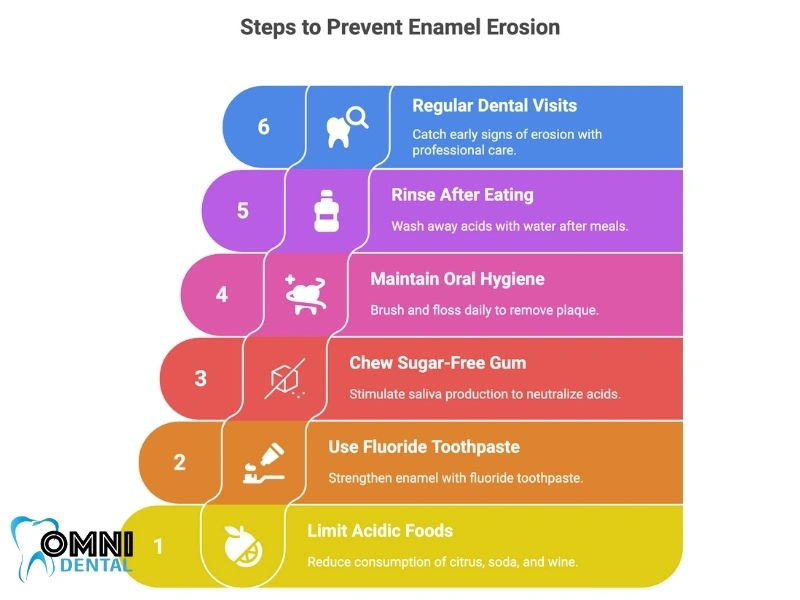
Limit Acidic Foods and Drinks
Reduce consumption of citrus, soda, and wine. When you do consume them, rinse with water afterward to neutralize acids.
Use Fluoride Toothpaste
Fluoride strengthens enamel, helps remineralize teeth, and protects against cavities and further erosion.
Chew Sugar-Free Gum
Chewing sugar-free gum stimulates saliva production, which neutralizes acids and protects enamel, especially after acidic meals.
Maintain Good Oral Hygiene
Brush at least twice daily with a soft-bristle toothbrush and floss once a day to remove plaque and prevent acid buildup.
Rinse After Eating
Rinse your mouth with water after consuming acidic foods or beverages to help wash away acids.
Visit Your Dentist Regularly
Regular dental visits help catch early signs of enamel erosion. Your dentist can provide professional cleanings and treatments to protect your teeth.
Frequently Asked Questions (FAQs)
What are the first signs of enamel erosion?
Early signs include tooth sensitivity to hot or cold foods and discoloration, often appearing yellow as dentin becomes visible.
Can enamel erosion be reversed?
Enamel loss cannot be reversed, but treatments like fluoride applications and proper oral hygiene can protect remaining enamel and prevent further damage.
Is enamel erosion common?
Yes, it is common. Diet, medical conditions like GERD, and poor oral hygiene all contribute to enamel erosion.
What foods are bad for enamel?
Acidic foods and drinks, such as citrus, soda, fruit juices, and wine, can erode enamel. Drinking water afterward helps protect your teeth.
Protecting Your Smile
Enamel erosion is preventable with the right habits. By practicing good oral hygiene, limiting acidic foods and drinks, and visiting your dentist regularly, you can protect your enamel and maintain a healthy, strong smile.
If you’re in Arlington Heights or nearby areas like Buffalo Grove, Schaumburg, or Palatine, schedule a visit to a trusted dentist to learn how to protect your enamel and keep your teeth healthy.

About the author
Dr. Bilus D PolesDDS,MAGD,DICOI, DIDIA
Founder and lead dentist of Omni Dental of Arlington Heights. Master of the Academy of General Dentistry and Board Certified Diplomate of the ICOI and IDIA. Illinois license #019.027365.